

♥ Wishlist
Compare 48 Thermometers products in Canada. Reviews, ratings, pros, cons and buying advice updated for October 2026.


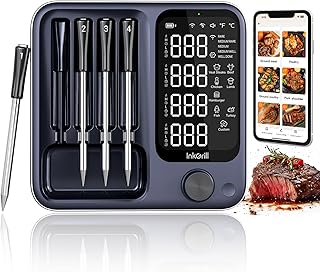

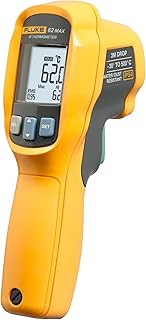


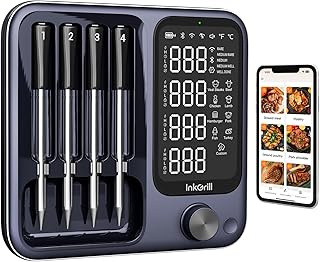
Choosing a smart thermometer is not simply about finding the lowest advertised price. The right model should match the way you intend to measure temperature, whether that means checking food, monitoring cooking temperatures, measuring room conditions, or using a connected device for more detailed tracking. Before comparing deals, identify the measurement type, required accuracy, response time, connectivity and operating environment.
For Canadian shoppers, it is also worth considering temperature units, battery availability, app compatibility, wireless range and the conditions in which the thermometer will be used. A feature-rich thermometer can be poor value if its extra functions are unnecessary, while a basic model may be insufficient for demanding cooking or monitoring tasks.
The term smart thermometer can describe several different product categories. Understanding the differences helps prevent buying a device that looks impressive but does not suit the intended application.
These thermometers are designed for measuring food and cooking temperatures. Depending on the model, they may use a wired or wireless probe, Bluetooth or Wi-Fi connectivity, multiple probes, temperature alarms and smartphone notifications.
They can be useful for grilling, smoking, roasting, baking and other cooking tasks where maintaining a target internal temperature matters. When comparing these products, pay close attention to probe construction, maximum temperature ratings, wireless range and whether the receiver or smartphone connection is practical for your cooking setup.
Instant-read models prioritize fast temperature measurements rather than continuous monitoring. They are useful when you need to check several points during cooking without leaving a probe in the food.
A clear display, easy controls, a comfortable grip and a probe that folds or stores securely can be more valuable than advanced connectivity. If you rarely need remote monitoring, an excellent instant-read thermometer may provide better overall value than a connected model.
Wireless probe thermometers are designed for situations where you want to monitor temperature without repeatedly opening an oven, grill or smoker. Some models communicate with a dedicated receiver, while others connect to a smartphone.
Look beyond the advertised wireless range. Walls, appliances, metal surfaces and the physical layout of a home can affect real-world connectivity. A thermometer with a sensible connection method and reliable controls can be more convenient than one that depends heavily on an app.
Multi-probe systems allow users to monitor more than one temperature at the same time. This can be useful when cooking several foods or monitoring both food and cooking-chamber temperatures.
However, additional probes increase the amount of equipment to clean, store and manage. Compare the number of probes included, supported probe channels, replacement options and how clearly the device identifies each temperature reading.
Temperature range should match the intended application. A thermometer designed for everyday cooking does not necessarily need the same range as a specialist thermometer used for high-temperature grilling or other demanding applications.
Check both the minimum and maximum stated operating range. Also distinguish between the temperature range of the probe and the acceptable operating conditions for the main thermometer body, display or wireless transmitter.
Accuracy describes how close a measurement is to the actual temperature, while resolution describes how finely the thermometer displays temperature changes. These are different specifications.
Do not assume that a display showing more decimal places automatically means greater accuracy. When comparing products, look for clearly stated accuracy specifications and consider whether the stated tolerance is appropriate for your intended use.
Fast response can make a noticeable difference when checking several temperatures. Instant-read thermometers generally emphasize quick measurements, while wireless probe systems are designed for continuous monitoring.
Consider the workflow rather than focusing only on the fastest advertised figure. A thermometer that is easy to position, read and remove can be more convenient in everyday use than one with impressive specifications but awkward handling.
A thermometer is only useful if you can read it easily. Look for a display that remains legible in the environment where you plan to use the device.
Canadian shoppers should check whether the thermometer supports the temperature units they normally use. Celsius is commonly used in Canada, while some recipes, product instructions and cooking resources may provide Fahrenheit measurements.
A model that allows easy switching between Celsius and Fahrenheit can reduce conversion mistakes and make the thermometer more versatile.
Connectivity is one of the main differences between a conventional digital thermometer and a smart thermometer. However, wireless technology should be evaluated according to how you will actually use the product.
Bluetooth can be practical for nearby monitoring through a compatible smartphone. It can work well when the cooking equipment and phone remain relatively close together.
The main consideration is range. If you expect to move around a large home or outdoor area while monitoring food, check the manufacturer's stated wireless limitations and consider whether the expected environment could reduce the usable range.
Wi-Fi connectivity can be useful for remote monitoring when supported by the product's hardware and software. It may be especially relevant to users who want notifications without remaining close to the cooking appliance.
App requirements should be checked before purchase. Confirm compatibility with your smartphone operating system and review the product's current software requirements rather than assuming every smart feature works identically across devices.
Not every buyer benefits from smartphone integration. If you primarily need a quick temperature reading, an app can introduce unnecessary setup and maintenance.
Smart features become more useful when you want programmable alerts, temperature history, multiple readings, remote monitoring or cooking-session tracking. Consider these functions as convenience features rather than automatically treating them as signs of a better thermometer.
The probe is one of the most important physical components of a cooking thermometer because it directly interacts with food or the cooking environment.
Look for a probe designed for the temperatures and food applications you expect. Stainless-steel construction is common in cooking thermometers, but the exact material, construction and heat resistance vary between products.
For wired probes, examine the cable design and its stated temperature limitations. A cable that is suitable for an oven may not be appropriate for direct contact with a grill flame or another high-temperature environment.
When using multiple probes, placement becomes important. Food temperature can vary significantly between different areas of a large roast or other thick food. A multi-probe thermometer gives you more measurement points, but correct probe placement remains essential.
Power management is easy to overlook when comparing smart thermometers. A device with advanced wireless functions may have different battery requirements from a simple instant-read model.
Rechargeable models can reduce disposable battery use, while replaceable batteries can be convenient when you need to restore operation immediately. Neither approach is automatically better for every shopper.
If a thermometer will be used outdoors, water resistance can be an important consideration. Grilling and outdoor cooking expose equipment to moisture, condensation and changing weather conditions.
Check the manufacturer's stated protection rating rather than assuming that a product described as water resistant can be submerged or washed under running water. Probe components, charging ports, displays and electronic housings may have different limitations.
Any thermometer used with food should be easy to clean. A probe with unnecessary grooves, exposed joints or difficult-to-reach areas can make routine cleaning more complicated.
After measuring raw meat or other foods, clean the probe appropriately before using it with ready-to-eat food. Follow the manufacturer's cleaning instructions and avoid exposing electronic components to water unless they are specifically designed for that treatment.
A good design should make the probe easy to access for cleaning while keeping the electronic body protected from normal cooking conditions.
Brand selection can help narrow the field, but brand recognition should not replace specification checking. Depending on the product category, shoppers may encounter established names such as ThermoWorks, MEATER, ThermoPro, Inkbird and Weber.
Each product should still be evaluated individually. Compare the specific model's temperature range, probe configuration, connectivity, app compatibility, power requirements and warranty information rather than assuming that every thermometer from the same manufacturer has identical capabilities.
For everyday cooking, prioritize simplicity, readability, fast measurements and easy cleaning. Advanced wireless functions may be unnecessary if you usually check temperatures manually.
Grill users may benefit from a thermometer with a heat-resistant probe, a readable display and sufficient wireless range. Outdoor durability and easy cleaning can also become more important than app-based extras.
Smoking often involves long cooking sessions, making continuous monitoring particularly useful. Consider a multi-probe wireless thermometer if you want to monitor food and cooking-chamber temperatures simultaneously.
For large cuts of meat, probe placement and continuous monitoring can be valuable. A thermometer with a suitable probe length and stable probe connection can make temperature monitoring easier throughout a long cooking process.
If you only use a thermometer occasionally, avoid paying for connectivity and accessories that will remain unused. A dependable digital instant-read model may offer the best balance between functionality and cost.
More features do not necessarily mean better value. Smartphone apps, multiple alarms, additional probes and extensive temperature history can be useful, but only when they solve a genuine need.
One of the most important mistakes is assuming that the entire thermometer can withstand the same temperature as its probe. Always check the specifications for the probe, cable and electronic housing separately when applicable.
Wireless range figures are typically based on particular conditions. Real-world performance can vary depending on walls, appliances, interference and device placement. Treat range as an important specification, but not as a guarantee of identical performance in every home.
A smart thermometer can remain useful for years only if important components remain practical to maintain. Check whether replacement probes, cables or batteries are available for the model you are considering.
Before buying a connected thermometer, verify app compatibility with your current smartphone. Also consider whether the manufacturer requires a particular operating-system version or account setup for certain functions.
A low listed price is not always the lowest total cost. When comparing deals, consider what is included in the package and whether you would otherwise need to purchase additional accessories.
Because prices and promotions can change, shoppers should verify the current price and product specifications before completing a purchase. A deal is most useful when the product remains suitable for the intended application after the promotional period ends.
Use this checklist when comparing several products side by side:
The best upgrade is usually the feature that removes a real inconvenience. For long cooking sessions, wireless monitoring can be worth paying more for. For large meals, additional probes may provide practical value. For occasional cooking, a fast and accurate instant-read thermometer may be the smarter purchase.
Consider spending more on build quality, appropriate temperature performance and useful monitoring capabilities before paying extra for cosmetic features or unnecessary app functions.
Correct usage matters as much as product selection. Place the probe in the part of the food that best represents the temperature you need to monitor. Avoid positioning the tip against cookware, bones or other surfaces when doing so could distort the reading.
For thick foods, consider whether the center is the relevant measurement point. During multi-probe cooking, label or identify each probe clearly so that you know which reading corresponds to each item or location.
Give the thermometer sufficient time to stabilize when the product instructions call for it. Avoid repeatedly opening an oven or grill unnecessarily when continuous monitoring can provide the information you need.
Not necessarily. Higher-priced models often provide additional probes, more sophisticated connectivity, enhanced controls or a more comprehensive monitoring system. Those features can be valuable for serious cooks, but they may provide little benefit to someone who only checks the temperature of food occasionally.
The better question is whether the additional cost delivers a feature you will regularly use. A well-matched thermometer at a lower price can be a better purchase than an advanced model with capabilities that remain unused.
A traditional digital thermometer generally emphasizes direct measurement and simplicity. A smart thermometer adds connected or automated functions such as wireless monitoring, alerts, temperature history or multi-device integration.
Choose a traditional digital thermometer when speed and simplicity are the main priorities. Choose a smart model when remote monitoring, multiple measurements or automated notifications would genuinely improve your cooking process.
These categories can overlap, but they serve different workflows. An instant-read thermometer is ideal for quick manual checks. A smart probe thermometer is better suited to continuous monitoring during longer cooking sessions.
If you regularly cook steaks, poultry, roasts or other foods where quick temperature checks are enough, an instant-read design may be preferable. If you smoke or roast food for extended periods, continuous monitoring can be considerably more convenient.
Customer reviews can provide useful information, but they should be evaluated alongside technical specifications. Focus on recurring comments about usability, connectivity, probe durability, battery performance, app setup and cleaning.
Give greater weight to detailed reviews that explain the conditions of use rather than short comments that only discuss whether the buyer liked the product. Also check reviews for the exact model because different versions can have different specifications.
It depends on the model. Some connected thermometers provide a dedicated display or receiver, while others rely more heavily on a smartphone application. Check the exact product specifications before buying if phone-free operation is important to you.
Neither is universally better. Wireless models can provide greater convenience, while wired probes can be straightforward and dependable for stationary cooking setups. The better choice depends on how you monitor food and how far you need to move from the cooking appliance.
One probe is enough for basic monitoring. Two or more probes become useful when you want to monitor multiple foods or compare food temperature with the surrounding cooking environment.
Choose based on the distance and monitoring method you need. Bluetooth can be suitable for nearby monitoring, while Wi-Fi can be useful when the product supports remote access over a broader network. Always check the model's actual connectivity requirements.
A good-value thermometer provides the accuracy, temperature range, durability, usability and features required for your particular application without charging you for functions you will rarely use.
The best smart thermometer in Canada is the one that fits your cooking habits, measurement requirements and preferred level of technology. Start with the basics: intended use, temperature range, accuracy, probe design and ease of cleaning. Then evaluate connectivity, app features, battery type, number of probes and accessories.
Before choosing a deal, compare the exact specifications rather than relying on product names or promotional wording. Check current retailer information, verified customer reviews, warranty details and replacement-part availability. Prices and stock can change throughout 2026, so confirm the latest information before purchasing.
For simple temperature checks, prioritize speed and ease of use. For grilling and smoking, focus on probe quality and monitoring capabilities. For connected cooking, evaluate the app and wireless system as carefully as the thermometer itself. This approach makes it easier to identify genuine value instead of simply choosing the product with the longest feature list.
The best option depends on your requirements. A home cook who wants quick measurements may prefer an instant-read model, while someone who regularly grills or smokes food may benefit from wireless probes and continuous monitoring. Compare the exact specifications, reviews and current price before deciding.
They can be worthwhile when wireless monitoring, alerts, multiple probes or temperature tracking save time during cooking. If you only need occasional temperature checks, a simpler digital thermometer may provide better value.
The appropriate range depends on the cooking method. Check the temperatures you expect to encounter and select a thermometer whose stated operating specifications comfortably cover those requirements.
Accuracy requirements depend on the application. Compare the manufacturer's stated accuracy specification and consider whether its tolerance is appropriate for the foods and cooking methods you use.
Many smart cooking thermometers are designed for grilling, but suitability depends on the individual model. Check the probe, cable and main-unit temperature limitations before using a thermometer near high heat.
You only need multiple probes if you expect to monitor multiple temperatures simultaneously. For simple single-item cooking, one quality probe can be sufficient.
Clean the food-contacting probe according to the manufacturer's instructions. Do not immerse electronic components unless the product is specifically designed for that type of cleaning.
They can be particularly useful for long smoking sessions because continuous temperature monitoring can reduce the need for repeated checks. Multi-probe models can also monitor more than one temperature at once.
Both options have advantages. Rechargeable systems can be convenient for frequent users, while replaceable batteries allow quick replacement without waiting for a device to charge. Choose according to your usage pattern.
No. Brand reputation can be useful when researching products, but the individual model's specifications, design, features and suitability should determine the final choice.