

♥ Wishlist
Compare 51 Stereo System Components in Canada products in Canada. Reviews, ratings, pros, cons and buying advice updated for October 2026.


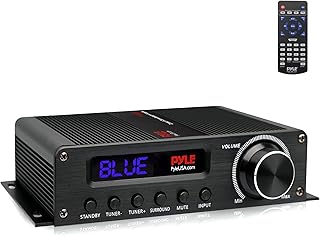


Choosing stereo system components in 2026 is less about buying the most expensive equipment and more about matching each component to the room, listening habits, source devices and amplifier. A well-balanced system can deliver a more convincing result than a collection of expensive products that are poorly matched.
For Canadian shoppers comparing stereo components, it is useful to evaluate the complete signal chain rather than judging a product in isolation. Speakers, an integrated amplifier, a network streamer, a turntable, a CD player, cables and other accessories all have different roles. Compatibility, connectivity and intended use should be considered alongside sound quality and price.
This buying guide focuses on the factors that matter when comparing stereo system components, including technical specifications, speaker matching, digital and analogue connections, room considerations, upgrade potential, maintenance and common purchasing mistakes.
A smart buy should offer the features you actually need without forcing you to pay for specifications that have little practical value in your setup. The right choice depends on whether you mainly stream music, play records, listen to CDs, connect a television or combine several sources.
An integrated amplifier combines amplification and source-control functions in one chassis. For many home stereo systems, this is the simplest starting point because it reduces the number of separate components required.
When comparing models from brands such as Yamaha, Denon, Marantz, Onkyo, Cambridge Audio and Sony, look beyond the headline wattage. Examine the available inputs, speaker connections, supported digital formats, subwoofer connectivity, streaming functions and impedance requirements.
Power specifications should also be interpreted carefully. Amplifier output can be presented using different measurement conditions, so two products with similar-looking wattage figures may not necessarily provide identical real-world performance.
Bookshelf speakers are often a strong option for smaller Canadian apartments, bedrooms, offices and compact listening rooms. Their relatively small footprint makes placement easier, although many models benefit from dedicated stands and careful positioning.
Important specifications include sensitivity, nominal impedance, frequency response and recommended amplifier power. These figures should be considered together rather than used independently.
Brands frequently considered in the stereo market include KEF, ELAC, Polk Audio, Klipsch, Q Acoustics, Wharfedale, Bowers & Wilkins and DALI. Individual models vary substantially, so brand reputation alone should never replace model-level comparison.
Floorstanding speakers can provide greater cabinet volume and a larger presentation without requiring separate speaker stands. They can be particularly suitable for larger rooms where compact speakers may not provide the desired scale.
However, bigger speakers are not automatically better for every room. Excessive bass energy can become difficult to control in a small or acoustically reflective space. Before choosing floorstanders, consider room dimensions, listening distance and available placement space.
A network streamer connects a stereo system to modern digital music services and network-based libraries. Streaming components can be useful when an existing amplifier provides excellent amplification but lacks modern networking features.
Check the services supported, Wi-Fi capabilities, Ethernet availability, app compatibility, multi-room functions and digital outputs. Some amplifiers already include sophisticated streaming platforms, making a separate streamer unnecessary.
A turntable is designed for vinyl playback and requires more careful system matching than many digital sources. Depending on the model, a phono preamp may be built into the turntable or amplifier, or may need to be purchased separately.
Before buying, determine whether your amplifier has a dedicated phono input. Also check cartridge compatibility, tonearm adjustment options, platter construction, drive mechanism and available speed settings.
Dedicated CD players remain relevant for listeners with physical music collections. A CD player can be particularly useful when an amplifier does not include a disc mechanism or when a listener prefers a dedicated source component.
Consider the type of discs supported, digital outputs, analogue outputs, display readability and overall usability. If the player is being connected through a digital output to an external DAC, the quality of its analogue output stage becomes less important to the final signal path.
Amplifier and speaker matching is one of the most important considerations when building a stereo system. Do not select an amplifier based only on its maximum wattage.
Speaker sensitivity indicates how efficiently a speaker converts amplifier power into acoustic output. Higher-sensitivity speakers generally require less amplifier power to reach a given volume. Low-sensitivity speakers may place greater demands on an amplifier, particularly in a large room or when listening at high levels.
Speaker impedance is another important factor. A speaker's nominal impedance does not always tell the complete story because impedance can vary across its frequency range. Check the amplifier manufacturer's supported speaker impedance range before connecting demanding speakers.
For everyday listening, the goal is not simply to maximize amplifier power. A better approach is to create a sensible combination of amplifier capability, speaker sensitivity, room size and listening distance.
Compact rooms generally benefit from smaller speakers and sensible listening levels. Bookshelf speakers, compact integrated amplifiers and streaming sources can create a capable system without occupying excessive space.
Speaker placement becomes especially important in small rooms. Avoid pushing speakers directly into corners unless the design specifically supports close-wall positioning. Leave sufficient clearance around rear ports where possible.
A medium-sized living room provides more flexibility. Stand-mount speakers with a subwoofer can offer a scalable solution, while floorstanding speakers can provide a larger full-range presentation.
An integrated amplifier with network streaming can also reduce equipment clutter while retaining access to multiple sources.
Larger rooms can require greater acoustic output and more careful speaker positioning. Floorstanding speakers may be appropriate, but amplifier capability, speaker sensitivity and listening distance become increasingly important.
Room acoustics should not be ignored. Hard floors, bare walls and large windows can create reflections that affect perceived clarity. Rugs, curtains, furniture and strategically placed acoustic treatments can influence the listening experience without replacing equipment.
Modern stereo systems often combine traditional hi-fi equipment with computers, televisions and wireless sources. The most useful connection depends on the device being connected.
Bluetooth is convenient because almost any compatible phone or tablet can act as a source. It is particularly useful for quick playback and casual listening.
Wi-Fi streaming can provide a more integrated home audio experience. Depending on the equipment and service, it may support network playback, higher-quality streaming, multi-room functionality and direct access to music services.
If streaming is central to your system, compare the actual streaming platform and supported services rather than assuming every network-enabled product offers the same functionality.
A digital-to-analogue converter, or DAC, converts digital audio information into an analogue signal that can be amplified and sent to speakers. Many modern amplifiers, streamers and CD players already contain DAC hardware.
A separate DAC can make sense when you need specific digital inputs, output connections or system architecture. It is not automatically necessary for every stereo system.
Before purchasing a standalone DAC, identify what your existing components already provide. Avoid adding equipment simply because a specification appears impressive if it does not solve an actual limitation in your system.
Passive speakers require an external amplifier. This approach gives you freedom to select and upgrade the amplifier independently from the speakers.
Active speakers contain amplification within the speaker enclosure. They can simplify system design and reduce the number of separate boxes and cables required.
For a minimalist desktop or living-room setup, active speakers can be convenient. For enthusiasts who want to change amplification or build a modular system, passive speakers may offer greater flexibility.
Product specifications can help narrow the shortlist, but not every number deserves equal attention. Focus on specifications that directly affect compatibility and functionality.
A speaker, amplifier or source can be excellent individually but unsuitable for a particular system. Check connection types, impedance requirements, phono requirements and available outputs before ordering.
Larger cabinets do not automatically produce a better result. Speaker design, room interaction and positioning all matter.
Even expensive components can sound disappointing when speakers are placed poorly. Room dimensions and acoustic characteristics should be considered before upgrading equipment.
A product with extensive connectivity may appear attractive, but unused features do not necessarily improve value. Prioritize functions that match your actual sources.
If you expect to add a subwoofer, turntable, television or network streamer later, check whether the amplifier has the appropriate connections today.
Customer ratings can help identify common ownership experiences, but they should be evaluated alongside technical specifications, independent testing where available, warranty information and the specific requirements of your system.
When comparing stereo system deals, compare equivalent products rather than simply looking for the largest percentage discount. A lower-priced model may have fewer inputs, lower power, fewer streaming functions or a different speaker configuration.
Several established audio brands have product ranges covering different parts of the stereo market. Yamaha, Denon, Marantz, Sony, Onkyo and Cambridge Audio are among the names worth considering when comparing amplifiers and source components.
For speakers, shoppers may also encounter KEF, Klipsch, Polk Audio, ELAC, Wharfedale, Q Acoustics, DALI and Bowers & Wilkins. Each brand offers different designs and price levels, so comparisons should always be made between specific models rather than brand names alone.
Brand recognition is useful for building a shortlist, but it should not be treated as proof that a particular product is the best choice for every room or listener.
A limited budget does not mean every component must be inexpensive. Instead, allocate money according to the role each component plays in your system.
For many buyers, speakers are a sensible area to prioritize because they have a major role in the final acoustic output. The amplifier should then provide suitable power and connectivity without unnecessary extras.
If you already own a good amplifier, upgrading the speakers may be more useful than replacing the entire system. Likewise, an existing pair of speakers may only need a modern streaming amplifier to become part of a more convenient digital setup.
A subwoofer can extend low-frequency reproduction and reduce the demand placed on smaller main speakers. This can be useful in both music-focused and mixed-use systems.
However, integration matters. Look for appropriate crossover controls and connection options, and consider placement carefully. A poorly positioned subwoofer can create uneven bass that sounds less accurate rather than more powerful.
A stereo system can also serve as a television audio solution. If TV integration is important, HDMI ARC or eARC can provide a convenient connection on compatible equipment.
Before buying an amplifier for combined music and television use, verify that the television and amplifier support the same connection method. Optical audio can also be useful when HDMI connectivity is unavailable or unnecessary.
Proper care can help preserve stereo equipment and maintain reliable operation. Keep ventilation openings unobstructed and avoid placing amplifiers in enclosed spaces where heat cannot escape.
Dust equipment periodically with suitable methods and avoid exposing speakers, turntables and electronics to excessive moisture. Vinyl records should be handled and stored carefully, while turntable cartridges and styluses should be maintained according to the manufacturer's instructions.
Speaker grilles can help protect drivers from accidental contact, particularly in homes with children or pets. If a system develops unusual distortion, intermittent connections or excessive heat, investigate the issue rather than continuing to operate the equipment under potentially unsuitable conditions.
Reviews are most useful when they provide specific information about setup, connectivity, usability and limitations. Look for reviews that explain how a component performs within its intended category instead of relying on broad statements such as "best" or "perfect."
Verified customer feedback can reveal practical issues that specifications do not show, such as confusing controls, difficult applications, connection limitations or installation concerns. At the same time, individual experiences can vary, so recurring patterns are generally more useful than isolated comments.
Before making a final decision, use a simple compatibility-first checklist. Start with your main listening sources and then determine which components are actually required.
There is no universal answer. If your speakers are poorly suited to your room, replacing them may have a greater effect than changing the amplifier. If your existing speakers are satisfactory but your amplifier lacks required inputs or streaming functions, an amplifier upgrade may be more practical.
No. Amplifier power should be considered with speaker sensitivity, impedance, room size and listening volume. The objective is an appropriate match rather than the highest wattage available.
Yes. Bookshelf speakers can work very well in many living rooms, particularly when positioned correctly on suitable stands. Larger rooms or listeners seeking greater low-frequency output may prefer floorstanding speakers or a subwoofer-assisted system.
Not necessarily. Many modern integrated amplifiers already include network streaming. A separate streamer is mainly useful when your existing equipment lacks the required functionality or when you specifically want a dedicated streaming component.
It depends on the turntable and amplifier. Some turntables include a built-in phono preamp, while some amplifiers have a dedicated phono input. If neither component provides the required phono stage, a separate phono preamp is necessary.
Reliable, correctly specified cables are important, but extremely expensive cables are not automatically necessary. Prioritize proper connections, suitable lengths, secure plugs and appropriate cable specifications before spending heavily on accessories.
The best option depends on room dimensions, neighbours, listening habits and source requirements. A compact integrated amplifier with bookshelf or active speakers can be a practical starting point when space is limited.
Compare the specifications and ownership factors that directly affect your setup. Examine connectivity, speaker compatibility, dimensions, streaming support, controls, upgrade options, warranty terms and recurring feedback from verified buyers.
The smartest way to shop for stereo system components in Canada is to build around your actual listening requirements. Start with the sources you use, determine the speaker type and room requirements, and then select amplification and connectivity that fit the complete system.
Do not let a discount, impressive specification or popular brand name make the decision by itself. Compare exact models, verify compatibility, read current product information and consider how each component will fit into the system several years from now.
For 2026 buying decisions, the strongest value is often found in a well-matched system rather than in the most expensive individual component. Whether you are building a compact streaming setup, upgrading a traditional hi-fi system, adding vinyl playback or creating a stereo system for both music and television, careful component matching can help you spend your budget where it matters most.