

♥ Wishlist
Compare 25 Rock Tumblers for Polishing Stones & Gems products in Canada. Reviews, ratings, pros, cons and buying advice updated for October 2026.


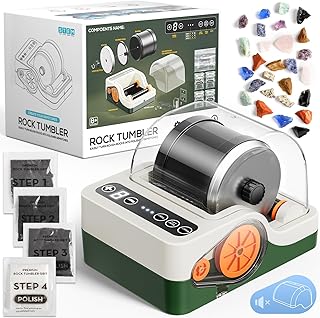


Choosing a rock tumbler is easier when you compare the details that affect polishing performance, noise, durability, capacity and long-term running costs rather than focusing only on the advertised price. A good tumbler can turn rough rocks, minerals and stones into smooth, polished pieces, but different machines are designed for very different workloads.
For Canadian buyers, the most useful comparison should include tumbler type, barrel capacity, motor design, operating noise, replacement parts, power requirements, barrel construction and the availability of suitable polishing media. Whether you are buying your first rock tumbler for a hobby, choosing equipment for children with adult supervision, or upgrading an existing setup, understanding these factors can help you narrow down the right option.
This 2026 buying guide focuses on smart purchasing decisions rather than simply ranking products by price. Brands commonly encountered in the rock-tumbling market include National Geographic, Lortone, Thumler's Tumbler, Dan&Darci and VEVOR. Always compare the current specifications, included accessories, customer feedback and retailer information for the exact model before purchasing.
A rock tumbler is a rotating machine that gradually smooths and polishes stones by placing them inside a barrel or drum with abrasive media, water and suitable rocks. As the barrel rotates, the contents move against one another. Over several stages, increasingly fine abrasive material can produce a smoother and more polished surface.
Rock tumbling is a gradual process rather than an instant polishing method. Rough stones normally require multiple stages, and each stage can take considerable time. The quality of the finished result depends on the machine, rock selection, barrel loading, abrasive sequence, water level and cleaning between stages.
Rotary tumblers are usually the most straightforward choice for beginners. The barrel rotates continuously, allowing rocks and abrasive material to cascade and rub against one another. This action is well suited to shaping rough stones and gradually smoothing irregular surfaces.
Models from established manufacturers such as Lortone and Thumler's Tumbler are often considered when buyers want conventional rotary-tumbling equipment. National Geographic also offers consumer-focused rock-tumbling kits that may appeal to beginners who want an accessible introduction to the hobby.
Vibratory tumblers use vibration rather than continuous barrel rotation. They can be useful for smoothing and polishing stones and may be attractive to experienced users who already understand abrasive stages and media selection.
A vibratory machine is not automatically a better replacement for a rotary tumbler. The two systems perform differently, and the best choice depends on whether your priority is shaping rough material, finishing already-smoothed stones, reducing cycle time for particular stages, or building a more advanced polishing setup.
Barrel configuration is one of the most important purchasing decisions. A single-barrel tumbler keeps the setup relatively simple, but it may require you to wait for one batch to finish before beginning another.
A dual-barrel design provides more flexibility. You can operate two batches at once or use different stages simultaneously, depending on the manufacturer's instructions and your workflow.
Remember that a larger nominal capacity does not necessarily mean a better tumbler. The barrel must still be loaded according to the manufacturer's recommended fill level and operating instructions.
Capacity should be evaluated carefully because manufacturers may describe capacity using different measurements. Barrel volume, recommended rock weight and total operating load are not necessarily interchangeable.
A practical comparison should consider the usable load rather than looking only at a number printed in a product title. Overloading a barrel can restrict movement and reduce tumbling efficiency. Underloading can also change the way rocks move inside the barrel and may affect the results.
Before purchasing, check:
The motor is central to a rock tumbler's operation because tumbling often involves long running cycles. A machine intended for occasional hobby use does not necessarily need the same design characteristics as equipment that will be operated frequently.
When comparing models, look for clear manufacturer information about the motor, drive system, operating cycle and recommended duty pattern. Avoid assuming that a larger motor automatically means better performance. Motor power should be considered alongside barrel size, load, transmission design and the manufacturer's intended use.
Drive belts, rollers, bearings and other moving components can eventually require maintenance or replacement. A model with accessible replacement parts can be more practical for long-term hobby use than a machine that becomes difficult to maintain when a wear component fails.
Rock tumblers can be surprisingly noisy, particularly when they contain hard stones and abrasive material. Noise is therefore an important consideration if the machine will run in a basement, workshop, apartment, garage or shared household space.
Do not rely only on a manufacturer's general statement about quiet operation. Customer feedback can help identify practical issues such as vibration, barrel noise, rattling or changes in noise levels during operation.
Placement also matters. A solid, stable surface can reduce unwanted movement. Some users choose to operate tumblers in a suitable utility area where extended operating noise is less disruptive.
The barrel is exposed to abrasive media, water and repeated mechanical movement, so its construction deserves attention. Common barrel materials include rubber and plastic, while some machines use specific liners or components designed to withstand repeated tumbling cycles.
Rubber-lined barrels are popular because the softer interior can help reduce impact noise while providing a protective surface between rocks and the barrel housing. The exact durability depends on the design and material used by the manufacturer.
Plastic barrels can be lightweight and easy to handle. Their suitability depends on the manufacturer's construction, wall thickness, sealing system and intended application.
When comparing barrels, inspect the lid design and sealing mechanism as carefully as the barrel material. A secure seal is essential because tumbling involves water and abrasive slurry.
A rock tumbler barrel needs to contain water, abrasive material and rock fragments throughout the cycle. A poor seal can create leakage, mess and unnecessary maintenance.
Check whether the manufacturer provides replacement gaskets, lids or other sealing components. Also consider how easy the barrel is to open, clean and reseal.
A complicated lid may discourage regular cleaning, while a simple and secure closure can make routine maintenance easier. Always follow the manufacturer's instructions when assembling and sealing the barrel.
First-time buyers often benefit from choosing simplicity over excessive capacity or advanced features. A beginner-friendly rotary tumbler with straightforward controls can make it easier to learn the basic stages of rock tumbling.
Look for a model with clear instructions and a practical barrel size. If a kit includes rough rocks, abrasive compounds and instructions, it may be convenient for learning the process, although you should still evaluate the quality and quantity of the included materials.
National Geographic is one brand to consider when comparing beginner-oriented rock-tumbling kits. Buyers should still check the specifications of the exact kit because included components and configurations can differ between models.
Experienced hobbyists may place more emphasis on barrel flexibility, replacement parts, motor durability, capacity and the ability to run multiple batches. In this situation, equipment from established manufacturers such as Lortone or Thumler's Tumbler may deserve closer comparison.
Experienced users should also consider whether their current abrasive system and polishing media are compatible with the selected machine. The tumbler itself is only one part of the complete process.
Successful tumbling normally involves several abrasive stages. The exact process varies according to the rock type, desired finish, abrasive system and manufacturer's recommendations.
The first stage focuses on shaping rough rocks and removing prominent irregularities. Coarse abrasive breaks down sharp edges and helps stones develop a more rounded profile.
The next stage continues smoothing the surfaces created during coarse grinding. Rocks should be cleaned thoroughly before moving to a finer abrasive stage.
Fine abrasive works on the remaining scratches and surface imperfections. Careful cleaning becomes increasingly important because coarse particles can contaminate a finer stage.
The final polishing stage uses a much finer material to develop the desired surface appearance. Not every rock responds equally well to polishing, and the final result depends heavily on the mineral's hardness, structure and condition.
A high-quality tumbler cannot compensate for unsuitable rocks. Stones with significant fractures, soft inclusions or weak structures may break apart during tumbling. Mixed hardness levels can also influence how quickly individual pieces change shape.
When selecting rough material, look for stones that are reasonably durable and suitable for the intended tumbling process. Avoid materials that are visibly unstable unless you understand how they behave during tumbling.
Popular tumbling materials can include varieties of quartz, jasper, agate and other durable stones. However, suitability varies considerably between individual specimens.
Mineral hardness is an important consideration because harder materials generally require different treatment from softer stones. If rocks have substantially different hardness characteristics, the softer material may wear more quickly while the harder material takes longer to shape.
For more consistent results, many experienced hobbyists prefer to group materials with similar characteristics rather than filling a barrel with completely unrelated stones.
Rock tumbling depends heavily on abrasive progression. Coarse abrasive is used for shaping, while progressively finer compounds are used as the rocks become smoother.
Silicon carbide is commonly associated with the grinding stages of rock tumbling, while cerium oxide, tin oxide or other polishing compounds may be selected for particular materials and finishing requirements. The appropriate compound depends on the rock and the manufacturer's recommended process.
Do not judge a tumbler by the amount of abrasive included in a starter kit alone. For long-term use, replacement abrasive costs and availability can become more important than the initial accessory package.
Cross-contamination is one of the easiest ways to compromise a polishing stage. Coarse abrasive particles remaining in the barrel can introduce scratches during a finer stage.
Clean the barrel, lid, rocks and appropriate accessories thoroughly between stages. Do not simply add a finer compound to an unclean barrel.
Cleaning routines should follow the manufacturer's instructions and should account for the type of material being processed.
Rock tumbling is a slow process. A complete batch can require multiple cycles, with each stage potentially taking several days depending on the material and desired finish.
The exact time cannot be guaranteed because rock hardness, size, shape, barrel loading, abrasive selection and machine characteristics all affect the process.
Buyers expecting polished stones within a few hours may therefore be disappointed. A rock tumbler is better understood as equipment for a gradual finishing process rather than an instant polishing appliance.
The cheapest machine is not always the least expensive option over time. Consider replacement barrels, belts, gaskets, abrasive compounds and other consumables when comparing total ownership cost.
A large tumbler can take up more space and may not be practical for occasional use. Choose capacity according to your normal batch size rather than assuming bigger is always better.
A tumbler may run for long periods, so noise can become a major practical issue. Consider where you will operate it before purchasing.
Not every attractive stone is appropriate for tumbling. Fragile, heavily fractured or unsuitable materials may produce disappointing results or excessive debris.
Combining rocks with significantly different characteristics can make results less predictable. More controlled batches often make it easier to achieve consistent finishes.
Moving directly from coarse grit to polishing compound without thorough cleaning can undermine the entire polishing sequence.
Belts, barrels, seals and other components may eventually wear. Check whether replacement components are realistically available for the model you are considering.
Rock tumblers are relatively simple machines, but they should still be operated responsibly. Follow the manufacturer's instructions, keep electrical connections away from water and inspect the equipment regularly for signs of damage.
Do not open a running barrel. Turn the machine off and disconnect power when maintenance requires access to moving components. Children should use rock-tumbling equipment only with appropriate adult supervision and according to the manufacturer's age and safety guidance.
Rock dust and abrasive residue should also be handled carefully. Follow suitable ventilation, cleaning and protective-equipment practices for the materials being used.
Canadian buyers may use rock tumblers in homes, garages, basements, workshops and hobby areas. The ideal machine depends partly on the available space and operating environment.
For indoor use, noise and vibration deserve particular attention. For a garage or workshop, available bench space and access to suitable water and cleaning facilities may be more important.
Before ordering, verify the exact electrical specifications, included accessories and retailer information for the Canadian version of the product. Do not assume that every model listed internationally has identical specifications or accessories in Canada.
A deal should be evaluated using total value rather than the advertised discount alone. A lower purchase price may be less attractive if the machine requires expensive proprietary components or lacks useful accessories.
When comparing current offers, review:
Prices and availability can change, so check the current retailer listing before making a purchase. A product that appears attractive in an older comparison may no longer represent the best value when specifications, bundles or current pricing change.
Brand reputation can be useful as a starting point, but the exact model remains more important than the logo on the machine.
National Geographic is commonly associated with beginner-oriented rock and mineral kits. Its products may appeal to buyers who want an accessible introduction to rock tumbling and educational use. Compare the exact kit contents and tumbler specifications before deciding.
Lortone is a well-known name in conventional rock-tumbling equipment. Buyers comparing Lortone models should examine barrel configuration, capacity, drive components and replacement-part considerations.
Thumler's Tumbler is another established name worth considering when comparing rotary and hobby rock-tumbling equipment. Focus on the specifications of the individual model rather than making assumptions based solely on the brand.
Dan&Darci products may be relevant to shoppers looking for consumer-focused kits. Compare the included rocks, abrasive materials, instructions and machine specifications to determine whether a particular kit fits your needs.
VEVOR offers equipment across a wide range of hobby and workshop categories, including rock-tumbling machines. Buyers should pay close attention to capacity, barrel construction, motor specifications and included accessories because configurations can vary between models.
A smart buy is not necessarily the most expensive or cheapest rock tumbler. It is the model whose capabilities match your actual use.
For occasional hobby use, straightforward controls, manageable capacity and reasonable noise may be more important than maximum throughput. For frequent tumbling, durability, replacement components and dual-barrel flexibility may carry greater weight.
For beginners, a complete starter kit can reduce the number of separate purchases required. However, experienced users may prefer purchasing the machine separately so they can choose their own rocks and abrasive compounds.
The tumbler is only one part of a complete setup. Depending on your process, you may also need suitable abrasive compounds, polishing media, replacement seals, cleaning supplies and additional rocks.
Check the manufacturer's instructions before substituting materials. Different tumblers and rock types may have different operating requirements.
Regular maintenance can help keep a tumbler operating consistently. After each cycle, inspect the barrel, lid, seals and moving components. Remove accumulated abrasive residue and clean the equipment according to the manufacturer's recommendations.
Check drive belts for visible wear if the machine uses a belt-driven system. Examine rollers and other moving parts for unusual wear or movement. If the machine develops an unusual noise, vibration or operating problem, stop using it and investigate the cause according to the manufacturer's guidance.
The best beginner model is usually one that is simple to operate, appropriately sized and supported by clear instructions and replacement components. A starter kit can be convenient for newcomers, while a basic rotary tumbler may be preferable for buyers who already have suitable rocks and abrasive materials.
Yes. Rotary tumblers are generally straightforward to understand and are well suited to the gradual shaping and smoothing process required for many common tumbling projects.
Not necessarily. Larger capacity can be useful for frequent or larger batches, but it can also require more space, material and operating resources. Match the barrel size to your actual workload.
The correct load depends on the machine and barrel. Follow the manufacturer's recommended fill level instead of filling the barrel completely.
You can combine suitable materials, but mixing rocks with substantially different hardness, durability or structure can produce inconsistent results. Grouping compatible material can make the process easier to control.
Rock tumbling usually requires multiple stages, and each stage can take several days. The total time varies according to rock type, condition, abrasive progression and desired finish.
Rock tumblers require suitable abrasive materials for the different stages of the process. The correct type and grade depend on the rock, tumbler and manufacturer's recommended procedure.
Noise varies by machine, barrel, load and operating environment. Because tumblers can run for extended periods, noise should be considered carefully before buying, particularly for indoor use.
A dual-barrel design can be useful if you want to process multiple batches or stages at the same time. For occasional users, however, a single barrel may provide enough capacity with a simpler setup.
Check the exact model number, barrel capacity, electrical specifications, included accessories, noise characteristics, replacement parts, manufacturer instructions, customer feedback and current retailer terms. Also consider where the machine will operate and how frequently you expect to use it.
Before choosing among the best smart buy rock tumblers in Canada, work through this checklist:
The right rock tumbler depends on how often you plan to use it, the types of rocks you want to polish, the quantity you expect to process and the amount of time you are prepared to spend on multiple tumbling stages. A beginner may benefit from a straightforward rotary kit, while frequent hobbyists may prefer a more durable machine with greater capacity, multiple barrels and accessible replacement components.
When comparing 2026 rock tumbler deals in Canada, look beyond ratings and discounts. Compare the exact model, barrel design, capacity, motor, noise, maintenance requirements, included accessories and long-term operating costs. Brands such as National Geographic, Lortone, Thumler's Tumbler, Dan&Darci and VEVOR can provide useful starting points for comparison, but the specifications of the individual product should determine your final decision.
The smartest purchase is the one that fits your workload and makes the entire tumbling process practical. Compare current specifications, check verified customer feedback, review the complete accessory package and confirm today's terms before choosing a rock tumbler.