

♥ Wishlist
Compare 57 Milwaukee Cordless Sanders products in Canada. Reviews, ratings, pros, cons and buying advice updated for October 2026.


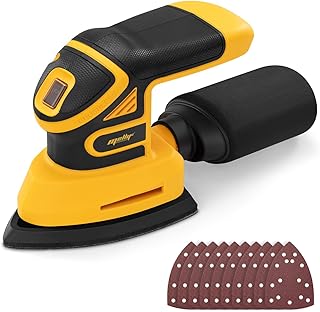


Choosing a Milwaukee cordless sander is not simply a matter of selecting the newest model or the largest battery. The right tool depends on the sanding motion, surface area, material, finish quality, dust-management requirements, working time and the Milwaukee battery platform already available in your workshop.
For Canadian buyers, the M18 system is especially important because tool-only and kit versions can represent very different overall values. A tool-only sander may make sense when you already own compatible M18 batteries and a charger. A complete kit can be more practical when starting from scratch, even if its initial purchase price is higher.
This guide focuses on the factors that make a Milwaukee cordless sander a smart buy rather than treating every model as interchangeable. Always compare the exact model number, included accessories, battery configuration and current retailer terms before purchasing.
The following models and configurations are useful reference points when comparing Milwaukee cordless sanding equipment. They are not interchangeable products, and their applications differ significantly.
These distinctions matter when comparing specifications. A belt sander should not be judged by the same criteria as a random orbital sander, while a quarter-sheet model may be preferable for someone who already keeps conventional sanding sheets in several grits.
The Milwaukee M18 FUEL 5" Random Orbital Sander 2837-20 is one of the most technically capable choices to consider when the priority is cordless random-orbit sanding. Milwaukee specifies a 3/32-inch orbit diameter and a five-position speed control covering 6,000 to 12,000 OPM. The design is aimed at material removal while maintaining control for finishing applications.
Its POWERSTATE brushless motor and REDLINK PLUS electronics are intended to provide performance while managing overload, heating and over-discharge conditions. The tool also includes a removable edge guard, an integrated dust-control arrangement and a universal hose adapter.
Milwaukee states that the sander can achieve up to 95% dust collection when its dust-control system is used in the appropriate configuration with compatible extraction equipment. That distinction is important: dust-collection performance depends on the setup rather than simply owning the tool.
The 2837-20 also works within the M18 battery platform. This can make the tool particularly attractive to existing M18 users because the purchase does not necessarily require a new battery ecosystem.
The strongest reason to consider this model is not merely its maximum speed. The combination of variable speed, low-vibration design, dust management and cordless portability can be more important when sanding large surfaces for extended periods.
The M18 2648-20 is another important model for buyers comparing Milwaukee cordless sanders. It uses a 5-inch random orbital format and provides a variable speed range of 7,000 to 12,000 OPM.
Milwaukee specifies a maximum output of 12,000 OPM and provides a dust canister, universal hose adapter, extension adapter and 80-grit sandpaper with the tool-only configuration.
The 2648-20 may make particular sense for buyers who want a straightforward M18 random orbital sander without necessarily moving to the newer FUEL configuration. The decision should be based on the price difference, required performance, existing accessories and the type of sanding work being performed.
This is one of the most important comparisons to make before purchasing. Two listings can appear to be the same sander while having very different package contents.
The Milwaukee M18 2648-21 kit, for example, combines the random orbital sander with an M18 REDLITHIUM XC extended-capacity battery, multi-voltage charger, contractor bag and sanding accessories. Compare the complete contents rather than judging a kit solely by its headline price.
Choosing between a random orbital sander and a quarter-sheet orbital sander is primarily an application decision.
A random orbital sander uses a round sanding disc and combines orbital movement with rotation. This makes the format versatile for many wood-sanding and finishing tasks. Five-inch discs are widely used and can be convenient when changing between abrasive grits.
A quarter-sheet sander uses rectangular sanding sheets. This format can be attractive for users who prefer traditional abrasive paper, want to cut sheets into smaller sections or regularly work with flat surfaces where a sheet-based sanding system is convenient.
The Milwaukee M18 2649-20 quarter-sheet sander has a 1.6 mm orbit diameter and variable speed from 11,000 to 13,000 OPM. It also uses a two-step clamping system for changing sanding paper and includes dust-management accessories.
The Milwaukee M18 FUEL 3" x 18" Belt Sander 2832-20 should be considered separately from random orbital sanders. It is designed around aggressive material removal rather than the same type of fine finishing work associated with a 5-inch random orbital tool.
Its 3" x 18" belt format and variable speed range of 750 to 1,350 SFM provide a different combination of cutting action and control. The tool also includes automatic belt tracking, a tool-free tracking adjustment, a tool-free belt-change lever and an adjustable pommel.
This type of sander can be useful when removing substantial amounts of material is more important than achieving the final finish in a single operation. The appropriate workflow may involve starting with a belt sander and moving to a random orbital sander for subsequent refinement.
More aggressive material removal is not automatically better. A belt sander can remove material rapidly, which also means it requires careful control. For delicate surfaces, edges and finishing work, a random orbital sander may be much more appropriate.
Specifications can become confusing when comparing different sanding tools because manufacturers use different measurements for different mechanisms.
OPM describes the number of orbital movements performed by an orbital or random orbital sander. A higher OPM setting generally increases the rate of sanding action, but maximum speed is not always the correct setting for every material or abrasive.
RPM is more commonly associated with rotational movement. It should not be directly compared with an orbital sander's OPM figure as though the two numbers represented the same operation.
SFM is especially relevant to belt sanders because it describes belt surface speed. The Milwaukee 2832-20, for example, uses a variable belt-speed range rather than an OPM rating.
Understanding these terms prevents one of the most common buying mistakes: selecting a tool solely because its specification contains the largest number.
Cordless sanding places a continuous demand on a battery. The appropriate battery therefore depends on the application, tool and working duration.
A compact battery can reduce overall tool weight and may be convenient for short jobs. A higher-capacity battery can be useful when longer operating periods are more important. However, the largest battery is not automatically the best option because additional battery weight can affect balance and comfort.
For buyers already using Milwaukee tools, compare the batteries you currently own before purchasing another pack. The M18 ecosystem gives users flexibility, but battery capacity, physical size and tool balance should still be considered.
Sanding generates fine particulate material, making dust control an important part of the purchasing decision rather than a minor accessory consideration.
Look for a sander that provides a practical connection to your existing extraction equipment. A dust bag can improve portability, while a compatible vacuum or dust extractor may provide a better solution for sustained indoor sanding.
The Milwaukee M18 FUEL 2837-20 provides a universal hose adapter and VACLINK technology for compatible dust-extraction configurations. The M18 2648-20 and M18 2649-20 also provide dust-management accessories.
Buyers should check the exact hose diameter, adapter arrangement and extractor compatibility before assuming that every vacuum will connect directly.
Variable speed is useful because sanding is not a one-setting operation. The correct setting depends on the material, abrasive, desired removal rate and stage of the project.
Always follow the abrasive manufacturer's recommendations and the tool's operating instructions. Excessive pressure is generally not a substitute for selecting the correct abrasive and speed.
A cordless sander is only as effective as the abrasive being used. Buying an advanced sander while using the wrong grit can produce poor results.
Coarse abrasives are generally selected when significant material must be removed. They can also leave deeper sanding marks, making subsequent refinement necessary.
Medium abrasives are commonly useful for general surface preparation and moving from aggressive sanding toward a smoother surface.
Fine abrasives are typically used during final surface preparation. They remove less material and require more patience, particularly when working toward a finish-ready surface.
Rather than asking which grit is universally best, determine what the surface looks like now and what condition it needs to reach next.
Brushless systems are attractive for demanding cordless applications because they eliminate conventional motor brushes and can support efficient electronic motor management. Milwaukee's FUEL platform combines its POWERSTATE brushless motor with REDLINK PLUS electronics.
Variable speed is one of the most useful features for buyers who work with multiple materials. It provides greater control than a single fixed operating speed.
Vibration becomes increasingly important during longer sanding sessions. A tool that is powerful but uncomfortable can be less useful in real-world work. Ergonomics, grip shape and balance should therefore be evaluated alongside motor performance.
A good dust-management system can reduce cleanup and improve the working environment. Buyers who primarily work indoors should give this feature substantial weight.
Compatibility with an existing M18 battery collection can significantly influence the total cost of ownership. Always confirm that the exact model uses the battery platform you already have.
A newer FUEL model may provide attractive technical improvements, but those improvements only matter if they solve a real problem in your workflow.
Maximum speed does not tell you how comfortable the tool is, how well it controls dust, how it handles under load or how appropriate it is for a particular material.
A tool-only price can look attractive until the cost of a compatible battery and charger is added. Conversely, a kit may contain equipment you already own.
Milwaukee also produces M18 FUEL random orbital polishers. These are designed for polishing and paint-correction applications, not as direct substitutes for woodworking sanders. The 15 mm and 21 mm M18 FUEL random orbital polishers have different operating characteristics and pad capacities.
Consider the long-term cost and availability of sanding discs, sheets, belts, dust bags and other consumables. A tool purchase is only one part of the sanding system.
Milwaukee uses M18 as its broader 18V cordless platform, while M18 FUEL identifies a higher-performance range built around Milwaukee's POWERSTATE brushless motor, REDLITHIUM battery technology and REDLINK PLUS intelligence.
This does not mean every M18 FUEL tool is automatically the correct purchase for every user. The extra capability should be evaluated against the actual workload, frequency of use and price difference.
For occasional DIY sanding, a conventional M18 model may provide sufficient functionality. For demanding professional work, frequent stock removal and extended jobsite use, the additional features of an M18 FUEL model may be more relevant.
Because retailer pricing, promotions and package contents can change, the lowest advertised price is not necessarily the best deal. Compare the complete purchase rather than one number.
Customer reviews can provide useful information, but they should be treated as one part of the buying process. Look for repeated observations rather than isolated complaints or praise.
For cordless sanders, useful review themes include battery endurance, vibration, dust collection, pad or belt compatibility, ergonomics, switch operation, sanding performance and long-term durability.
Also distinguish between reviews discussing the exact model and reviews referring to another Milwaukee sander. Similar names can make product pages confusing, particularly when several generations or configurations exist.
Professional users should generally prioritize productivity, ergonomics, battery management, dust extraction and durability because the tool may be used frequently and for extended sessions.
DIY users may place greater emphasis on versatility, purchase price, ease of use and whether the tool can share batteries with other equipment.
Neither approach is universally superior. The right choice is the one that matches the frequency and difficulty of the work rather than the label attached to the tool.
Milwaukee random orbital sanders can be considered for tasks such as smoothing prepared timber, refining surfaces between finishing stages, removing existing surface imperfections and preparing wood before coating.
Use the appropriate abrasive progression rather than attempting to accomplish every stage with one grit. Excessive pressure can reduce the effectiveness of the sanding action and may create unwanted surface issues.
Cordless sanding can be particularly convenient during renovation work where extension cords are inconvenient or electrical access is limited. Battery operation can make movement around a work area easier, although battery capacity should be planned around the expected workload.
For professional remodeling, dust extraction becomes even more important because sanding may occur inside occupied or partially finished spaces. A portable dust-management setup can be preferable to relying solely on a small dust bag.
Milwaukee's M18 platform also includes random orbital polishers, which can look superficially similar to random orbital sanders. Their intended applications are different.
A sander is designed around abrasive material removal. A polisher is designed around polishing compounds, pads and surface correction. Buyers should not substitute one for the other simply because both use orbital movement.
Always read the manufacturer's instructions before operating the tool. Wear appropriate eye protection and respiratory protection based on the material and working environment. Dust from wood, coatings, composites and other materials can present different hazards, so suitable controls should be selected for the task.
Secure the workpiece before sanding. Avoid excessive pressure and keep the sanding surface moving appropriately. Inspect the battery, abrasive and tool before starting work, and stop if the equipment shows signs of damage or abnormal operation.
A smart purchase is not necessarily the most expensive Milwaukee sander or the model with the highest specification. It is the model that provides the right combination of performance, control, battery compatibility, ergonomics, dust management and consumable availability for the intended work.
For an existing M18 owner, platform compatibility can be a major advantage. For a new buyer, the complete cost of entering the battery system deserves more attention. For professionals, time savings and ergonomic considerations may outweigh a lower initial price. For occasional users, a simpler model may be the more rational choice.
A 5-inch random orbital model is generally the most versatile format to investigate for general woodworking and surface preparation. The M18 2648-20 and M18 FUEL 2837-20 are two Milwaukee options worth comparing based on required performance, features and current pricing.
They target similar 5-inch random orbital applications, but the M18 FUEL 2837-20 adds features such as five-mode speed control, a brushless POWERSTATE motor, REDLINK PLUS intelligence and enhanced dust-management capability. Whether those differences justify the additional cost depends on the user's workload and requirements.
The 2648-20 is a tool-only configuration. The separate 2648-21 kit includes an M18 REDLITHIUM XC extended-capacity battery, charger and additional kit contents. Always verify the exact package before purchasing.
Milwaukee specifies M18 battery compatibility for its M18 sanding tools, but battery size and capacity can influence weight, balance and operating duration. Check the exact tool documentation and battery requirements before choosing a pack.
Several Milwaukee M18 and M18 FUEL sanding tools are designed for professional applications. Suitability depends on the specific sanding task, material, workload, battery configuration and dust-extraction setup rather than cordless operation alone.
M18 FUEL sanding tools combine Milwaukee's POWERSTATE brushless motor, REDLITHIUM battery technology and REDLINK PLUS intelligence. Specific models may also add features such as variable speed control, improved dust collection and ergonomic refinements.
Choose based on the job. A random orbital sander is generally the more versatile option for surface preparation and finishing. A belt sander is more appropriate when rapid material removal is the priority.
No. Higher speed can increase sanding action, but the correct setting depends on the material, abrasive and desired finish. Control and appropriate technique are often more important than maximum speed.
Yes. Sanding produces fine dust, and effective collection can reduce airborne debris and cleanup. When comparing models, consider both the tool's dust-management design and whether it can connect effectively to your existing extraction equipment.
Check the exact model number, sanding format, speed range, battery compatibility, included accessories, dust-collection system, kit contents, current retailer price, return conditions and manufacturer's warranty information.
The best Milwaukee cordless sander for a Canadian buyer in 2026 depends on the work rather than a universal ranking. The M18 FUEL 2837-20 is a strong candidate for buyers seeking an advanced 5-inch random orbital platform, while the M18 2648-20 provides another route into cordless random orbital sanding. The M18 2649-20 serves buyers who prefer quarter-sheet abrasives, and the M18 FUEL 2832-20 is the more specialized choice when aggressive belt sanding is required.
Before buying, compare the exact configuration, battery requirements, sanding accessories, dust-control setup and current Canadian pricing. A smart deal is one that fits the job, works with your existing equipment and provides the features you will actually use.