

♥ Wishlist
Compare 34 Milwaukee Cordless Nail Guns products in Canada. Reviews, ratings, pros, cons and buying advice updated for October 2026.


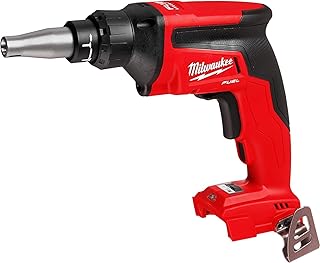

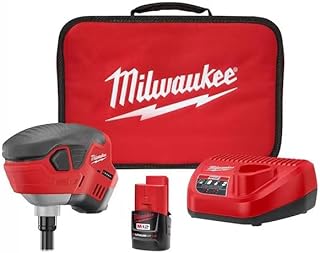


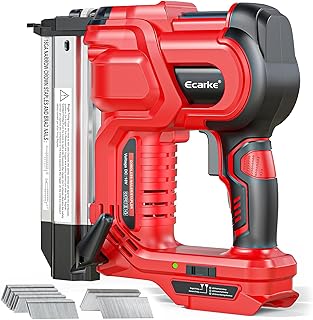


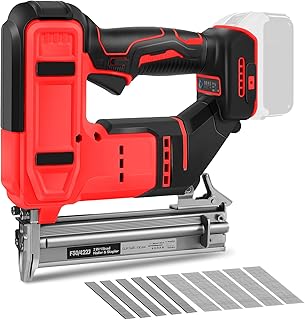


Choosing a Milwaukee cordless nail gun involves more than comparing the advertised power or the lowest price. The right model depends on the type of fastening work, nail size, material, required finish, battery platform, tool weight and frequency of use. For Canadian buyers, it is also sensible to consider availability of compatible batteries, chargers and replacement fasteners before choosing a particular tool.
Milwaukee has developed several cordless fastening tools for professional construction, renovation, finish carpentry and installation work. Its M18 and M12 platforms cover different tool sizes and applications, while REDLITHIUM battery technology is designed around the broader Milwaukee cordless ecosystem. When comparing Milwaukee nail guns, the most important step is matching the tool category to the work rather than simply choosing the most powerful-looking option.
Finish nailers are designed for applications where a relatively small nail and a cleaner appearance are important. They are commonly considered for trim, moulding, casing, baseboards, interior finishing and other woodworking tasks.
A finish nailer can be a strong choice when the fastening point needs to remain relatively discreet. Before buying, check the supported nail diameter and length range because not every finish nailer accepts the same fasteners.
Brad nailers use smaller-gauge brad nails and are suited to lighter fastening jobs. They can be useful for delicate trim, cabinetry components, decorative moulding and woodworking projects where minimizing visible holes matters.
For buyers comparing a Milwaukee brad nailer with a finish nailer, the key distinction is fastening strength versus the size of the fastener. A brad nailer is not simply a smaller version of a finish nailer. Each tool is designed around a different range of applications.
Framing nailers are intended for heavier construction applications. They generally use larger nails and are designed for structural and general framing work such as wall framing, sheathing and other demanding construction tasks where appropriate fasteners are required.
A cordless framing nailer can be particularly convenient where compressed-air equipment would add hoses, compressors and setup time. However, framing tools are typically heavier than compact finish or brad nailers, so tool balance and battery weight deserve careful consideration.
Specialized cordless nailers are designed around specific fastening applications. If the intended work involves roofing, decking or another specialized construction task, buyers should select a tool specifically engineered for that application rather than assuming a general-purpose nailer will provide equivalent results.
Fastener compatibility should be checked before almost every other specification. Look at the nail gauge, nail diameter, minimum length, maximum length and compatible collation type.
A tool may look ideal on paper but become unsuitable if the nails required for your project fall outside its supported range. Always compare the manufacturer's stated specifications with the fasteners you already use or intend to purchase.
Battery compatibility can have a major effect on the overall value of a cordless nailer. Buyers who already own Milwaukee cordless tools may prefer a model compatible with batteries they already have.
The Milwaukee M18 platform is particularly relevant when choosing larger cordless construction tools, while M12 tools occupy a more compact cordless category. However, platform compatibility should always be confirmed for the exact model because battery requirements can differ between products.
If you are starting from scratch, compare the cost of the complete setup rather than considering only the bare tool. A cordless nailer may be sold as a tool-only package or as a kit containing a battery and charger. The better value depends on what equipment you already own.
Weight becomes increasingly important during repetitive fastening. A nailer that feels manageable for ten minutes may feel considerably different after several hours of overhead, vertical or awkward-position work.
Look beyond the published weight and consider how the battery changes the balance. A well-balanced tool can feel easier to control than a similarly weighted tool with an awkward centre of gravity.
Depth adjustment allows users to control how deeply fasteners are driven into the workpiece. This feature can be especially important for finish carpentry, where excessive depth can leave larger depressions and insufficient depth can leave the nail proud of the surface.
A useful depth-adjustment system should be straightforward to access and predictable in operation. When comparing models, consider how easily the setting can be changed when moving between different materials or applications.
Different fastening tasks can benefit from different firing modes. Sequential operation generally provides more deliberate control, while contact-style operation can support faster repetitive fastening where the application and tool design permit it.
Do not choose a firing mode based solely on speed. Control, accuracy and safe handling remain important, particularly when working near finished surfaces or in confined areas.
Dry-fire protection can help prevent the tool from operating when the magazine is empty or nearly empty, depending on the model. This feature can reduce unnecessary firing cycles and may help protect the workpiece from accidental operation without a fastener.
Magazine capacity affects how frequently fasteners need to be reloaded. A larger capacity can be convenient for repetitive work, while compact tools may prioritize manoeuvrability over maximum capacity.
Consider your normal workflow. For occasional trim installation, magazine capacity may be less important than compact handling. For production-style fastening, reload frequency can have a greater effect on productivity.
Many modern cordless construction tools use brushless motors. Brushless motor technology eliminates traditional motor brushes and can provide advantages in efficiency, durability and electronic control.
Milwaukee uses brushless motor technology across many cordless tools, but buyers should avoid assuming that every product carrying the Milwaukee name has identical motor technology or performance characteristics. Always verify the specifications of the exact nailer being considered.
Motor technology is only one part of tool performance. The fastening mechanism, electronics, battery system, magazine design and overall mechanical construction all influence how a cordless nailer behaves in real applications.
Cordless nailers eliminate the need to connect the tool to an air compressor and pneumatic hose. This can simplify setup and make it easier to move between rooms, floors, work areas and job sites.
For renovation work, portability can be particularly valuable. A cordless nailer can be easier to transport through finished interiors where dragging an air hose could be inconvenient.
Battery-powered tools can also be useful for smaller jobs where setting up a compressor would take more time than the fastening work itself. The trade-off is that battery capacity, charging requirements and overall tool weight become part of the buying decision.
The M18 platform is associated with Milwaukee's larger 18-volt cordless tool ecosystem. It is commonly used across demanding construction and workshop applications.
When comparing an M18 nailer, consider the size and type of work you perform, the batteries already available to you and the total weight of the tool with the selected battery.
M12 tools use Milwaukee's smaller battery platform and are generally aimed at compact cordless applications. Where an M12 nailer is appropriate for the task, its smaller platform can be attractive for users who prioritize portability.
The important point is that battery voltage should not be treated as a simple measurement of overall tool quality. Application suitability, fastener compatibility, ergonomics and tool design matter just as much.
A pneumatic nailer requires compressed air, usually supplied through an air compressor and hose. A cordless nailer instead uses a battery-powered drive system.
Neither system is automatically better for every buyer. A professional workshop with an existing compressed-air system may have different priorities from a renovation contractor moving around multiple locations.
A finish or brad nailer may be more appropriate than a framing nailer. The choice depends on the thickness of the material, required holding power and nail size specified for the project.
Compact fastening tools can be useful when working with smaller components. Nail size, depth control and the appearance of the finished surface become particularly important.
A framing nailer may be more appropriate where larger structural fasteners are required. Check the project specifications and local construction requirements before selecting the tool and fastener combination.
Cordless operation can be convenient during renovation because the tool can move easily between rooms. Weight, battery availability and compact handling can therefore be as important as raw fastening power.
Milwaukee is a well-established power-tool brand, but brand recognition does not eliminate the need to compare specifications. The right Milwaukee nailer still depends on the actual application.
A nailer is only useful when compatible fasteners are readily available. Before buying, identify the exact nail type required and check whether suitable fasteners can be sourced conveniently in Canada.
A framing nailer should not be selected for delicate finish work simply because it has more driving capability. Similarly, a compact brad nailer should not be expected to perform structural fastening tasks outside its design.
Tool-only pricing can make a cordless nailer appear less expensive than the complete setup actually required. If you do not already own compatible batteries and chargers, include those components when comparing total purchase cost.
Specifications rarely communicate the entire experience of holding a tool. Consider grip shape, trigger position, balance, magazine access and the additional weight of the battery.
Maximum driving capability is not the only measure of a useful nailer. Consistent fastening, depth control, handling, reload convenience and compatibility with the required fasteners can be more important for the intended application.
When reading customer reviews, focus on recurring observations rather than isolated comments. Reviews can provide useful information about everyday handling, ease of loading, battery consumption and ergonomics, but they should be considered alongside manufacturer specifications.
Milwaukee is not the only established manufacturer in the cordless fastening market. Depending on the project and existing tools, buyers may also compare products from DEWALT, Makita, Bosch and Ryobi.
The best comparison is not necessarily a direct specification-for-specification contest. Battery ecosystem, compatible tools, service arrangements, ergonomics, fastener availability and the user's existing equipment can all influence the practical value of a nailer.
For buyers already invested in Milwaukee batteries, staying within the same ecosystem may reduce the need to purchase another battery and charger system. Conversely, a buyer starting a new cordless platform can compare the wider tool range offered by competing manufacturers before making a long-term decision.
Battery runtime varies according to the battery capacity, tool design, material, nail size, firing frequency and working conditions. It is therefore difficult to treat a single runtime figure as representative of every user's experience.
For intensive jobs, having a second compatible battery can help reduce interruptions. Buyers should also consider whether the battery charger is included with the product package.
Battery age and storage conditions can affect performance over time. Follow the manufacturer's instructions for charging, storage and use rather than relying on generic battery advice.
A cordless nail gun is a powerful fastening tool and should be treated as such. Read the manufacturer's instructions before operation and use the recommended protective equipment for the task.
Routine maintenance can help keep a cordless nailer ready for work. The exact maintenance procedure depends on the model, so the manufacturer's instructions should take priority.
Dust, debris and damaged fasteners can interfere with smooth feeding. Inspect the magazine periodically and remove debris according to the manufacturer's recommended procedure.
Do not assume that every nail with the correct advertised length is suitable. Check gauge, collation, material and other compatibility requirements before loading the magazine.
Inspect the housing, magazine, contact mechanism and other accessible components before use. Stop using the tool if it shows damage or develops an unsafe operating condition.
Use the manufacturer's approved battery and charging equipment. Store batteries as directed and avoid using damaged battery packs.
The cheapest tool is not always the best value. A more useful approach is to compare the total cost of ownership against the amount and type of work you expect to perform.
For occasional DIY projects, paying more for professional-oriented features may not provide meaningful value. For frequent construction or installation work, durability, productivity and compatibility with an existing cordless system can justify a higher initial investment.
When comparing deals, avoid judging an offer solely by the headline price. Check whether the listing is for the bare tool or a kit, whether the required battery and charger are included, and whether the exact model number matches the product you intend to buy.
Compare specifications across multiple Canadian retailers and review the complete product description before purchasing. Prices and availability can change, so check current listings at the time of purchase rather than relying on an old advertised price.
It is also useful to compare package contents. Two apparently similar deals can have very different value if one includes a battery and charger while another includes only the tool.
Professional users generally benefit from prioritizing productivity, ergonomics, battery management, fastener compatibility and durability. A tool that is used frequently should fit naturally into the user's broader workflow.
Existing Milwaukee equipment can also influence the decision. If a contractor already operates several compatible cordless tools, a nailer from the same battery ecosystem may simplify battery management across the job site.
DIY buyers should focus on the projects they realistically expect to complete. There is little benefit in buying a heavy-duty framing nailer when most projects involve light trim and woodworking.
Occasional users should also consider whether purchasing a cordless nailer is more practical than renting or using an alternative fastening method for a single project.
There is no single best model for every user. The appropriate choice depends on whether the work involves framing, finish carpentry, brad nailing or another fastening application. Start by identifying the required nail type and size, then compare compatible Milwaukee models.
Milwaukee offers cordless fastening tools designed for professional applications, but suitability depends on the specific model and job requirements. Check the tool's specifications, supported fasteners and intended application before buying.
An M18 model can make sense for buyers already using the Milwaukee M18 battery platform or those who need a compatible tool within that ecosystem. The correct choice still depends on the nailer category and application.
It depends on the user's workflow. Cordless nailers provide mobility without an air hose, while pneumatic systems can be attractive for users who already have a suitable compressor setup. Compare portability, battery management, operating frequency and existing equipment.
No. Brad, finish, framing and specialty nailers are designed for different fasteners and applications. Selecting the correct category is more important than trying to find one tool for every fastening job.
Use a battery that is officially compatible with the exact nailer model. Consider capacity, weight and the expected workload. If you already own compatible Milwaukee batteries, selecting a tool from the same platform may simplify your setup.
Check the exact model, nail compatibility, package contents, battery requirements, included accessories, current price, retailer terms and customer feedback. Comparing the complete package is more useful than comparing headline prices alone.
Operating conditions can affect batteries and power tools, particularly in very cold environments. Follow Milwaukee's instructions for the applicable tool and battery regarding operating temperature, charging, storage and transportation.
The smartest way to choose a Milwaukee cordless nail gun in Canada is to start with the work rather than the deal. Identify the fastening application, determine the required nail specification and then narrow the selection according to battery platform, ergonomics, features and package contents.
For trim and detailed woodworking, a compatible brad or finish nailer may be the logical direction. For structural construction, a suitable framing nailer is more appropriate. Buyers who already own Milwaukee cordless equipment should also factor battery compatibility into the decision.
Before purchasing, compare current Canadian listings, verify the exact model number, check the manufacturer's specifications and read recent verified customer reviews. A genuinely smart buy is the product that matches the intended work, fits the user's cordless ecosystem and provides the necessary features without paying for capabilities that will rarely be used.