

♥ Wishlist
Compare 21 Metabo Line Laser Level products in Canada. Reviews, ratings, pros, cons and buying advice updated for October 2026.


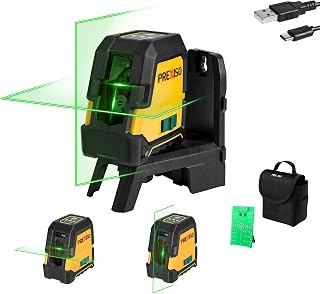

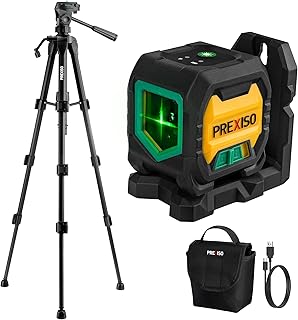


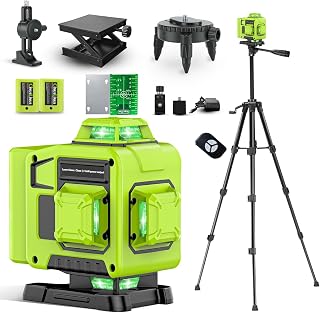
Choosing a line laser level is less about finding the most feature-packed tool and more about matching the laser's projection pattern, accuracy, working range, mounting options and durability to the work you actually perform. For Canadian buyers, the right choice should also account for indoor visibility, jobsite conditions, battery availability, temperature, accessories and the practical difference between a basic cross-line laser and a multi-line model.
Metabo has produced several laser-measuring and alignment tools over the years, including the KLL 2-20 cross-line laser and MLL 3-20 multi-line laser. Older Metabo documentation lists both as self-levelling laser systems designed for construction and alignment work. Because model ranges and retail availability can change, shoppers should verify the exact model number, included accessories and current Canadian specifications before ordering.
The first buying decision is the projection pattern. A horizontal line is useful for cabinets, shelving, wall layouts and general levelling. A vertical line helps with plumbing, framing, door alignment and transferring reference points between floor and ceiling. A cross-line laser combines horizontal and vertical references, making it more versatile for interior renovation.
Multi-line systems can provide additional reference lines and, depending on the model, broader room coverage. The Metabo MLL 3-20, for example, was documented as a multi-line laser with horizontal and vertical laser functions, a 90-degree angle function and a plumb-line function. The KLL 2-20 was documented as a cross-line laser with horizontal, vertical and plumb-line functions.
A laser that projects a line a long distance is not automatically the best choice. Accuracy is usually more important when installing cabinets, setting tile layouts, aligning framing, positioning electrical components or establishing precise reference lines.
Metabo documentation for the KLL 2-20 and MLL 3-20 lists a levelling accuracy of approximately ±0.3 mm/m. That figure should be treated as model-specific rather than as a specification for every Metabo laser. Always check the technical documentation for the exact product configuration you are considering.
Remember that laser accuracy is only one part of the final result. A tripod that moves, a mounting bracket that slips or a dirty optical window can introduce practical errors even when the laser itself is properly calibrated.
Self-levelling is one of the most useful features for everyday construction and renovation work. Instead of manually adjusting a bubble level every time the tool moves, the internal pendulum system automatically establishes the reference within its specified self-levelling range.
The KLL 2-20 was documented with a self-levelling range of ±4.5 degrees, while the MLL 3-20 was listed at ±4 degrees in Metabo's earlier catalogue. These figures illustrate why buyers should check the exact model rather than assuming that all line lasers behave identically.
A useful warning feature is also important. If the tool is positioned outside its self-levelling range, the projected line should not be treated as a reliable level reference. Learn how the selected model indicates an out-of-level condition before using it for precision work.
A 360-degree horizontal laser can be extremely useful when several walls need the same elevation reference. Instead of repositioning a laser repeatedly, a room-wide horizontal line can provide a continuous reference.
This can simplify tasks such as installing upper cabinets, marking suspended ceilings, establishing tile layouts, aligning wall fixtures and setting consistent heights across multiple walls.
However, 360-degree projection does not automatically make a laser more accurate. It primarily changes how much of the working area can be covered from one position. If your projects are small and localized, a simpler cross-line system may be easier to transport and faster to set up.
Most line lasers are easiest to use indoors because the projected line is more visible away from direct sunlight. Visibility can change significantly depending on room size, surface colour, ambient lighting and the distance between the laser and the work surface.
For interior renovation, a clearly visible red laser may be sufficient. For brighter environments, buyers should investigate whether the particular model is intended for the lighting conditions in which it will be used. Do not assume that a laser visible in a dim workshop will perform identically beside a large sunlit window or outdoors.
A target plate can also make a useful difference when transferring a reference over a longer distance. If the package includes one, check its purpose and compatibility rather than assuming it replaces a receiver.
A line laser is only useful when it can be positioned securely. Look for a practical combination of tripod compatibility, wall mounting, magnetic mounting or other attachment methods suited to your projects.
Metabo's earlier documentation for the KLL 2-20 and MLL 3-20 included mounting accessories and tripod connections. The MLL 3-20 documentation also described mounting options involving a tripod, magnets and metal lugs.
For Canadian renovation work, a flexible mounting system can be particularly useful because the same laser may be used on drywall, framing, cabinetry, concrete or metal surfaces. Check the exact mounting thread and included hardware before purchasing accessories.
Battery runtime matters more when the laser is used throughout a full working day. For occasional home projects, runtime may be less important than portability. For contractors, repeated setup and extended operation make battery life a more meaningful consideration.
Older Metabo specifications listed approximately 20 hours of operating time for the KLL 2-20 and approximately 10 hours for the MLL 3-20 under their specified conditions. These figures should not be generalized to newer or different models.
Before buying, confirm whether batteries are included, what battery type the laser requires and whether replacement batteries are readily available in Canada. Also check whether the quoted operating time applies to all laser lines being used simultaneously or to a particular operating mode.
Construction environments expose measurement tools to dust, moisture, impacts and frequent transportation. A compact laser intended primarily for indoor finishing work may not be the right choice for rough construction sites.
Earlier Metabo documentation listed IP54 protection for the KLL 2-20 and MLL 3-20. An IP rating should not be interpreted as permission to expose a tool to any environment without limits. It describes defined resistance to dust and water ingress under specified testing conditions.
For a current 2026 purchase, verify the IP rating of the exact model. Also inspect the housing design, protective frame, pendulum lock, optical protection and supplied carrying case.
A lower-priced laser can become less attractive if you need to purchase several essential accessories separately. Compare the complete setup rather than judging the laser body alone.
For professional users, a good mounting and transport system can save more time than an additional laser function that is rarely used.
A smart buy is not necessarily the product with the lowest advertised price. Consider the laser, batteries, charger if applicable, tripod, mounting accessories, replacement parts and protective storage.
When comparing Canadian offers, check the exact model number and package contents. Two listings can appear to describe the same laser while including different accessories or battery configurations.
Also check whether the seller is offering a new product, an open-box unit, refurbished equipment or a used tool. These categories can have different conditions and return policies.
The Metabo KLL 2-20 is one of the company's documented cross-line laser models. Earlier Metabo specifications describe a Class 2 laser with a 635 nm wavelength, an indoor visibility range of up to 20 m, ±0.3 mm/m levelling accuracy and a self-levelling range of ±4.5 degrees.
Its documented functions include horizontal and vertical lines together with a plumb-line function. The earlier specification also listed a 1/4-inch tripod thread and approximately 20 hours of operating time under the stated conditions.
These specifications make the model particularly relevant to buyers looking for a relatively straightforward cross-line reference tool rather than a more elaborate multi-line layout system. Because the specifications originate from older Metabo documentation, confirm current availability and package details before treating them as current 2026 retail specifications.
The Metabo MLL 3-20 was documented as a multi-line laser designed to provide broader layout functionality. Its listed functions include horizontal and vertical laser lines, a 90-degree angle function and a plumb-line function.
The earlier specifications listed a 20 m indoor visibility range, ±0.3 mm/m levelling accuracy, a ±4-degree self-levelling range and IP54 protection. The documentation also described a 360-degree horizontal line, manual fine adjustment of the 90-degree angle and mounting flexibility.
A multi-line laser can be valuable when several reference directions must be established during the same job. It may be particularly useful for interior construction, cabinetry, partitions, ceiling layouts and detailed renovation projects.
On the other hand, additional projection functions can increase complexity and may increase battery consumption. If your work only requires a basic horizontal and vertical reference, a simpler cross-line model may offer better value.
Cross-line and multi-line lasers solve related problems but are not interchangeable for every project.
The best option depends on how often each function is used. Buying a more advanced laser simply because it has more projection modes can add unnecessary cost and complexity.
Red laser projection is common in line-level tools and is generally well suited to indoor work. Visibility depends on ambient light and distance, so buyers should assess the actual working environment rather than choosing solely based on colour.
Some competing manufacturers offer green laser systems designed to improve perceived visibility in certain conditions. Brands such as Bosch, DEWALT, Milwaukee, Makita and Leica Geosystems have produced different types of laser measuring and alignment equipment.
That does not mean a green laser is automatically better. The projection system, optical design, accuracy, durability, mounting options and intended application all matter. A well-suited red laser can be a better purchase than a more expensive green laser that provides functions you do not need.
Accuracy specifications can look abstract until they are converted into working distances. A specification of ±0.3 mm/m indicates that the stated tolerance scales with distance. At 10 m, the theoretical tolerance associated with that figure would be approximately ±3 mm, assuming the manufacturer's stated specification and test conditions apply.
This is why distance matters. A small error may be insignificant when hanging a picture but important when establishing a long cabinet run or transferring a precise construction reference.
Users should also distinguish between factory accuracy, operating accuracy and calibration condition. A tool can be accurate when new but require verification after significant impact, misuse or long-term service.
A quick verification routine can reduce the risk of carrying an unnoticed error into a larger project.
Do not rely on an informal test as a substitute for professional calibration when precision requirements are high. If a tool has suffered a major impact or shows inconsistent readings, stop using it for critical measurements until its accuracy has been properly assessed.
The cheapest laser may lack the mounting system, durability or projection functions needed for your projects. Compare the complete package and specifications.
A long projection distance is useful only if the laser remains appropriate for the accuracy required by the task.
Before purchasing a tripod or accessory, verify the connection size. Do not assume that every laser uses the same mounting thread.
Bright daylight can make a visible line difficult to see. Outdoor work may require a compatible receiver or a laser specifically designed for exterior applications.
Always compare what is actually included. A bare-tool configuration and a kit containing batteries, brackets and a case can have substantially different practical value.
Metabo product ranges change. A model found in an older catalogue may not be a current Canadian product. Verify the model number and current retailer listing before purchasing.
For homeowners working on shelves, cabinets, wall fixtures, picture layouts, partitions and similar indoor projects, a cross-line laser can provide a useful balance of simplicity and functionality.
The key requirements are straightforward operation, sufficient indoor visibility, dependable self-levelling, stable mounting and adequate accuracy. Advanced multi-line functions are worthwhile when they will actually be used.
Cabinet installation places a premium on consistent horizontal references. A laser can make it easier to establish a continuous elevation across multiple cabinets and walls.
Look for accurate horizontal projection, secure mounting and easy height adjustment. A tripod or adjustable support can be particularly useful when cabinet layouts extend across a larger room.
Tile installation can benefit from both horizontal and vertical references. A cross-line system can help establish straight reference lines, while a multi-line system may be more useful for complex room layouts.
Before buying specifically for tile work, consider whether the laser's mounting position works at low height. A tool that can be placed securely near the floor can be more useful than one designed primarily for tripod-height operation.
Construction applications can demand greater durability, secure mounting and consistent performance around dust and movement. If the laser will be transported frequently between jobsites, the quality of its protective case and housing deserves attention.
For professional work, compare the tool's protection rating, accuracy, self-levelling behaviour, mounting flexibility and service documentation. Do not select a model based solely on its advertised number of laser lines.
Canadian buyers should check the product listing carefully because availability, packaging and electrical specifications can vary by market. Verify that the exact model is intended for the Canadian market and that any charger or electrical accessory is appropriate for Canadian power requirements.
For battery-powered products, investigate replacement battery availability and compatibility. For imported products, also consider whether documentation, support arrangements and warranty terms apply in Canada.
Weather can also influence construction work. Cold conditions may affect batteries and operating performance, while condensation can occur when a cold tool is brought into a warm indoor environment. Follow the manufacturer's temperature and storage instructions.
Metabo should not be evaluated in isolation. Depending on your application, it can be useful to compare equivalent laser-level products from established manufacturers such as Bosch, DEWALT, Makita, Milwaukee, Leica Geosystems and Stanley.
Compare like-for-like specifications. A professional 360-degree multi-line laser should not be compared directly with a basic DIY cross-line laser simply because both project a horizontal line.
Never stare directly into a laser beam or intentionally aim a laser toward another person's eyes. Laser safety information supplied with the product should be read before use.
Earlier Metabo documentation for the KLL 2-20 and MLL 3-20 identified them as Class 2 laser products. Buyers should verify the laser classification and safety instructions for the exact current model because classifications and product configurations can differ.
Use the tool only as intended and keep the beam away from road traffic, aircraft, reflective surfaces that could redirect the beam and situations where another person could be exposed unnecessarily.
When reviewing current Canadian offers, start with the exact model number. Then compare the package contents, not just the headline price.
A Metabo line laser can make sense for tradespeople, contractors, renovators, installers, cabinetmakers and serious DIY users who regularly need repeatable horizontal or vertical references.
It may be unnecessary for someone who only needs to hang an occasional picture or complete very small household tasks. In those situations, a conventional spirit level may provide all the functionality required.
The value of a laser level increases as the number of alignment points, room dimensions and repeated measurements increase. The tool becomes especially useful when a straight reference must be maintained across a large wall or multiple surfaces.
There is no single best model for every buyer. A cross-line model can be appropriate for straightforward horizontal and vertical alignment, while a multi-line model can be preferable for complex layouts requiring additional reference lines and right-angle functions.
The KLL 2-20 was designed as a cross-line laser with horizontal, vertical and plumb-line functions. Its feature set can suit many interior DIY and renovation tasks, but buyers should verify current availability and specifications before purchasing.
Earlier Metabo documentation describes the KLL 2-20 as a cross-line laser and the MLL 3-20 as a multi-line laser. The MLL 3-20 adds broader projection functionality, including a 360-degree horizontal line and additional alignment capabilities.
Several Metabo laser models have used pendulum-based self-levelling systems. The exact self-levelling range varies by model, so check the technical specifications for the specific product you intend to buy.
Visibility is the main challenge outdoors. A line that is easy to see indoors may be difficult to identify in bright sunlight. For exterior work, check whether the selected model supports a compatible receiver and whether its stated operating range is appropriate.
Not always. Some laser levels can be positioned using wall brackets, magnets or other mounting methods. A tripod becomes useful when you need controlled height adjustment, stable positioning or repeated setups across larger spaces.
It can be worthwhile when you regularly need a continuous horizontal reference around a room. For small jobs where only one wall needs to be aligned, a simpler cross-line laser may provide better value.
Check the exact model number, accuracy, self-levelling range, projection functions, working range, battery requirements, mounting thread, protection rating, included accessories and current retailer terms. Also verify that the listing describes the actual package being offered.
No. Ratings can provide useful buyer feedback, but they should be considered alongside technical specifications and your intended application. Pay particular attention to recurring comments about visibility, mounting stability, battery performance, calibration and durability.
Before selecting a Metabo line laser level in Canada, make sure the tool matches the job rather than simply choosing the most advanced model.
The smartest way to choose a Metabo line laser in 2026 is to start with the type of reference your projects require. A cross-line laser can be an efficient solution for everyday horizontal and vertical alignment, while a multi-line system can justify its additional capability when room-wide layouts, right-angle references and multiple projection directions are important.
Models such as the historically documented Metabo KLL 2-20 and MLL 3-20 demonstrate the difference between straightforward cross-line functionality and a more comprehensive multi-line approach. However, because product ranges and configurations can change over time, Canadian shoppers should verify current specifications, package contents and availability for the exact model before purchasing.
Ultimately, the best deal is the one that combines appropriate accuracy, useful projection functions, dependable mounting, suitable durability and the accessories you actually need. Compare specifications carefully, read verified customer feedback, check current Canadian pricing and choose the laser that fits the work rather than paying for features that will remain unused.