

♥ Wishlist
Compare 67 Medical Compression Garments for Support and Comfort products in Canada. Reviews, ratings, pros, cons and buying advice updated for October 2026.













Choosing a medical compression garment is more complicated than selecting ordinary socks, sleeves or supportive clothing. The right option depends on the body area being treated, the required compression level, garment construction, measurements, daily activity and whether the garment has been recommended by a healthcare professional. A product that feels comfortable and supportive for one person may be unsuitable for another.
For Canadian shoppers, it is also worth considering seasonal conditions. Warm weather can make some compression garments feel uncomfortable, while colder months may increase the appeal of longer garments and thicker fabrics. If a garment will be worn under work clothing, sports clothing or everyday clothing, its profile, seams and fabric thickness can also influence the buying decision.
Medical compression garments are designed to apply controlled pressure to a specific part of the body. Common examples include compression socks, stockings, sleeves, tights, arm sleeves, gloves and other supportive garments. The pressure may be graduated, meaning it is stronger in one area and progressively reduced along the limb.
Compression garments are used for different purposes, so shoppers should not assume that every product with the word “compression” provides the same level of support. Athletic compression clothing, everyday compression socks and medically prescribed compression garments can differ substantially in construction and intended use.
Graduated compression garments are generally designed with the greatest pressure around the area where compression is intended to be strongest, with pressure reducing along the limb. This design is different from garments that provide relatively uniform pressure.
When comparing products, look beyond descriptions such as “firm,” “supportive” or “high compression.” Check the manufacturer's stated compression range, sizing instructions and intended application. Compression measurements are commonly expressed in mmHg, but the appropriate level depends on the individual's circumstances.
Compression strength is commonly expressed in millimetres of mercury, abbreviated as mmHg. A lower mmHg value generally represents lighter compression, while higher values represent stronger compression. However, a numerical rating alone does not determine whether a garment is suitable for a particular person.
Do not select a stronger garment simply because it appears to offer better performance. Excessive or inappropriate compression can be uncomfortable and may not be appropriate for people with certain circulation problems or other medical conditions.
Compression socks and stockings are often used interchangeably in casual shopping searches, but they are not always identical. Compression socks may finish below or around the knee, whereas stockings can extend higher up the leg. The correct length depends on the area requiring compression and the purpose of the garment.
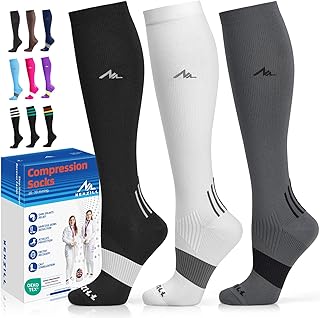
Knee-high styles are often considered when compression is needed around the lower leg. They can be easier to put on than longer garments and may work well under trousers or everyday clothing.
Pay close attention to the top band. It should remain securely positioned without creating an uncomfortable indentation. A poorly fitted upper band can be a sign that the size or garment design is unsuitable.
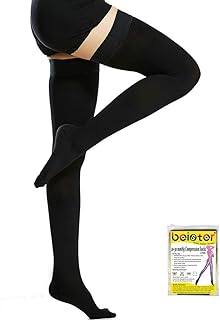
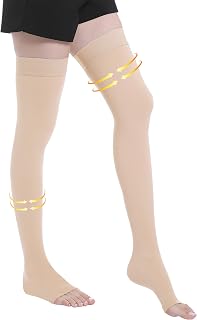
Thigh-high garments cover a larger portion of the leg and can be appropriate when compression needs extend above the knee. They require careful sizing because both leg dimensions and garment length can affect fit.
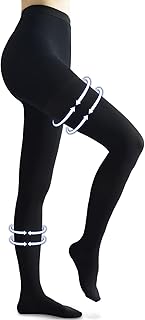
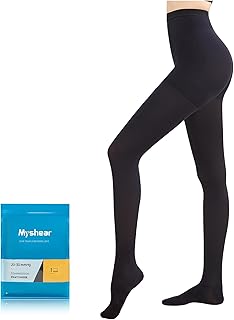
Full-length compression tights cover the legs from the waist or hip area downward. They can be useful when a shopper needs compression over a larger area, but they may take more effort to put on and remove than shorter garments.
Compression sleeves are another major category to consider. Leg sleeves can provide compression around the calf without covering the foot, while arm sleeves can cover the forearm or extend farther up the arm depending on the design.
Before purchasing a sleeve, identify precisely where compression is required. A sleeve that ends below the area needing support may not meet the intended purpose, while a garment that extends farther than necessary may be less comfortable.
Arm sleeves and compression garments may be available in different lengths and compression strengths. Some designs are intended for sports or everyday support, while others are manufactured for specific medical applications.
Check the manufacturer's measurement chart carefully rather than choosing a size based only on clothing size. Arm circumference, wrist circumference and sleeve length can all influence the fit.
Fabric composition affects comfort, durability, elasticity and ease of use. Compression garments commonly combine elastic fibres with materials selected for softness, moisture management or durability.
Nylon and polyamide fabrics are widely used in compression clothing because they can provide a durable foundation for elastic construction. Blends may also help manufacturers balance stretch, strength and comfort.
Elastane, also known as spandex in some markets, provides stretch and recovery. In compression garments, elasticity is important because the fabric must maintain controlled pressure while allowing movement.
Some garments incorporate cotton or other softer fibres to improve the feel against the skin. These options may appeal to shoppers who prioritize comfort, although fabric composition should be considered alongside compression specifications rather than used as the only selection criterion.
For active use, moisture management can be particularly important. A fabric that moves perspiration away from the skin may feel more comfortable during extended wear. However, moisture management does not automatically mean a garment provides medically appropriate compression.
Accurate measurement is one of the most important steps when buying compression garments online. Standard clothing sizes are not always sufficient because compression products depend on specific body measurements.
Brands such as Sigvaris, JOBST and Bauerfeind may use their own sizing systems and product-specific measurement requirements. Even when two garments appear similar, their sizing charts can differ. Always check the specifications for the exact model being considered.
A compression garment should fit as intended rather than simply look tight. Excessive bunching, rolling, slipping, uncomfortable pressure points or difficulty putting the garment on can indicate a poor fit or an unsuitable design.
Look closely at areas where the garment changes direction, such as the ankle, knee, elbow or upper edge. These areas can reveal whether the garment remains correctly positioned during normal movement.
If a compression garment causes significant pain, numbness, unusual colour changes, marked swelling or other concerning symptoms, stop using it and seek appropriate medical advice rather than assuming the garment needs to be worn in.
This distinction is essential when comparing products marketed online. Athletic compression clothing is commonly designed around movement, muscle support, comfort and sports performance. Medical compression garments may be designed around specific compression levels and clinical applications.
Brands such as 2XU and CEP are well known in compression sportswear, while brands such as Sigvaris, JOBST and Bauerfeind offer products across compression and medical-support categories. The brand name alone does not determine whether a particular product is appropriate for a medical requirement.
When shopping for a medical purpose, prioritize the stated compression specification, intended use, sizing system and professional guidance over marketing language.
Confirm the stated compression range rather than relying on words such as “maximum support” or “premium compression.” The numerical specification is more useful for comparison when the products are intended for the same application.
Compare knee-high, thigh-high, waist-high and sleeve-style designs according to the area that needs coverage. Longer garments may provide broader coverage but can require more effort to wear correctly.
For compression socks and stockings, toe construction can affect comfort. Open-toe and closed-toe designs serve different preferences and use cases, so consider footwear, personal comfort and the intended application.
A shaped heel can help position the garment correctly. Check product specifications for anatomical shaping, reinforced areas and other construction details that may influence fit.
Flat or carefully positioned seams can be preferable for people who are sensitive to friction. Inspect product descriptions for information about seam construction rather than assuming every compression garment has the same internal finish.
Higher compression garments can be more difficult to put on. This matters particularly when the garment is intended for daily use. Look for construction features designed to make application easier, but remember that ease of application varies by person.
Compression garments rely on elastic fibres and can lose their intended performance if they are repeatedly stretched, snagged or washed incorrectly. Reinforced construction can be useful in areas exposed to frequent wear.
Canadian shoppers should consider how and where the garment will be used. Someone looking for support during a long workday may prioritize comfort and easy application, while someone who travels frequently may place greater emphasis on portability and simple care.
People who spend long periods sitting may search for compression socks designed for everyday wear. Comfort, breathable fabric, correct sizing and compatibility with normal footwear are important considerations.
Workers who spend much of the day standing may prioritize supportive compression garments that remain comfortable over extended periods. A secure fit is especially important because repeated movement can cause an incorrectly sized garment to slip or bunch.
Frequent travellers may prefer garments that are easy to pack, put on and care for. However, anyone considering compression for a medical reason during travel should determine the appropriate product and compression level with a healthcare professional when necessary.
Athletic compression garments are available for running, cycling, training and other activities. These products should not automatically be treated as substitutes for medically indicated compression garments. Compare the intended use and technical specifications carefully.
Compression socks and stockings are among the most common products in this category. Compare length, compression rating, sizing, fabric, toe design and ease of application.
Arm sleeves and other upper-limb compression garments differ in length and construction. Measure the arm according to the manufacturer's instructions and verify that the product covers the intended area.
Compression gloves can cover part or all of the hand and may have different finger and wrist configurations. Check finger length, palm measurements and the garment's intended use.
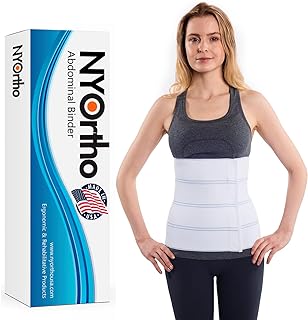
Some specialized garments cover larger areas of the body. These products require particularly careful attention to sizing and intended application because fit and compression can vary substantially across different body regions.
Brand reputation can help narrow a shortlist, but it should not replace product-level comparison. Consider brands such as Sigvaris, JOBST, Bauerfeind, CEP, 2XU and other established manufacturers according to the specific garment rather than assuming that every product in a brand's range is equivalent.
Stronger compression is not automatically better. The appropriate level depends on the intended purpose and the individual's circumstances.
Shoe size may be one part of a sizing system, but many compression products require additional measurements. Follow the exact chart supplied for the product.
A knee-high sock and a thigh-high stocking are not interchangeable simply because both are labelled as compression products. Coverage should match the intended application.
The word “compression” appears on sportswear, recovery clothing and medical products. Always distinguish between the product's marketing category and its stated medical or technical specification.
A cheaper garment may not provide the fit, construction or durability required for regular use. Compare the total value, including material quality, sizing options, intended use and care requirements.
Because compression garments are closely fitted, shoppers should review the retailer's current return and exchange conditions before purchasing. Hygiene restrictions may apply to certain garments once they have been worn.
Putting on a compression garment correctly can require more technique than wearing ordinary clothing. Follow the manufacturer's instructions and avoid pulling aggressively on a delicate section of fabric.
Specialized donning aids may be useful for some people. If putting on a prescribed compression garment is consistently difficult, ask a healthcare professional or qualified fitting specialist about appropriate techniques or assistive devices.
Proper care can help maintain the garment's construction and elastic properties. Always follow the care label for the exact product because washing instructions vary.
If a compression garment has visibly stretched, developed damaged areas or no longer fits as intended, consider replacing it according to the manufacturer's guidance.
There is no single lifespan that applies to every compression garment. Durability depends on the product, compression level, fabric construction, frequency of use, washing routine and how the garment is handled.
Instead of relying solely on a fixed replacement schedule, monitor the condition of the garment. Loss of elasticity, persistent stretching, thinning fabric, damaged seams and changes in fit can all indicate that the garment should be evaluated for replacement.
Customer reviews can provide useful information about everyday fit and usability, but they should be interpreted carefully. A review describing a garment as “too tight” may reflect a sizing issue rather than a defect, while another customer may prefer the same level of compression.
When reading reviews, look for repeated observations about sizing accuracy, comfort, durability, slipping, fabric quality and ease of application. Give greater weight to reviews that describe the reviewer's use case and measurements rather than short comments based only on appearance.
The lowest advertised price is not necessarily the best deal. A useful comparison should consider the garment's specifications, quality, intended use and long-term practicality.
For an affiliate buying guide, shoppers should verify today's price, stock status, retailer terms and current customer feedback directly with the retailer before placing an order. Product availability and promotions can change without notice.
Compression garments are not universally appropriate for every medical situation. If the garment is being considered for a diagnosed condition, persistent swelling, circulation concerns, recovery following a medical procedure or another specific health requirement, professional guidance can help determine whether compression is appropriate and what level or style should be used.
People with known circulation problems, unexplained swelling, significant skin changes, severe pain or other concerning symptoms should not use a shopping guide as a substitute for medical assessment.
If a prescribed compression garment causes significant discomfort, numbness, unusual colour changes, worsening symptoms or other unexpected problems, contact an appropriate healthcare professional rather than simply selecting a stronger or weaker product independently.
There is no single best option for every Canadian shopper. The appropriate garment depends on the required compression level, body area, measurements, intended use, comfort preferences and any professional recommendation. Compare the exact specifications of suitable products rather than choosing solely by brand or price.
Not necessarily. Both can provide compression, but their construction, pressure specifications, length and intended applications can differ. Check the exact product specification and intended use before purchasing.
mmHg means millimetres of mercury and is commonly used to describe compression pressure. A higher numerical range generally indicates stronger compression, but the appropriate pressure depends on the purpose and individual circumstances.
No. Stronger compression is not automatically better. Compression should be selected according to the intended application and, when appropriate, professional medical guidance.
Use the manufacturer's measurement chart for the exact product. Depending on the design, you may need measurements such as foot size, ankle circumference, calf circumference, thigh circumference or leg length. Do not rely on ordinary clothing size unless the manufacturer specifically says to do so.
Some compression garments are designed for regular or daily wear, but suitability depends on the product and the individual. Follow the manufacturer's instructions and any advice provided by a healthcare professional.
Not automatically. Athletic compression clothing and medical compression garments can have different specifications and purposes. If compression is being used for a medical reason, choose a product that meets the relevant recommendation rather than assuming sportswear is an equivalent substitute.
Recognized names in different compression and support categories include Sigvaris, JOBST, Bauerfeind, CEP and 2XU. Product ranges differ, so compare the specifications of the exact garment rather than treating every product from a brand as identical.
Consider appropriate compression, accurate sizing, breathable construction, comfortable seams and a secure fit. If compression is being considered because of a medical concern, obtain appropriate professional guidance.
Follow the care label supplied with the specific garment. Washing temperature, detergent recommendations and drying instructions can vary between products.
Compare equivalent products by compression level, length, sizing, material, construction, durability, care requirements and current price. A lower price is only meaningful when the products provide comparable specifications.
No. Reviews can help identify common experiences with comfort, sizing and durability, but they should complement rather than replace product specifications and professional guidance where medical compression is involved.
The best medical compression garment is the one that matches the intended application, provides the appropriate level of compression and fits the wearer correctly. Start with the required body area and compression specification, then compare sizing, fabric, construction, comfort, durability and current customer feedback.
For Canadian shoppers, compare current products and today's prices from trusted retailers because availability, promotions and product selections can change during 2026. Before buying, verify the exact model, compression rating, size chart, care instructions and retailer terms. When compression is being used for a medical condition or specific clinical requirement, professional advice should take priority over general online buying recommendations.