

♥ Wishlist
Compare 49 Makita Cordless Sanders products in Canada. Reviews, ratings, pros, cons and buying advice updated for October 2026.





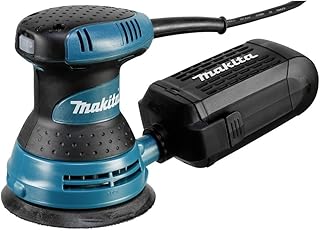


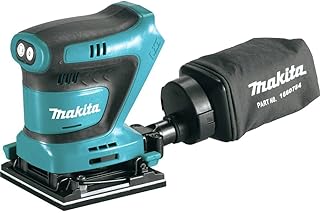


Choosing a Makita cordless sander is about more than selecting the highest-rated or most powerful-looking model. The right tool depends on the type of sanding you do, the materials you work with, the finish you expect, the battery platform you already own, and how much control you need during longer sessions. For Canadian buyers, it is also sensible to compare the complete tool specification rather than judging a deal by the headline price alone.
Makita offers cordless sanding tools in several formats, including random orbital sanders and other specialised sanding solutions. Each design handles surface preparation differently. A random orbital sander is generally suited to broad surfaces and finishing work, while a more specialised format may make more sense for corners, detail work, or applications where access is more important than maximum sanding area.
Before choosing from the products featured in this guide, compare the sander's pad size, orbit characteristics, speed control, dust collection arrangement, battery requirements, ergonomics and intended applications. A lower-priced bare tool can also become less economical if you need to purchase batteries and a charger separately.
One of the most important decisions is choosing the correct type of sander. Different mechanisms produce different movement patterns and are designed around different working conditions.
Random orbital sanders combine orbital movement with rotation of the sanding pad. This makes them versatile for removing surface imperfections, preparing timber and producing a smooth finish when the correct abrasive and technique are used. They are particularly useful when working across relatively large, flat surfaces.
The randomised sanding action can also help reduce the risk of obvious repetitive sanding patterns compared with some simpler orbital arrangements. However, technique still matters. Excessive pressure, unsuitable abrasive grades or remaining in one area for too long can affect the final surface.
Finishing sanders are designed around controlled sanding and surface finishing. Their rectangular or square-style abrasive arrangements can be useful for edges, panels and woodworking applications where a predictable sanding pattern is desirable.
They can be particularly attractive when the primary objective is preparing surfaces between coats of finish or achieving a refined result on woodworking projects rather than rapidly removing large quantities of material.
Detail sanders are intended for areas where a conventional round sanding pad is difficult to use. Their compact sanding shapes can help reach corners, narrow sections and intricate profiles. If your projects frequently involve furniture restoration, window components or detailed woodworking, accessibility may be more valuable than maximum sanding coverage.
Battery compatibility should be one of the first specifications Canadian buyers check. Cordless tools are often sold as either bare tools or complete kits. A bare tool may be attractive when you already have compatible Makita batteries and a charger, whereas a kit can make more sense when starting a new cordless setup.
Do not assume that every Makita cordless tool uses the same battery. Makita has produced multiple cordless platforms and voltage classes over time. Always verify the exact battery specification for the individual sander rather than relying solely on the brand name.
Battery capacity can also affect the practical experience. A higher-capacity battery may provide greater runtime, but it can add weight. For overhead, vertical or detailed sanding, overall tool balance may matter more than maximising battery capacity.
When comparing deals, calculate the total cost of ownership rather than comparing bare-tool prices with complete kits. The cheapest advertised tool is not necessarily the lowest-cost option once batteries, charger requirements and replacement abrasives are considered.
Sanding speed is not simply a case of faster being better. The appropriate speed depends on the material, abrasive, sanding stage and desired result. Coarser abrasive work may require a different approach from final finishing, and delicate surfaces can benefit from more controlled operation.
Variable-speed control is therefore a useful feature for buyers who work with multiple materials. It can provide greater flexibility than a single-speed design, particularly when moving between aggressive material removal and finishing work.
Always follow the manufacturer's operating instructions and use an abrasive appropriate for the material. Applying excessive downward force can reduce the effectiveness of the sanding action and may increase heat or wear rather than making the tool work more efficiently.
The sander is only one part of the sanding system. Abrasive selection has a major influence on both productivity and surface quality.
Coarser abrasives are generally used when more material needs to be removed. They can help address rough timber, old surface coatings or significant imperfections, depending on the material and project.
Medium abrasives are useful for general surface preparation and for refining a surface after more aggressive sanding. They often form part of the transition between initial material removal and final finishing.
Fine abrasives are typically used for final smoothing and finishing stages. They remove less material per pass, so they are better suited to controlled refinement rather than aggressive stock removal.
A practical sanding sequence normally involves moving progressively through appropriate abrasive grades rather than trying to complete an entire project using one grit. The exact sequence should be selected according to the material, coating and finish requirements.
Sanding creates fine airborne particles, making dust management an important consideration for both workshop cleanliness and responsible working practices. Makita cordless sanders can use different dust-collection arrangements depending on the model, so buyers should inspect the exact specification.
Some configurations are designed around an attached dust box or bag, while others can be connected to a compatible vacuum system. A vacuum connection may be preferable for larger projects where significant quantities of dust are generated.
Dust collection should not be treated as a substitute for appropriate personal protective equipment or suitable workshop ventilation. Follow the manufacturer's safety instructions and use respiratory, eye and hearing protection where the working environment and tool instructions require it.
Sanding often involves repeated movements over the same surface, so ergonomics can influence productivity as much as headline specifications. Pay attention to the position of the grip, the centre of gravity, battery placement and how naturally the tool sits on the workpiece.
A tool that feels balanced can be easier to guide accurately. This is particularly important when sanding vertical surfaces, working above shoulder height or completing detailed finishing work.
Weight should also be considered in context. A lighter configuration may be preferable for extended finishing work, while a heavier setup can sometimes feel more planted on a broad horizontal surface. Battery choice can change the overall weight and balance, so consider the complete configuration rather than the bare-tool specification alone.
For a cordless sander expected to remain useful over years of projects, examine construction details rather than focusing only on motor output. Important areas include the sanding pad, pad attachment system, housing, switches, dust-collection components and battery interface.
The sanding pad is a particularly important wear component. Frequent use can eventually require replacement parts, so buyers should check whether replacement pads and other consumable components are available through appropriate channels in their market.
Good build quality also means practical design. A robust tool that is difficult to control or awkward to maintain may not be the best choice for every application.
For home woodworking, furniture projects and general timber preparation, a cordless random orbital sander can provide a useful combination of portability and versatility. It removes the need to manage a power cable around the workpiece, which can be convenient when moving around benches or working on larger objects.
However, cordless convenience does not eliminate the need for good sanding technique. Keep the pad moving at a controlled rate, avoid unnecessary downward pressure and allow the abrasive to perform the cutting work.
For smaller decorative projects, a detail or finishing configuration may be more suitable. The best option depends on whether the project prioritises coverage, access or final surface refinement.
Furniture restoration can require several sanding stages, particularly when removing old finishes and preparing timber for repainting, staining or clear coating. A versatile sander can be useful for broad panels, while a smaller sanding tool may be needed around corners, profiles and difficult-to-reach areas.
When refinishing furniture, avoid assuming that aggressive sanding is always preferable. Veneers, softer timber and delicate surfaces can be damaged by excessive material removal. Select abrasives carefully and inspect the surface frequently as the project progresses.
Professional users should evaluate a cordless sander as part of a wider workflow. Runtime, battery availability, abrasive consumption, dust extraction, ergonomics and replacement components can all influence productivity.
If several cordless Makita tools are already used in the workshop, battery-platform compatibility may be especially valuable. Shared batteries can simplify tool changes and reduce the number of chargers and battery types required.
For high-volume sanding, compare the complete workflow rather than relying on one specification. A tool with excellent ergonomics and efficient dust management may be more useful over a working day than a model selected solely because it has a higher headline specification.
A low purchase price can be misleading if the product requires a separate battery, charger, sanding accessories or replacement components. Compare the complete setup needed for your work.
Always verify the exact battery platform. Existing Makita batteries are only useful when they are compatible with the particular tool.
A detail sander is not automatically a replacement for a random orbital sander, and a finishing sander is not necessarily the best choice for heavy surface preparation. Match the tool movement and pad shape to the job.
Dust handling can have a substantial effect on workshop cleanliness and comfort. Compare collection options before purchasing, particularly if you frequently sand indoors.
Effective sanding depends on the relationship between tool movement, abrasive selection, pressure, speed and material. More aggressive operation is not always better for the final finish.
Sanding discs and sheets are consumables. Check the required abrasive shape, dimensions, attachment method and hole pattern so that suitable replacements can be sourced easily.
When several models appear similar, use a structured comparison rather than relying on marketing descriptions. Start with the specifications that directly affect your application.
Makita is not the only established power-tool manufacturer worth considering. Depending on your existing workshop ecosystem, it can also be useful to compare equivalent cordless sanding tools from Bosch, DeWalt, Milwaukee, Metabo, Ryobi and other established manufacturers.
The most meaningful comparison is not simply brand against brand. Compare the specific models on battery platform, sanding mechanism, pad dimensions, speed control, dust collection, ergonomics, accessories and the total investment required.
For buyers already committed to a particular cordless ecosystem, staying within that platform can provide practical advantages. Shared batteries and chargers may reduce equipment duplication. For new buyers, however, it can be worthwhile to compare the available tool range across competing platforms before making a long-term commitment.
A smart purchase is not necessarily the product with the lowest price or the longest feature list. It is the model whose capabilities closely match the work you actually perform.
For example, a user sanding large wooden panels may place greater value on broad coverage, dust extraction and comfortable handling. Someone restoring furniture may prioritise control and access. A professional who already owns compatible Makita batteries may value a bare-tool configuration, while a new cordless-tool buyer may need a complete kit.
This is why specifications should be interpreted in relation to the application. The most useful comparison identifies what you need, removes unnecessary features and then evaluates the remaining models on price and ownership considerations.
Routine maintenance can help keep a cordless sander operating consistently. Before cleaning or carrying out maintenance, remove the battery and follow the manufacturer's instructions.
Sanding should be approached as a power-tool operation rather than a simple finishing task. Fine dust can be generated depending on the material and abrasive, while moving sanding pads can cause injury if the tool is handled incorrectly.
Use appropriate eye protection and respiratory protection where required by the material, environment and manufacturer's instructions. Hearing protection may also be appropriate depending on the tool and duration of use. Keep hands away from moving components and secure the workpiece before sanding.
When working on painted, treated or otherwise coated materials, determine whether the coating creates additional safety considerations before sanding. Do not assume that every surface produces ordinary wood dust.
Canadian buyers should compare the exact product configuration available for their market. Product bundles can differ, and a model name alone does not always tell you whether a battery, charger, abrasive or dust-collection accessory is included.
Before purchasing, verify the product specifications, package contents, applicable electrical and battery information, seller details, delivery terms, return conditions and any manufacturer warranty information presented with the specific listing. These details can change between retailers and product configurations.
When comparing current deals, consider the final delivered cost rather than the advertised starting price. Also check whether a promotion applies to a bare tool, kit or accessory package, because apparently similar listings can represent very different purchases.
DIY woodworkers: A cordless Makita sander can be convenient for home projects where freedom from a power cable improves access around a bench or workpiece.
Furniture restorers: Consider a combination of sanding formats if your work includes both broad panels and intricate areas.
Professional tradespeople: Prioritise battery compatibility, ergonomics, dust extraction, durability considerations and workflow efficiency.
Existing Makita users: A compatible bare tool can be particularly practical when suitable batteries and chargers are already available.
New cordless-tool buyers: Compare complete kits and the wider battery ecosystem before committing to a platform.
Cordless convenience is valuable, but it is not automatically the best solution for every workshop. If a sander will be used continuously in one fixed location and uninterrupted operation is the priority, a corded alternative may deserve consideration.
Likewise, buyers who do not already own compatible batteries should compare the complete cordless investment against equivalent corded options. The best choice depends on where you work, how frequently you sand and how important portability is.
The best Makita cordless sander depends on the application. A random orbital model can be a strong general-purpose choice for broad surfaces, while finishing and detail sanders can be more appropriate for specific woodworking and access requirements. Compare the exact specifications of the models you are considering.
Yes, Makita cordless sanders are designed for applications that can include woodworking, although the appropriate model and abrasive depend on the project. Select the sanding format and grit according to the material and desired finish.
It depends on the specific product configuration. Some listings are bare tools, while others are sold as kits with batteries and chargers. Always check the stated package contents before buying.
Only if the battery is compatible with the exact sander and platform. Check the manufacturer's specifications rather than assuming compatibility based solely on the Makita name.
Neither is universally better. Random orbital sanders are versatile for many broad-surface applications, while finishing sanders can be useful when controlled finishing and particular sanding shapes are preferred. Choose according to your project.
The correct grit depends on the material and sanding stage. Coarse abrasives remove material more aggressively, medium grades are commonly used for intermediate preparation, and finer grades are used for final refinement. Follow the requirements of the specific project and finish.
Suitability depends on the individual model, application, workload and operator requirements. Professional buyers should assess battery runtime, dust extraction, ergonomics, sanding performance, consumables and workflow compatibility rather than judging suitability from cordless operation alone.
Dust collection is an important consideration because sanding can produce fine particles. Compare the supplied collection system and vacuum compatibility, and use appropriate protective measures according to the material and working environment.
If you already own compatible batteries and a charger, a bare tool may be the more practical configuration. If you are establishing a new battery platform, a complete kit may be more convenient. Compare the total cost of the equipment you actually need.
Replacement frequency depends on usage, material, abrasive type and wear. Inspect the pad and replace it when it becomes damaged, excessively worn or unable to hold abrasives securely.
The best smart-buy decision among Makita cordless sanders comes from matching the tool to the work rather than chasing specifications in isolation. Start by identifying the surfaces you sand most often, then choose the appropriate sanding format, battery platform, pad size and speed characteristics.
Next, compare dust collection, ergonomics, package contents and consumable requirements. If you already use Makita cordless tools, battery compatibility can simplify the decision. If you are starting from scratch, compare the wider cordless ecosystem and complete purchase cost before committing.
For Canadian shoppers comparing 2026 deals, always verify the current specification, package contents, retailer information, customer feedback and total price at the time of purchase. Product configurations and promotional pricing can change, so the most useful deal is the one that delivers the capabilities you actually need at a sensible overall ownership cost.