

♥ Wishlist
Compare 35 Makita Cordless Angle Grinders products in Canada. Reviews, ratings, pros, cons and buying advice updated for October 2026.


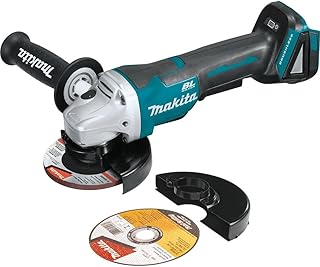


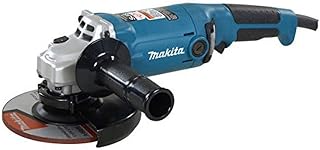


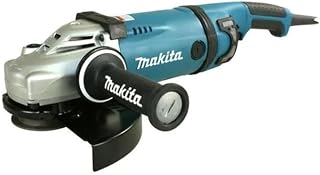


Makita cordless angle grinders are designed for users who want the flexibility of battery power without being restricted by an electrical cord. For Canadian homeowners, tradespeople, fabricators, mechanics, renovators and contractors, the right grinder depends on much more than the brand name. Battery platform, disc size, motor technology, speed control, safety features, ergonomics, workload and included accessories can all affect whether a particular model is a sensible purchase.
This buying guide focuses on the factors that matter when comparing Makita cordless angle grinders in the Canadian market. Product specifications, included batteries, chargers, accessories and package contents can vary by model and retailer, so always check the exact model number and current specification before purchasing.
There is no single Makita grinder that is ideal for every application. A compact grinder may be preferable for occasional cutting and light fabrication, while a higher-performance brushless model may be more appropriate for demanding professional workloads. The following categories help narrow the field when comparing the leading Makita cordless angle grinder options available in Canada.
One of the most important decisions is choosing between Makita's 18V LXT platform and its 40V max XGT platform. Both are cordless systems, but they target different requirements.
The LXT platform has a broad range of compatible cordless tools. For someone who already owns several Makita 18V LXT batteries, an LXT angle grinder can be a cost-effective addition to an existing tool collection. The shared battery ecosystem can also reduce the need to purchase another charger and another battery platform.
LXT grinders can make particular sense for maintenance work, renovation, metal fabrication, DIY projects, workshop tasks and general-purpose cutting and grinding. Compact models can also be easier to handle in confined areas.
XGT is aimed at applications where higher cordless performance is a priority. An XGT grinder can be an attractive option for professional users who place greater emphasis on demanding workloads and already use other XGT equipment.
However, buying into XGT solely for one grinder can require a larger initial investment. The battery, charger and additional tool ecosystem should therefore be considered alongside the grinder itself.
Brushless motor technology is an important consideration when comparing modern cordless grinders. Unlike conventional brushed motors, brushless designs do not rely on traditional physical motor brushes for commutation.
For a cordless tool, efficient use of battery energy is particularly valuable. A brushless motor can help a grinder make better use of the available battery system while also reducing one category of mechanical wear associated with brushes.
That does not automatically mean every brushless grinder is the right choice. Motor design, electronics, gearing, battery capacity, thermal management and overall tool construction all contribute to real-world performance.
Disc diameter has a direct effect on the type of work a grinder can perform. When comparing Makita angle grinders, do not automatically assume that a larger disc is better.
A compact grinder can be convenient for lighter fabrication, maintenance and general-purpose work. Smaller tools can be easier to control, particularly when working in restricted areas or for shorter cutting and grinding tasks.
The 125 mm class is a versatile size for many workshop and trade applications. It provides a useful balance between cutting capacity, portability and tool handling. Buyers who want one cordless grinder for a wide range of routine tasks may find this size particularly practical.
Larger-disc grinders are generally selected when greater cutting depth or heavier material removal is required. They can also be physically larger and heavier. For users who do not routinely need the additional capacity, a smaller grinder may be easier to control and transport.
An angle grinder is a highly versatile power tool, but different applications place different demands on the machine and abrasive wheel.
Cut-off wheels are designed for cutting suitable materials. A grinder intended for cutting should provide appropriate guarding, controllable operation and enough power for the intended material and wheel size.
Never assume that a grinding wheel can be used as a cut-off wheel or that every disc fits every grinder. Always follow the wheel manufacturer's instructions and the grinder's operating instructions.
Grinding wheels and flap discs can be used for suitable metal-removal and preparation tasks. A powerful grinder can remove material quickly, but control is more important than raw output. Excessive pressure can reduce wheel life and increase heat.
For weld cleanup, flap discs can provide a different working characteristic from traditional grinding wheels. They can be useful when the objective is controlled material removal and surface preparation rather than aggressive stock removal.
Appropriate wire wheels and surface-conditioning accessories can be useful for certain cleaning applications. The accessory must be rated for the grinder's speed and compatible with the material and task.
Only use accessories specifically designed and rated for the material and application. Dust generated during masonry work can present significant respiratory and equipment hazards, so dust-management practices are especially important.
Battery capacity affects more than runtime. A larger battery can add weight and change the balance of a cordless grinder. For work above shoulder height or extended handheld use, overall tool weight can become an important factor.
When comparing battery options, consider the complete combination of grinder, battery and accessory rather than looking only at the amp-hour rating.
Existing battery owners should also consider which packs they already have. A bare tool can become much more attractive when compatible batteries and chargers are already available.
Many cordless grinders are sold in different configurations. The same basic tool may be available as a bare tool, a kit containing batteries and a charger, or a package with additional accessories.
Safety features should be treated as essential buying criteria rather than optional extras. Cordless operation removes the power cord from the work area, but it does not remove the risks associated with high-speed abrasive wheels.
Where fitted, an electronic brake can help bring the accessory to a stop more quickly after the trigger or switch is released. This can be useful when moving between tasks or setting the tool down.
Some Makita cordless grinders incorporate electronic systems designed to help detect or respond to sudden changes in tool movement or load. The exact functionality varies by model, so check the manufacturer's specification for the particular grinder.
Electronic protection can help prevent damage when a tool experiences excessive load. This is especially relevant for cordless grinders because demanding applications can place significant stress on both the motor and battery.
Advanced cordless grinders may include electronic systems intended to respond to abnormal operating conditions. These technologies are useful, but they should never be treated as substitutes for correct technique, appropriate accessories and proper personal protective equipment.
A properly positioned guard is fundamental to safe grinder operation. A convenient guard-adjustment system can make it easier to position protection appropriately for different working orientations.
The switch design can affect how a grinder feels during use. Neither configuration is universally better because working style, application and personal preference all matter.
A paddle switch can provide an intuitive operating arrangement and may be attractive to users who prefer to control the grinder while maintaining a particular hand position. The specific switch mechanism and safety arrangement vary between models.
A slide switch provides a conventional grinder control and can be convenient for users who prefer a switch that remains engaged during a longer task. Buyers should consider how easily the switch can be operated with gloves and whether its location suits their working position.
Variable-speed control can expand the range of compatible applications, particularly when working with accessories or materials that benefit from a controlled speed rather than maximum rotation speed.
For basic cutting and aggressive metal grinding, a fixed-speed grinder may be perfectly adequate. However, users who perform surface finishing, polishing, brushing or accessory-specific work may benefit from a model offering more speed control.
Performance figures tell only part of the story. Grinder ergonomics can have a significant effect on comfort and control, particularly during repetitive work.
A grinder with a well-balanced motor and battery arrangement can feel easier to control than a tool with the same total weight distributed differently.
Look for a comfortable primary grip and an auxiliary handle that can be positioned appropriately for the task. A secure grip becomes especially important when the tool is working against resistance.
A compact body can help when working around brackets, pipes, frames and other restricted spaces. However, compact dimensions should not be considered in isolation from motor performance and cooling.
Lower perceived vibration can contribute to improved comfort during extended use. However, vibration levels vary by model, accessory and application, so consult the manufacturer's specifications rather than assuming that all Makita grinders perform identically.
Cold weather can affect battery-powered equipment. Canadian users should pay particular attention to battery storage and operating conditions, especially during winter work or when tools are transported between heated buildings and cold outdoor environments.
Comparing the model name alone is not enough. Use the following checklist before committing to a purchase.
More output can be useful, but a heavier grinder may become tiring during repeated overhead or awkward-position work. Select performance according to the actual workload.
Buying an XGT grinder when your existing batteries are LXT, or vice versa, can create unnecessary additional expense. Confirm compatibility before ordering.
A low tool-only price is not necessarily the lowest total cost. A complete kit may include a battery and charger that would otherwise need to be purchased separately.
Two apparently similar grinder packages can contain different guards, handles, cases, batteries or other accessories. Check the package contents carefully.
Wheel diameter, arbor size, accessory type and maximum rated speed all matter. Never purchase an abrasive accessory based solely on its appearance or diameter.
Maximum rotational speed is just one specification. Motor design, electronics, battery system, disc size, ergonomics and protection features can be equally important.
A cordless grinder can become significantly more expensive if you need several batteries and a charger. Consider the long-term tool ecosystem rather than the grinder alone.
Makita is not the only manufacturer offering professional cordless angle grinders. Buyers may also compare models from DeWalt, Milwaukee, Bosch, Metabo, Ryobi and other established tool manufacturers.
The best comparison is platform-to-platform rather than brand-to-brand. Evaluate the grinder's battery system, performance requirements, switch configuration, safety electronics, ergonomics, accessory compatibility and the tools you already own.
Rather than assuming one brand is automatically superior, compare the specific grinder models that meet your requirements and then evaluate the total cost of ownership.
A compact 18V grinder may be sufficient for occasional cutting, grinding and maintenance work. Ease of use, manageable weight and reasonable battery requirements can be more valuable than maximum performance.
Users who regularly work with metal brackets, fasteners, pipework, fixtures and construction materials may benefit from a versatile grinder with good ergonomics and dependable electronic protection.
Frequent metalwork can justify investing in a more powerful brushless grinder, larger battery capacity and application-specific accessories. Variable speed can also be valuable when finishing and surface preparation form part of the workload.
Contractors should consider battery standardisation. If the rest of the cordless equipment uses Makita LXT or XGT batteries, choosing a grinder from the same platform can simplify battery management and reduce the number of chargers required on site.
If you use several cordless tools, the grinder should be evaluated as part of the complete workshop or jobsite system. Standardising on one battery platform can simplify charging, transport and replacement planning.
For example, a user with compatible Makita cordless drills, impact drivers, saws and outdoor equipment may benefit from keeping the grinder within the same battery family where compatibility permits. This can be more economical than maintaining separate battery systems for individual tools.
The grinder is only one component of the cutting and grinding system. Accessories determine what materials can be worked and how the tool should be operated.
Always verify compatibility, accessory rating and intended application before fitting an attachment. The maximum accessory speed must be compatible with the grinder's operating speed.
Battery runtime depends on the battery, material, accessory, pressure, operating technique and workload. There is no single runtime figure that applies to every job.
Regular inspection can help keep a cordless grinder ready for use. Maintenance should always follow the instructions supplied with the exact model.
Angle grinders can generate sparks, fragments, dust and high noise levels. Correct personal protective equipment and safe working practices are essential.
A smart purchase is not necessarily the cheapest grinder or the most powerful grinder. It is the model that provides the appropriate performance, compatibility and features without paying for capabilities you will not use.
For an existing LXT owner, a bare-tool LXT grinder may offer excellent value because the required batteries and charger are already available. For a professional user with demanding applications, an XGT model may make more sense if its performance characteristics match the workload. For an occasional DIY user, a compact grinder can be preferable to a larger professional machine that adds unnecessary weight and cost.
Prices and package configurations can change frequently, so buyers should compare the complete offer rather than relying on a headline discount.
Makita cordless angle grinders are worth considering when portability, cordless convenience and integration with an existing Makita battery platform are important. They can suit a wide range of users, from DIY enthusiasts and homeowners to maintenance workers, fabricators and professional contractors.
They are especially attractive when a cordless grinder will be used alongside other compatible Makita tools. In that situation, the battery ecosystem can be just as important as the grinder's individual specifications.
A cordless grinder is not automatically the best option for every job. If a grinder will be used continuously in a workshop where reliable mains power is readily available, a corded model can eliminate battery changes and charging requirements.
Corded equipment can also make sense when maximum continuous operation is more important than mobility. The trade-off is the presence of a power cable, which can restrict movement and create additional cable-management considerations.
The best model depends on the application, battery platform, disc size, workload and budget. An 18V LXT grinder can be an excellent choice for users already invested in LXT, while an XGT model may be more appropriate for demanding professional workloads.
Compatible Makita cordless angle grinders can be used for suitable metal-cutting applications when paired with the correct rated cut-off accessory. Always follow the grinder and accessory manufacturer's instructions.
A brushless model is worth considering when efficiency, modern electronic control and reduced brush-related maintenance are priorities. For frequent cordless use, brushless technology can be particularly attractive.
Neither platform is universally better. LXT can be more practical for users who already own 18V LXT tools, while XGT is designed around higher-performance cordless applications. Choose according to workload and existing battery ownership.
No. Battery compatibility depends on the specific Makita platform and tool. Confirm the exact battery requirements for the grinder before purchasing or attempting to install a battery.
Choose a bare tool if you already have compatible batteries and a charger. A kit can be more practical for new users who need a complete cordless setup.
Not necessarily. Larger batteries can provide greater capacity, but they can also increase overall tool weight. Choose battery capacity according to the expected workload and the importance of manoeuvrability.
Variable speed is most useful when your applications include accessories or materials that benefit from different operating speeds. For straightforward cutting and grinding, a fixed-speed model may be sufficient.
Choose the disc size based on the materials, cutting depth and applications you expect to perform. A compact grinder can be easier to control, while a larger grinder can provide greater capacity.
Some angle grinders can support suitable polishing accessories, but compatibility and permitted speed must be checked carefully. A dedicated polisher may be more appropriate for frequent polishing work.
There is no universal replacement interval. Replace an accessory when it reaches its permitted wear limit or shows damage, cracking, excessive wear or other signs that make continued use inappropriate.
Inspect the grinder, battery, guard, handle, spindle and accessory. Confirm that the accessory is appropriate for the application and rated for the grinder's operating speed. Also make sure appropriate protective equipment and safe working conditions are in place.
The smartest way to choose among Makita cordless angle grinders in 2026 is to start with the job rather than the product name. Identify the materials you will work with, the accessories you need, the required disc size, expected workload and preferred switch configuration. Then decide whether the Makita LXT or XGT platform makes the most sense.
For existing Makita owners, battery compatibility can dramatically influence value. For new buyers, compare the complete cost of the grinder, batteries and charger. Professional users should place greater emphasis on sustained performance, ergonomics, electronic protection and battery strategy, while occasional DIY users may benefit more from compact dimensions, manageable weight and a straightforward configuration.
Before making a purchase, verify the current model number, specifications, package contents and Canadian pricing with trusted retailers. Product configurations can change, and a deal that appears attractive at first glance may not represent the best value once battery and charger requirements are considered.
The right Makita cordless angle grinder is ultimately the one that matches your actual workload, accessory requirements, battery ecosystem and working environment. Careful comparison of these factors can help you avoid unnecessary expense while choosing a grinder that is practical for the work you expect to perform.