

♥ Wishlist
Compare 5 Makita Coffee Makers products in Canada. Reviews, ratings, pros, cons and buying advice updated for October 2026.


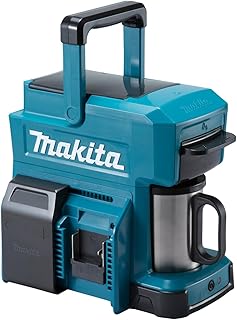
Makita coffee makers occupy a very specific niche: they are designed around the same cordless battery ecosystem used by many Makita power tools. That makes them particularly interesting for tradespeople, contractors, campers, mobile crews and anyone who already owns compatible Makita batteries. They are not intended to replace a full-size home coffee machine with a large reservoir, multiple brewing modes or espresso-focused features. Instead, the emphasis is portability, simple brewing and access to coffee where conventional mains power may not be convenient.
For Canadian buyers, the most important starting point is identifying the exact model. The Makita DCM501Z is currently listed by Makita Canada as an 18V LXT coffee maker and supports both 12Vmax CXT and 18V LXT lithium-ion battery platforms. Makita Canada lists a 240 ml tank, 190 W heater output on 12V and 300 W on 18V, with a tool-only configuration.
That distinction matters when comparing deals. A lower advertised price may represent the coffee maker only, while the compatible battery and charger may need to be purchased separately. Before considering any 2026 deal worthwhile, compare the complete setup cost rather than looking only at the headline product price.
A good buying decision depends less on the number of features and more on compatibility, intended location and how often the machine will be transported. Use the following criteria when comparing Makita coffee maker listings in Canada.
Battery compatibility should be the first checkpoint. The DCM501Z is designed for both 12Vmax CXT and 18V LXT lithium-ion batteries. This can be valuable for existing Makita users because the coffee maker can fit into an established cordless-tool ecosystem rather than requiring a completely separate power arrangement.
However, compatibility should never be assumed simply because a battery carries a Makita name. Check the exact battery platform identified by the manufacturer and the specific model listing. Also confirm whether your battery is included. The DCM501Z is a tool-only product, so batteries and chargers are sold separately.
Compact cordless coffee makers are designed for individual servings rather than large groups. The DCM501Z has a 240 ml water tank, making it better suited to a single compact serving than repeated family-size brewing. Makita's specifications also describe the machine as capable of brewing a 5 oz cup in approximately five minutes when powered by an 18V LXT battery.
Capacity should therefore be judged against your routine. If you normally prepare one cup during a work break, a compact battery coffee maker can make sense. If several people need coffee at the same time, a conventional larger coffee machine may be more practical.
The attraction of a cordless Makita coffee maker is the ability to brew without depending on a conventional kitchen outlet. That can be useful on jobsites, remote work areas, campsites and other locations where portable power is valuable.
At the same time, battery operation introduces a consideration that is easy to overlook: brewing consumes battery capacity. If the same battery is also needed for a drill, impact driver, saw, light or other tool, coffee preparation becomes another demand on your battery inventory.
Many Makita products are sold as tool-only configurations, and coffee makers are no exception. The DCM501Z listing specifies that the battery and charger are not included, while accessories such as a filter, stainless cup, mug lid and measuring spoon are identified as included items.
This makes a tool-only purchase most attractive to buyers who already own compatible batteries and a charger. For someone starting from scratch, the apparent saving can disappear once the required battery and charger are added.
The DCM501Z is the key Makita cordless coffee maker to investigate when comparing current Canadian listings. Makita Canada identifies it as an 18V LXT coffee maker with compatibility for 12Vmax CXT and 18V LXT lithium-ion batteries.
These specifications demonstrate why the DCM501Z should be evaluated as a portable specialty appliance rather than a conventional countertop coffee machine. Its compact capacity and battery-oriented design prioritize mobility over high-volume brewing.
One useful feature of the DCM501Z is its permanent drip filter. Makita states that the filter can be used with coffee grounds or compatible single-serve coffee pods without requiring an additional paper filter.
For mobile use, eliminating disposable paper filters can simplify packing. There is also less consumable equipment to remember when preparing for a jobsite or outdoor trip. However, a permanent filter still needs to be cleaned regularly, and buyers should follow the manufacturer's instructions for removing, washing and reinstalling the relevant components.
The ability to accommodate coffee grounds and a single-serve format gives the DCM501Z additional flexibility. Your preferred option depends on convenience, availability and how you normally prepare coffee.
Buyers should always check the manufacturer's instructions for compatible pod formats rather than assuming every type of coffee capsule will fit.
A portable appliance containing heated water needs appropriate safety features. Makita lists boil-dry protection on the DCM501Z, which automatically shuts the unit off if the water level is too low.
The manufacturer's manual also provides specific warnings about hot surfaces, steam and hot coffee remaining capable of causing burns after the brewing cycle. It instructs users not to remove the filter holder or pod holder during brewing because steam can build up underneath.
These instructions are especially important on construction sites, where uneven surfaces, gloves, crowded work areas and hurried breaks can increase the chance of accidental contact with hot liquid. Place the coffee maker on a stable, level surface and keep the brewing area away from children and unnecessary foot traffic.
The strongest argument for a Makita coffee maker is convenience rather than sophisticated coffee preparation. A tradesperson who already carries Makita batteries may be able to use the same battery ecosystem for both tools and coffee preparation.
This can be particularly useful in locations such as:
The integrated carrying handle further supports portability. Makita lists this as one of the product's convenience features.
The right choice depends heavily on the environment. A traditional mains-powered coffee maker generally makes more sense for a fixed kitchen or office where electrical power and a larger water supply are readily available. A Makita cordless model is more compelling when portability is the priority.
Buyers searching for discounted Makita coffee makers may encounter older DCM500Z listings. This is an important distinction when evaluating clearance inventory or older marketplace pages.
Makita identifies the DCM500Z as discontinued and lists the DCM501Z as its replacement model.
That means an older DCM500Z listing should not automatically be treated as equivalent to a current DCM501Z listing. Check the model number, included accessories, battery compatibility, condition and seller information before purchasing.
A discontinued product can sometimes appear attractive because of a reduced listing price. However, price alone does not establish better value. Consider whether the product is new, open-box, refurbished or used; whether the required accessories are present; and whether the listing clearly identifies the exact model.
For an independent buying decision, compare the complete package rather than simply selecting the oldest product with the lowest advertised price.
If you already own Makita cordless tools, the battery platform may be the deciding factor. The DCM501Z is compatible with 12Vmax CXT and 18V LXT lithium-ion batteries.
If you are buying a battery specifically for the coffee maker, consider the wider role that battery could play in your tool collection. A battery that can also operate other compatible tools may provide more long-term value than one purchased solely for occasional coffee brewing.
Battery capacity influences how much energy is available for cordless equipment. However, battery capacity should not be translated into an exact number of coffee cups unless the manufacturer provides a specific figure for the exact battery, operating conditions and brewing method.
Temperature, battery condition, battery capacity, operating history and the selected voltage platform can all affect real-world performance. Avoid buying based on an unsupported claim such as a guaranteed number of cups per charge unless that figure is clearly documented by the manufacturer.
The phrase "tool only" can be misleading to buyers who are unfamiliar with cordless power-tool ecosystems. It does not mean the product is incomplete or defective. It normally means the main tool is supplied without a battery and charger.
For the DCM501Z, Makita Canada explicitly identifies the configuration as tool only and states that batteries and charger are sold separately. The listed package includes the filter, stainless cup, mug lid and measuring spoon.
Always inspect the individual retailer listing because package contents can vary between product bundles, regional configurations and used or open-box listings.
Do not assume that every Makita battery will fit every Makita cordless appliance. Check the exact supported platform before ordering.
A tool-only coffee maker and a package containing a battery and charger are not directly comparable. Calculate the complete ownership cost before deciding which deal is better.
A compact cordless coffee maker is designed around portability. It is not a substitute for a large-capacity kitchen machine simply because both products brew coffee.
A 240 ml tank is compact. If several people expect coffee at the same time, the need for repeated filling and brewing can make a larger machine more appropriate.
A large percentage discount does not necessarily represent the best value. Compare the final price, product condition, model number, package contents, battery requirements and retailer reputation.
Portable appliances still require routine cleaning. Coffee residue, water deposits and moisture should not be ignored simply because the appliance is designed for outdoor or jobsite use.
Older product pages can remain searchable after a model has been replaced. Verify the exact model number and current product status before purchasing.
When searching for the best Makita coffee maker deals in Canada in 2026, use a structured comparison instead of relying on a single advertised price.
The DCM501Z is most compelling for buyers who value the combination of portability and battery compatibility. A contractor already carrying Makita LXT batteries, for example, may find the cordless design more useful than a conventional appliance that requires an electrical outlet.
It can also appeal to campers and outdoor users, provided the operating environment, electrical safety requirements and manufacturer's instructions are followed. Buyers should not treat a jobsite-oriented design as permission to use the appliance in conditions that the manufacturer's instructions prohibit.
There are equally valid reasons to choose something else.
Routine maintenance is particularly important when a coffee maker is used in dusty workshops or construction environments. Keep the appliance away from excessive dust, debris and moisture that could interfere with its operation.
Follow the manufacturer's cleaning instructions for the water tank, filter, holder and other removable components. The DCM501 manual instructs users to clean removable parts and run fresh water through the appliance before initial use to clear manufacturing residue.
If the coffee maker will not be used for an extended period, clean and dry the removable components before storage. Store the appliance in a clean, dry location and follow the battery manufacturer's recommendations for battery storage rather than leaving a battery installed unnecessarily.
Jobsite conditions require more planning than a normal kitchen environment. Select a stable location away from edges, moving equipment and electrical hazards. Keep the water and brewing area organized, particularly when multiple workers are using the same break area.
The compact design is an advantage, but compact does not mean indestructible. Avoid dropping the appliance, exposing it to inappropriate weather conditions or using it outside the operating instructions.
Makita is not the only power-tool manufacturer associated with specialty cordless lifestyle equipment. Buyers may also encounter products from brands such as Milwaukee, DeWalt, Bosch, Ryobi and other manufacturers offering battery-powered appliances, coolers, lighting products or jobsite accessories.
The key comparison is not simply which brand name is more familiar. Compare the battery ecosystem you already own, the appliance's intended purpose, technical specifications, package contents and long-term usefulness.
Battery compatibility should remain the primary criterion. Mixing brands solely because one appliance appears cheaper can result in buying another battery and charger, reducing the apparent savings.
Customer reviews can be useful, but the most helpful approach is to look for recurring patterns rather than relying on one extremely positive or negative comment.
When evaluating reviews for a cordless coffee maker, pay attention to comments about:
Do not treat a reviewer's personal battery runtime, brewing quantity or usage environment as a guaranteed specification. Individual results can vary significantly.
The best Makita coffee maker deal is not necessarily the lowest-priced listing. Value depends on what you receive for the money and whether the product fits your existing equipment.
For an existing Makita user with compatible batteries and a charger, a tool-only coffee maker may have a very different value proposition than it does for someone starting a new battery platform.
Consider these five cost categories:
Looking at the complete ownership picture provides a more useful comparison than judging a deal from its advertised discount alone.
Canadian shoppers should pay attention to the exact Canadian product listing rather than relying exclusively on specifications from another country's website. Product configurations, model availability, retailer inventory and pricing can differ by market.
Makita Canada maintains Canadian product information for the DCM501Z and identifies it as a current coffee maker model. Canadian retailers may list the same product with their own SKU, package information and pricing, so the model number is a useful reference when comparing listings.
A Makita cordless coffee maker is worth considering if your priorities align with its strengths.
Consider another type of coffee maker if you need large-volume brewing, sophisticated drink preparation, extensive automation or a permanently installed kitchen appliance.
It may also be a poor financial choice for someone who owns no compatible Makita battery equipment and has no interest in purchasing additional cordless tools. In that situation, a conventional compact coffee maker could potentially provide the required function without requiring investment in a new battery ecosystem.
For August 2026 shopping, treat current prices and availability as dynamic information. Retailer inventory can change, promotional pricing can expire and older listings can remain visible after a model has been replaced.
A sensible process is to identify the correct model first, establish the required battery platform, calculate the complete purchase cost and then compare reputable Canadian retailers. Check today's price immediately before purchasing rather than relying on an older price shown in an editorial guide.
No. Makita Canada identifies the DCM501Z as a tool-only product, with the battery and charger sold separately.
Makita Canada lists compatibility with 12Vmax CXT and 18V LXT lithium-ion batteries.
The listed tank capacity is 240 ml.
The DCM501Z uses a permanent drip filter, so Makita states that additional paper filters are not required.
Makita identifies the DCM500Z as discontinued and lists the DCM501Z as its replacement.
It can be used where appropriate, but its compact cordless design is especially useful where portability matters. For a fixed kitchen, a conventional countertop coffee maker may provide greater capacity and more features.
Its cordless design can make it appealing for portable use, but users should follow the manufacturer's operating instructions and safety requirements and should not assume that a cordless appliance is suitable for every outdoor environment.
Compare the exact model, condition, included accessories, battery requirements and complete ownership cost. A tool-only listing should not be compared directly with a bundle containing a battery and charger.
The strongest reason to choose a Makita coffee maker is its combination of portability and cordless battery compatibility. The DCM501Z is especially relevant to Canadian buyers already invested in Makita's 18V LXT or 12Vmax CXT platforms. Its 240 ml capacity, permanent filter, removable water tank, boil-dry protection and compact design make it a specialized solution for individual coffee preparation rather than a high-capacity household machine.
Before buying, verify the exact model number, check whether the listing is tool-only, confirm your battery compatibility and calculate the total cost of the setup. If you find an older DCM500Z listing, remember that Makita identifies it as discontinued and names the DCM501Z as its replacement.
For the best 2026 buying decision, prioritize fit over hype: choose the machine that matches your battery ecosystem, brewing volume, portability requirements and intended environment. Then compare current Canadian retailer prices, verified customer feedback and the latest manufacturer specifications before placing an order.
The Makita DCM501Z is the key current model to investigate because Makita Canada lists it as an 18V LXT coffee maker with 12Vmax CXT and 18V LXT compatibility. The right choice still depends on your battery platform, capacity needs and budget.
You can use an existing battery only if it belongs to a battery platform supported by the exact coffee maker model. For the DCM501Z, Makita identifies 12Vmax CXT and 18V LXT compatibility.
Makita Canada's DCM501Z listing identifies a Makita stainless cup and mug lid among the included items, along with the filter and measuring spoon. Always check the individual listing before purchase because package contents should be confirmed at the point of sale.
Yes, portability is one of its intended advantages. Makita lists a carrying handle, compact dimensions and a relatively low tool-only weight.
Makita lists boil-dry protection that automatically shuts the unit off when the water level is too low.
It depends on your priorities. If cordless portability is important, it may still be attractive. However, if you need to buy a battery and charger specifically for coffee preparation, compare the complete cost with standalone portable coffee makers before deciding.
Its 240 ml tank is designed around compact individual brewing, so it is better suited to personal use than high-volume group preparation.
Check the model number, condition, included accessories, battery requirements, current manufacturer status and seller information. A discounted older model is not automatically a better purchase than the current replacement model.
Clean it according to the manufacturer's instructions and after use as appropriate for the brewing components. The DCM501 manual specifically addresses cleaning removable parts and initial flushing before normal use.
Neither category is universally better. Makita's advantage is cordless portability and battery-platform compatibility. Conventional coffee makers generally make more sense when capacity, household convenience and countertop features are the priority.