

♥ Wishlist
Compare 48 Jewelry Boxes & Jewelry Armoires products in Canada. Reviews, ratings, pros, cons and buying advice updated for October 2026.


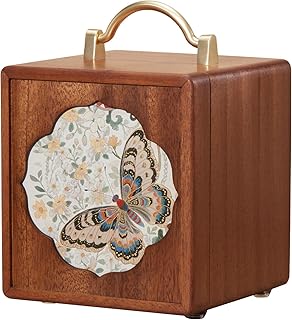


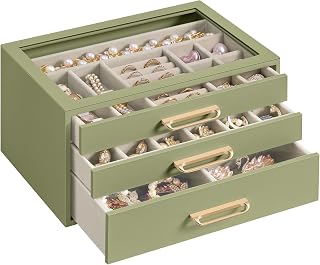


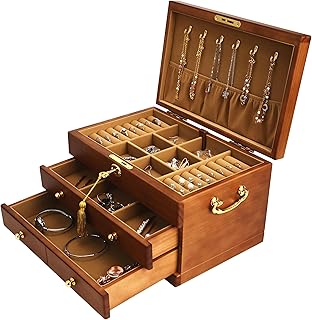


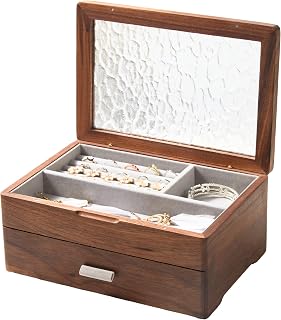

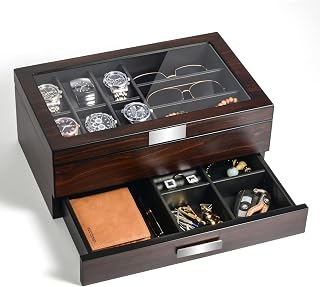
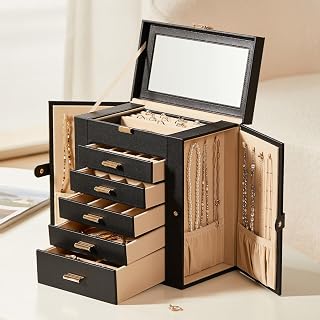


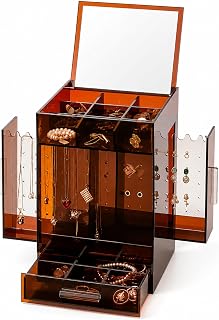
Choosing a jewelry box or jewelry armoire is not simply about finding an attractive storage cabinet. The right organizer should protect delicate pieces, make frequently worn jewelry easy to find, use available space efficiently and suit the type and quantity of jewelry you own. In Canada, shoppers can find compact organizers for small collections, larger armoires for extensive collections, travel-friendly cases, mirrored cabinets and multi-compartment boxes in a wide range of designs.
This 2026 buying guide focuses on the features that matter when comparing jewelry storage products. Instead of judging an organizer only by appearance, consider its construction, compartment layout, lining, accessibility, capacity, dimensions, security features, installation requirements and suitability for different types of jewelry.
A jewelry box is generally a compact storage solution designed to sit on a dresser, vanity, shelf or tabletop. Jewelry boxes are useful when portability and space efficiency are priorities. They commonly include ring rolls, small compartments, drawers and sections for necklaces, bracelets and earrings.
A jewelry armoire is a larger storage unit designed to hold a more extensive collection. Many models are freestanding, while others are designed for wall mounting or placement over a door. Jewelry armoires may include multiple drawers, side compartments, necklace hooks and a full-length or partial mirror.
The best choice depends on how much jewelry you own, where you intend to keep it and how frequently you access individual pieces.
Two jewelry organizers can look almost identical in photographs while offering very different storage capabilities. Before making a purchase, compare the internal layout rather than focusing solely on the exterior finish.
A well-designed jewelry organizer should provide dedicated spaces for different categories of jewelry. Small compartments are useful for earrings, rings and individual pieces, while larger sections can accommodate bracelets, watches and accessories.
Look for a layout that reflects your actual collection. An organizer with dozens of tiny compartments may be inconvenient if you mainly own necklaces and bracelets. Conversely, a large open drawer may waste space if you have many rings and earrings.
Necklaces require particular attention because chains can become tangled when stored together. Jewelry armoires frequently use hooks, pegs or individually separated hanging areas to keep necklaces apart.
When comparing models, check the number of necklace hooks and the available vertical space. Longer necklaces may require more clearance than short chains. A storage design that keeps each necklace separated can reduce the time spent untangling jewelry.
Ring rolls consist of closely spaced slots designed to hold rings upright. They can also provide convenient visibility when selecting a ring.
Check the number of slots and whether the spacing accommodates your collection. If you own larger statement rings, unusually wide bands or other bulky pieces, very narrow ring slots may not be practical.
Earrings can easily become separated from their backs or mixed with other small accessories. Dedicated earring slots, holes or removable trays can make them easier to organize.
Consider whether the organizer is designed primarily for studs, dangling earrings, hoops or a mixture of styles. The most useful layout is one that matches the jewelry you actually wear.
Drawers are valuable for bracelets, watches, brooches, hair accessories and larger jewelry pieces. However, drawer count alone does not indicate useful capacity.
Compare drawer height, width and depth. Shallow drawers can be excellent for small jewelry, while deeper compartments may be more versatile for bulky accessories.
The material used for a jewelry organizer affects its appearance, durability, weight and maintenance requirements. Common construction materials include engineered wood, MDF, solid wood, metal, plastic, acrylic and combinations of several materials.
Wooden and wood-look jewelry armoires can complement traditional, contemporary and bedroom furniture. Engineered wood can provide a consistent finish while keeping the construction relatively practical for furniture-style organizers.
Inspect the joints, drawer construction, hinges and surface finish rather than assuming that a wood appearance automatically indicates premium construction.
Metal may be used for hinges, drawer hardware, necklace hooks, clasps and structural components. Strong hardware can improve usability, particularly on an organizer that will be opened frequently.
Check whether doors and drawers operate smoothly and whether the hardware appears appropriately sized for the organizer.
Glass or acrylic panels can make jewelry easier to see and may contribute to a display-oriented design. However, transparent components can require more frequent cleaning because fingerprints and dust are more visible.
A soft interior lining can help separate jewelry from harder surfaces. Velvet-like, felt-like and other fabric interiors are common in jewelry storage products.
When comparing lining materials, look for secure attachment and consistent coverage. Loose fabric, exposed hard surfaces or poorly finished edges can reduce the overall quality of an organizer.
Capacity should be measured according to your current collection and likely future needs. Buying an organizer that is already full when you receive it can make organization difficult, while an excessively large armoire can consume valuable bedroom space.
Leave some spare capacity whenever possible. Extra space makes it easier to add new pieces without forcing different jewelry categories into the same compartment.
One of the most common buying mistakes is choosing a jewelry organizer based only on its photographs. Furniture and storage products can appear compact online but require substantially more space when doors or drawers are opened.
Measure the intended location before comparing models. For a countertop jewelry box, measure the available width, depth and height. For a freestanding armoire, also consider the surrounding walking area and whether drawers can open fully.
For wall-mounted or over-the-door jewelry cabinets, check the mounting area, door clearance and installation requirements. Always compare the manufacturer's stated dimensions with your available space rather than estimating from product photographs.
Freestanding armoires are suitable when you want a dedicated jewelry storage station without using wall or door mounting hardware. They can offer substantial internal capacity and may incorporate mirrors, drawers and side compartments.
The main consideration is stability. A taller storage unit should have an appropriate footprint and construction for its intended placement. Check assembly instructions and any included stability or anchoring requirements before installation.
Wall-mounted organizers can save valuable dresser and floor space. They are particularly useful in smaller bedrooms, dressing areas and apartments where surface space is limited.
However, installation requirements matter. Before choosing a wall-mounted model, consider the wall construction, mounting hardware, cabinet weight and the location of studs or other suitable fixing points. Follow the manufacturer's installation instructions and use hardware appropriate for the wall type.
Over-the-door designs make use of otherwise unused vertical space. They can provide considerable storage without occupying a dresser or floor area.
Check door thickness compatibility, clearance around hinges and the organizer's overall depth. A deep organizer may interfere with furniture or narrow walkways when the door is opened.
A mirrored jewelry armoire can combine two functions in one piece of furniture. The exterior mirror can be useful for dressing, while the interior provides dedicated jewelry storage.
This design is particularly practical when bedroom space is limited. Nevertheless, compare mirror size, viewing angle, internal capacity and overall dimensions. A large mirror does not compensate for inadequate jewelry storage if the internal layout does not suit your collection.
Some jewelry organizers include locks, keys or other basic access-control features. These can discourage casual access, but shoppers should not automatically treat a decorative jewelry box as a high-security safe.
If the jewelry being stored has significant financial or sentimental value, consider the difference between organization and security. A locking compartment may provide privacy and convenience, while dedicated security equipment may be more appropriate for valuable items.
Do not rely solely on a small built-in lock when determining how to protect high-value jewelry. Consider the organizer's construction, placement and the broader security of the room or home.
A jewelry organizer should reduce friction rather than create another storage problem. The best layout lets you identify individual pieces quickly without moving an entire collection.
Think about your daily routine. If you wear earrings every morning, keep them in easily accessible sections. If necklaces are worn less frequently, they can be stored in dedicated hanging areas farther from the primary access zone.
Transparent sections, labeled categories and removable trays can further improve visibility. Organization becomes especially important when the collection contains many visually similar pieces.
Limited living space does not necessarily require sacrificing organized jewelry storage. Vertical solutions can make better use of available room than wide countertop boxes.
For compact spaces, dimensions and accessibility are often more important than maximum theoretical capacity.
Large collections benefit from categorization. Instead of selecting a product simply because it has the highest compartment count, look for a combination of hanging storage, drawers, ring rolls and open compartments.
A large jewelry armoire can be particularly useful when you own different jewelry categories. Dedicated sections can prevent necklaces, rings, earrings, bracelets and watches from becoming mixed together.
Before buying, estimate how much storage each category requires. This helps you determine whether the internal layout is genuinely suitable rather than relying on a single advertised capacity figure.
A travel jewelry case serves a different purpose from a permanent jewelry box. Travel cases prioritize compactness, portability and secure organization during transportation.
For travel, consider a case with separated compartments, secure closures and enough padding for the jewelry you intend to carry. For everyday home storage, capacity and accessibility generally become more important.
If you travel frequently, keeping a smaller travel case alongside a larger home organizer can be more practical than repeatedly transferring jewelry between storage systems.
Style should complement the room, but it should not override functional requirements. Common options include traditional wooden boxes, contemporary mirrored cabinets, minimalist organizers, fabric-lined cases and furniture-style armoires.
Brands such as SONGMICS, Vlando, Glenor Co., Hives and Honey, mDesign and Nicetree are among the names shoppers may encounter when researching jewelry storage products. Availability, specifications and individual product quality can vary by model, so compare the exact product rather than relying solely on brand recognition.
When shopping through Amazon Canada or another trusted retailer, evaluate each product using the same criteria. This creates a more meaningful comparison than simply sorting by price or star rating.
Customer reviews can provide useful information, but they should be interpreted alongside the manufacturer's specifications. Look for repeated observations rather than relying on one unusually positive or negative comment.
Pay particular attention to comments concerning drawer alignment, hinges, assembly, material quality, stability, odor, compartment sizing and long-term usability. Reviews that include photographs can also help you understand the actual scale of a product.
Be cautious when comparing products solely by average star ratings. A high rating does not necessarily mean an organizer is suitable for your particular collection.
A beautiful jewelry box can still have an inconvenient internal layout. Always inspect the compartment arrangement and dimensions before purchasing.
Short hooks may work well for chains but become frustrating for longer necklaces. Measure or estimate the length of your most demanding pieces before selecting an armoire.
A product can advertise multiple drawers while offering limited usable space. Compare actual drawer dimensions whenever they are provided.
A very large organizer may occupy unnecessary space if your collection is small. Choose capacity based on realistic current and near-term needs.
Measure the surrounding area, not just the footprint. Doors and drawers need enough clearance to operate comfortably.
A small jewelry box lock is primarily an access-control feature. It should not automatically be considered equivalent to a security safe.
Furniture-style armoires may require assembly. Check the product description for assembly requirements, included hardware and installation instructions before ordering.
Regular maintenance helps keep an organizer attractive and functional. Dust exterior surfaces with a suitable soft cloth and follow the manufacturer's care instructions for wood finishes, mirrors, metal hardware and fabric interiors.
Avoid applying cleaning chemicals directly to jewelry compartments unless the manufacturer specifically permits them. Moisture can also be problematic for some materials, so keep the interior dry and allow any damp surfaces to dry completely.
The most effective organization system is one you will continue using. Group pieces according to how you actually select them rather than following an arbitrary storage method.
Choose a jewelry box if you have a relatively small collection, limited space or a preference for portable tabletop storage. A jewelry armoire becomes more attractive when your collection has expanded to multiple categories and requires dedicated hanging and drawer space.
A mirrored armoire can be useful if you want jewelry storage and a dressing mirror in one piece. A wall-mounted cabinet can make sense when floor and dresser space are limited. A travel case is preferable when portability is the primary requirement.
The lowest-priced option is not necessarily the best value, and a higher price does not automatically indicate superior construction. Evaluate what you receive for the cost.
Compare material quality, usable storage, hardware, compartment design, dimensions, assembly requirements and security features. A slightly more expensive organizer can be better value if it provides a substantially more suitable layout and construction for your collection.
Before purchasing, compare current prices from trusted Canadian retailers and review the exact specifications of the model being considered. Prices and availability can change throughout 2026.
Use the following checklist when narrowing down the best jewelry boxes and jewelry armoires available in Canada:
The best jewelry box depends on the size of your collection, available space, jewelry types and preferred storage layout. A compact box may be ideal for a small collection, while a larger armoire can be more appropriate for extensive collections.
Neither is universally better. Jewelry armoires generally provide more storage and organization, while jewelry boxes are usually more compact and easier to place on a dresser or vanity.
Focus on sturdy construction, suitable dimensions, useful compartment layouts, necklace hooks, ring storage, earring organization, adequate drawer capacity, quality hardware and an interior finish suitable for jewelry storage.
They can be very practical because they combine jewelry storage with a mirror. They are particularly useful when space is limited, provided the mirror size and internal storage meet your requirements.
There is no universal ideal number. The useful number depends on your collection. Quality of layout matters more than raw compartment count because oversized or undersized sections may not suit your jewelry.
A storage system with individual necklace hooks and enough vertical clearance is generally more convenient than placing multiple necklaces together in a drawer or open compartment.
A soft lining can provide a suitable separation between jewelry and the storage surface. However, the overall construction, cleanliness, compartment design and manufacturer's care instructions should also be considered.
A lock can provide basic privacy and discourage casual access, but decorative jewelry boxes should not automatically be treated as high-security safes. For particularly valuable jewelry, consider more appropriate security measures.
Choose a size that fits the available room while providing enough capacity for your jewelry categories. Measure the installation area and check the product's full external dimensions, including clearance needed to open doors and drawers.
Assembly requirements vary by product. Some organizers arrive mostly assembled, while furniture-style armoires may require more extensive assembly. Always review the stated assembly requirements before ordering.
Compare individual products rather than relying solely on brand reputation. Examine construction materials, dimensions, internal layout, hardware, customer feedback and the features that matter most for your collection.
They can be worth considering when the product specifications, customer feedback and current price align with your requirements. Compare the exact model, not just the product title or promotional discount, and verify the current listing details before purchasing.
The smartest way to choose a jewelry box or jewelry armoire is to start with your collection rather than the product's appearance. Identify what you own, determine which pieces need hanging storage, measure the available space and then compare organizers using the same criteria.
For shoppers in Canada, pay particular attention to the exact product specifications, current availability, dimensions, assembly requirements and verified customer feedback. Brands such as SONGMICS, Vlando, Glenor Co., Hives and Honey, mDesign and Nicetree may appear during your research, but the individual product's design and specifications should ultimately determine whether it is suitable.
A well-chosen organizer should make jewelry easier to see, easier to access and easier to keep separated. Whether you need a compact jewelry box, a mirrored cabinet, a travel case or a full-size jewelry armoire, prioritize practical storage capacity, construction quality, appropriate dimensions and a layout that matches the way you use your collection.