

♥ Wishlist
Compare 13 Hemostatic Agents and Packing Materials products in Canada. Reviews, ratings, pros, cons and buying advice updated for October 2026.





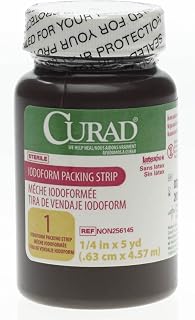


Choosing a hemostatic agent or wound-packing material requires more than comparing a product name, package size or advertised price. These products are designed for bleeding-control situations where the choice of material, application technique, packaging, storage conditions and intended use can all matter. For Canadian shoppers, it is also important to distinguish products intended for professional or emergency use from ordinary first-aid dressings.
This independent buying guide explains the features worth comparing when researching hemostatic agents and packing materials in Canada. Rather than treating one product as universally “best,” the right choice depends on the type of bleeding, intended user, training level, product instructions, storage environment and clinical or first-aid requirements.
Examples of established product families that shoppers may encounter include QuikClot, Celox and ChitoGauze. Their presence in a comparison does not mean that one brand is appropriate for every situation. Always review the current product labelling, intended use, instructions and Canadian regulatory status before purchasing or using a medical product.
Hemostatic agents are materials designed to support the body's ability to control bleeding. Depending on the product, they may work by promoting clot formation, concentrating blood components, providing a physical matrix for clotting, or using other mechanisms described by the manufacturer.
Packing materials are wound-care materials that can be placed into a wound when direct pressure over the external opening alone is not sufficient. In appropriate circumstances, wound packing can help apply pressure deeper within a wound. Some packing products incorporate a hemostatic agent, while others are plain gauze or wound-packing material.
These categories should not be treated as interchangeable. A plain gauze roll, a compressed gauze product and an impregnated hemostatic dressing can have very different intended uses and application requirements.
Plain gauze primarily provides a physical material for applying pressure, absorbing blood and, when appropriate, packing a wound. A hemostatic dressing may additionally contain a substance or material intended to assist clot formation.
The distinction is important when comparing products because a higher price does not automatically make a product suitable for every bleeding scenario. A shopper should first identify the intended application and then determine whether plain packing gauze, a hemostatic dressing or another type of wound-care product is appropriate.
Start with the manufacturer's stated intended use rather than the marketing description. A product designed for external bleeding may not be appropriate for every type of wound, and some products have specific restrictions regarding body sites or circumstances.
Read the packaging and instructions carefully. Look for information describing the intended user, wound type, application method, contraindications, storage conditions and disposal requirements.
When comparing packing materials, examine how the gauze is constructed. Woven gauze, non-woven materials and specialised fabric structures can behave differently during insertion, compression and removal.
A useful packing material should be practical to handle and should provide enough material for the intended application without making the package unnecessarily bulky. Compact packaging can be particularly useful for emergency kits where storage space is limited.
Package dimensions can be more meaningful than the headline quantity. A compact package may contain a relatively long length of material, while a larger-looking package may contain a different configuration.
Compare the actual dimensions and quantity stated by the manufacturer. If evaluating several products, record the length, width, folded dimensions and number of units rather than comparing package appearance alone.
For medical wound-care products, packaging integrity is critical. Check that individual packaging is sealed and undamaged and that the product has been stored according to the manufacturer's requirements.
A damaged, opened, wet, contaminated or otherwise compromised sterile package should not be treated as equivalent to an intact package. When purchasing online, examine the product description and packaging information carefully.
Emergency products should be easy to identify quickly. Clear labels, obvious product names, readable instructions and sensible packaging can make a practical difference when several first-aid products are stored together.
For emergency kits, avoid storing similar-looking products without labels. Organising supplies by function can reduce the time needed to identify the correct item.
Instructions should be understandable and specific. Some hemostatic products require direct pressure for a specified period or particular placement techniques. Others may have different preparation or removal instructions.
Do not assume that one hemostatic product can be applied exactly like another. Always follow the instructions supplied with the specific product.
Storage conditions are often overlooked when comparing emergency medical supplies. Temperature, humidity, sunlight, packaging integrity and shelf life can all affect whether a product remains suitable for use.
For Canadian emergency kits, consider where the kit will be stored. A product kept in a vehicle may experience environmental conditions that differ substantially from a product stored indoors. Follow the manufacturer's storage requirements rather than assuming that all wound-care products tolerate the same conditions.
Hemostatic gauze is designed to combine a fabric carrier with a hemostatic component. Its format can make it useful for situations where a material needs to be placed into or against a wound while pressure is applied according to the product instructions.
When comparing hemostatic gauze, consider the material's length, width, packaging, flexibility, visibility and manufacturer's instructions. A longer roll is not automatically better if it is difficult to handle or unsuitable for the intended kit.
Compressed gauze focuses on compact storage. This can be useful for emergency kits where space is limited. The most important comparison is not simply the physical size of the package but how much usable material it contains and how easily it can be deployed.
Plain packing gauze can be a useful component of a broader wound-care kit, but it should not be assumed to provide the same hemostatic function as a product specifically designed with a hemostatic agent.
Sponges have a different physical structure from rolls of gauze. They may be designed for particular wound-care applications and should be evaluated according to their specific intended use rather than general assumptions about hemostatic products.
Powders and granules can have different application characteristics from gauze-based products. Product-specific instructions are particularly important because the correct quantity, placement and subsequent wound management may vary.
If you are creating a shortlist of ten products, use the same criteria for every candidate. A consistent comparison makes it easier to distinguish genuine value from marketing claims.
Not all hemostatic products work in exactly the same way. Understanding the general mechanism can help shoppers read technical product information more intelligently.
Some hemostatic products use mineral-based materials designed to interact with blood and support clot formation. The exact material and mechanism depend on the product formulation.
When comparing products in this category, avoid relying on broad statements such as “fastest” or “strongest” unless the claim is supported by appropriate product information. Different laboratory conditions and clinical situations can produce different outcomes.
Chitosan is used in certain hemostatic products. Celox and some other specialist wound-care products are examples shoppers may encounter when researching chitosan-based hemostatic technology.
The presence of chitosan does not by itself establish that one product is superior for every situation. Compare the complete product specification, intended use and instructions.
Kaolin is another material used in certain hemostatic dressings. QuikClot is a widely recognised product family associated with kaolin-based hemostatic technology.
When evaluating kaolin-based products, look beyond the ingredient name. The carrier material, package configuration, application method, storage requirements and intended use are equally important purchasing considerations.
Shoppers researching established hemostatic products may encounter brands such as QuikClot, Celox and ChitoGauze. These names should be treated as starting points for product research rather than evidence that one brand is automatically the best choice.
Different versions within the same brand can have different specifications. Always compare individual product models instead of assuming that every item under a brand name has identical performance or application requirements.
The phrase “best hemostatic agent” is inherently dependent on context. A product that fits a trained responder's trauma kit may not be the right choice for a household first-aid kit. Similarly, the most compact package may not be the most appropriate option where a larger amount of packing material is required.
For a meaningful comparison, define what “best” means before ranking products. Useful criteria include:
This approach produces a more useful buying guide than assigning an arbitrary ranking based solely on brand recognition.
Medical products are often described using terms such as advanced, rapid, powerful, professional-grade or emergency-ready. Such wording can attract attention, but it does not provide enough information to determine whether a product is appropriate.
Instead, look for concrete details such as material composition, product dimensions, packaging configuration, intended use, application instructions, storage conditions and manufacturer information.
Where a product makes performance claims, shoppers should distinguish between manufacturer claims, regulatory information, independent evidence and user reviews. These sources do not carry the same evidentiary weight.
A “deal” should not be judged by the percentage discount displayed beside the product. The more useful calculation is the effective cost of the usable product.
For example, when comparing two packs, consider the number of individual units, the length of packing material, package configuration and whether the products have equivalent intended uses. A lower price for a smaller or substantially different product is not necessarily better value.
Before purchasing, compare:
Prices and retailer availability can change quickly. For August and September 2026 shopping research, verify the current listing details directly with the retailer before treating a displayed price as a current deal.
Canadian shoppers should pay attention to the regulatory information associated with medical devices. Depending on the product and its classification, relevant Canadian regulatory requirements may apply.
Health Canada is the appropriate authority to consult for current information about regulated health products and medical devices in Canada. When evaluating an unfamiliar product, check the manufacturer's information and applicable Canadian regulatory details rather than relying solely on an online marketplace description.
Regulatory status should not be confused with a guarantee that a particular product is appropriate for every individual or emergency. It is one part of responsible product evaluation.
A standard first-aid kit may contain adhesive bandages, ordinary gauze, antiseptic products, tape, gloves and other basic supplies. Hemostatic dressings and wound-packing materials serve more specialised purposes.
Consumers should therefore avoid building a medical kit solely around product popularity. The contents should match the intended environment, the users' training and the foreseeable emergency scenarios.
Having an advanced medical product does not automatically provide the knowledge needed to use it correctly. Some bleeding-control products are intended for use by trained personnel or by people who have received appropriate instruction.
If a product is purchased for an emergency kit, consider whether the intended users know how to identify severe bleeding, activate emergency medical services, apply direct pressure, use wound-packing techniques where appropriate and follow the specific instructions supplied with the product.
For serious bleeding, emergency medical assistance should be sought immediately. A hemostatic dressing should not be considered a replacement for professional medical care.
A well-known brand can be a useful starting point, but brand recognition does not eliminate the need to compare the specific product. Different versions can use different materials, package sizes and intended applications.
The cheapest package is not necessarily the best value. A lower-cost product may contain less material, have a different format or be intended for a different application.
Package size and usable material dimensions can vary significantly. Always check the manufacturer's specifications.
Emergency medical products can remain stored for long periods. Shelf-life information should therefore be part of the purchasing decision, particularly when building a kit intended for long-term storage.
Marketplace listings can sometimes omit important technical details. If the product description does not clearly identify the manufacturer, model, intended use and packaging information, consider researching the exact product elsewhere before purchasing.
Customer reviews can reveal useful information about packaging, delivery condition or ease of identifying a product. They cannot, by themselves, establish clinical effectiveness or suitability for a particular medical situation.
Different technologies and formulations can have different application requirements. Always follow the instructions for the exact product.
Reviews can be useful for commercial research, but they should be interpreted carefully for medical products.
Look for reviews that discuss objective purchasing details such as:
Be cautious about treating anecdotal claims of medical effectiveness as definitive evidence. Emergency outcomes depend on many variables, including the type and severity of bleeding, wound characteristics, application technique and time to professional treatment.
A bleeding-control kit should be designed around its intended environment rather than assembled from the most heavily advertised products.
Depending on the setting and the users' training, a kit may include appropriate wound dressings, packing materials, gloves, pressure dressings and other supplies. The exact contents should reflect the risks of the environment and applicable first-aid guidance.
For a vehicle kit, compact packaging may be particularly useful. For a workplace kit, training and organisational requirements may be more important. For professional responders, product selection may be governed by protocols, equipment standards and operational requirements.
Canadian drivers may keep emergency supplies in a vehicle, but storage conditions deserve particular attention. Vehicles can experience substantial temperature fluctuations, and some products have specific storage limits.
Before placing a hemostatic product in a vehicle kit, review the manufacturer's storage instructions. Keep packaging protected from moisture and physical damage, and periodically inspect the kit for expired or compromised supplies.
A household kit should prioritise products that household members understand how to use. Advanced bleeding-control equipment can be useful in appropriate circumstances, but it should not replace basic first-aid knowledge or access to emergency services.
Store medical supplies in a clearly identified location that adults can access quickly while keeping them away from children when appropriate. Periodically check package integrity and expiration dates.
Workplaces may have different requirements depending on the type of work performed, workplace hazards, jurisdictional requirements and available first-aid resources.
Employers and professional organisations should use appropriate occupational-health guidance and qualified training resources when determining what bleeding-control supplies are required. A consumer shopping guide should not be treated as a substitute for workplace risk assessment or formal medical protocols.
Before purchasing, identify the exact product name and model. Then review the following information:
If a listing does not provide enough information to make these comparisons, the product may not be suitable for an evidence-based buying shortlist.
These products have related but different roles. A hemostatic dressing may provide a material intended to support clotting, while a pressure dressing is designed primarily to maintain pressure over a wound.
In some emergency situations, products can be used as components of a broader bleeding-control approach according to their instructions. The appropriate technique depends on the wound and the specific product.
The effectiveness of a wound-care material cannot be separated completely from how it is used. Even a technically advanced product may not be appropriate if it is incorrectly selected, incorrectly positioned or used contrary to the manufacturer's instructions.
This is why a responsible buying guide should evaluate training, instructions and product design alongside material technology.
A good packing material should be evaluated according to the intended application. Useful characteristics may include adequate material length, manageable construction, appropriate packaging, clear instructions and compatibility with the intended wound-care protocol.
For emergency kits, compactness can also be important. A product that occupies less storage space may allow a kit designer to carry additional supplies, but compactness should never override suitability for the intended use.
If you are comparing ten hemostatic agents or packing materials, create a standard comparison framework. Each product should be assessed using the same criteria so that one brand does not receive an advantage simply because its listing provides more marketing information.
A questionable product listing may provide little information about the manufacturer or exact product model. It may use generic photographs, vague claims, incomplete dimensions or inconsistent package quantities.
For medical products, transparency is particularly important. If you cannot determine exactly what you are purchasing, it is difficult to make a meaningful comparison.
Prefer listings that clearly identify the product, manufacturer, specifications and intended use. When important information is missing, research the exact model before making a purchase decision.
Emergency medical supplies should not simply be purchased and forgotten. Periodic inspection can identify damaged packaging, expired products or supplies that have been exposed to unsuitable conditions.
No single price point determines suitability. A premium-priced product may offer a particular format or technology that is valuable for one application but unnecessary for another.
Conversely, a low-cost product should not be selected solely because it is inexpensive. Compare specifications, intended use, packaging, training requirements and regulatory information first.
Start with the scenario, not the product. Identify the environment, intended users and type of emergency kit. Then determine what category of material is appropriate.
Once the category is established, compare several products using identical criteria. Review the exact manufacturer's specifications and Canadian information, then compare current retailer pricing for equivalent products.
This process is more reliable than searching for a single universal “best” hemostatic agent.
Severe bleeding can be life-threatening. If someone has serious or uncontrolled bleeding, activate emergency medical services immediately and follow appropriate first-aid or emergency-response guidance. Do not delay professional medical care while comparing products or searching for supplies.
Use hemostatic agents only according to their specific instructions and intended use. Some wounds, body locations and medical situations require professional assessment rather than consumer-applied wound products.
This buying guide is intended for product research and does not replace first-aid training, medical advice, emergency instructions or professional clinical protocols.
There is no single product that is best for every user or bleeding situation. The appropriate choice depends on the intended use, product format, hemostatic technology, training level, packaging, instructions and applicable Canadian requirements.
No. QuikClot and Celox are different product families and may use different hemostatic technologies. Compare the exact product models, intended uses and instructions rather than assuming they are interchangeable.
Not universally. Hemostatic gauze is designed with a hemostatic component, while ordinary gauze primarily provides a physical dressing or packing material. The appropriate choice depends on the situation and intended use.
Product requirements vary. Some products may be designed for trained responders or specialised applications. Read the manufacturer's instructions and obtain appropriate training before relying on specialised bleeding-control products.
Shelf life varies by product and manufacturer. Check the expiration or shelf-life information printed on the specific package rather than assuming all products have the same storage period.
Only if the product's specified storage conditions permit the environmental conditions likely to occur in the vehicle. Canadian vehicles can experience substantial temperature and humidity changes, so always check the manufacturer's storage instructions.
Neither format is universally preferable. Compare the product's intended use, application method, training requirements and instructions. Gauze-based products and powders can have different application characteristics.
Look for an identifiable manufacturer and exact product model, clear specifications, intended-use information, package quantity, dimensions, storage information and relevant Canadian regulatory details. Avoid relying solely on promotional claims or star ratings.
No. Reviews can help evaluate purchasing and packaging experiences, but they should not be treated as a substitute for manufacturer information, regulatory information, clinical evidence or appropriate training.
Compare equivalent products using package quantity, usable dimensions, product format, intended use and current total cost. A percentage discount alone does not establish better value.
Suitability for the intended application is more important than any single feature. Dimensions, construction, packaging, instructions, storage requirements and user training should all be considered together.
The strongest approach to researching hemostatic agents and packing materials in Canada is to compare products on evidence and specifications rather than marketing language. Start by defining the intended application, then examine the exact product format, hemostatic technology, dimensions, packaging, instructions, storage requirements, shelf life and Canadian regulatory information.
Brands such as QuikClot, Celox and ChitoGauze may appear during product research, but brand recognition alone should never determine a medical purchasing decision. The exact product model and intended use matter.
For shoppers building an emergency kit, the best value is not necessarily the cheapest package or the product with the highest number of reviews. A sensible choice is one that fits the intended application, can be stored correctly, is clearly identified, comes with appropriate instructions and matches the training level of the people expected to use it.
Before buying, compare current specifications and retailer information carefully, verify the exact product being offered and check the manufacturer's instructions. For serious bleeding emergencies, seek professional emergency medical assistance immediately rather than relying on a consumer product guide.