

♥ Wishlist
Compare 48 Festool Plunge Saw products in Canada. Reviews, ratings, pros, cons and buying advice updated for October 2026.








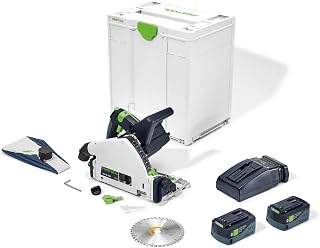


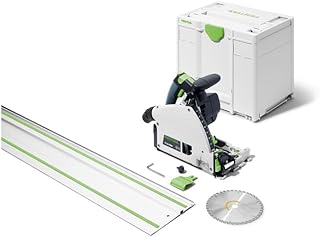


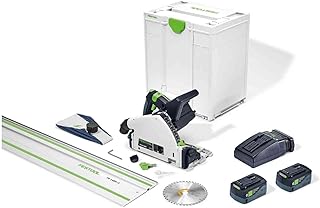

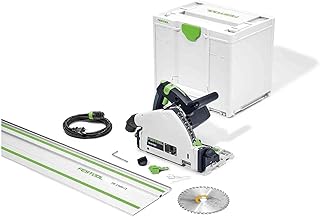
Choosing a Festool plunge saw is less about finding the cheapest tool and more about matching the saw, blade system, guide rail setup and power source to the work you actually do. Festool plunge saws are designed around controlled cutting, repeatability, dust management and compatibility with a wider workshop system, so the right model can be a significant investment for a professional workshop, renovation business, cabinetmaker, carpenter or serious DIY user.
For Canadian buyers in 2026, it is worth comparing the complete tool configuration rather than judging a deal by the headline price alone. A saw may be supplied as a basic tool, as a kit with a guide rail, or with additional accessories. Battery-powered versions also need to be considered alongside battery and charger costs if you are not already invested in the relevant Festool cordless platform.
This guide focuses on the buying decisions that matter when comparing Festool plunge saw options in Canada. It explains the differences between popular Festool plunge-saw families, how to evaluate cutting capacity, blade size, guide rails, dust extraction, power options and safety features, and which type of user each configuration is best suited to.
The exact configuration, package contents and retailer pricing can change, so buyers should always verify the current specification before ordering. The following options represent the main Festool plunge-saw configurations worth investigating rather than suggesting that one model is automatically best for every user.
The TS 55 family is one of the most important Festool plunge-saw ranges to consider when the work involves sheet materials, cabinetry, furniture components, doors, worktops and accurate straight cuts. Its appeal comes from the combination of a comparatively manageable form factor, plunge-cutting control and integration with Festool guide rails and dust-extraction equipment.
For many buyers, a TS 55 configuration can provide a better balance than automatically moving to the largest saw available. A smaller and lighter saw can be easier to control during repeated sheet-material cuts, particularly when the material is supported on a cutting table or insulated surface.
A plunge saw does not need to be the most powerful or deepest-cutting machine to be useful. For plywood, MDF, melamine-faced panels and many other sheet materials, controlled cutting and accurate guidance can be more valuable than maximum depth.
The TS 55 category is therefore particularly interesting when the majority of projects involve 12 mm, 18 mm or similarly sized panels. The exact cutting capacity depends on the model, blade, angle and setup, so specifications should be checked for the specific configuration being considered.
The TS 60 family deserves attention when the TS 55's cutting range does not provide enough headroom for your typical projects. It offers a useful middle ground for buyers who want more capability without immediately stepping up to a substantially larger plunge saw.
This category can make sense for professionals working across both sheet goods and thicker timber-based materials. It is also worth considering for renovation work where material thicknesses can vary considerably from one project to another.
The answer depends on your actual material thickness. If most of your work consists of cabinet panels and thin sheet goods, the additional capacity may not justify paying for a larger configuration. If you frequently cut thicker workpieces, however, additional depth can prevent the need to change tools or resort to alternative cutting methods.
Buyers should also consider handling. A larger-capacity saw can be an advantage for demanding applications, but a compact machine may feel more convenient when performing many repeated cuts in sheet material.
The TS 75 occupies a different position in the Festool plunge-saw range. It is primarily relevant to users who need significantly greater cutting depth and regularly work with thicker timber, panels or other substantial materials.
For professional users, the additional capacity can be valuable because it reduces the number of situations where a cut exceeds the capability of a smaller saw. However, buyers should not assume that a larger saw is automatically the better investment.
If your normal workload consists mainly of standard cabinet panels, a TS 55 or TS 60 configuration may be easier to handle. The TS 75 becomes more compelling when deep cutting is a recurring requirement rather than an occasional need.
Power source is one of the most important decisions when comparing current Festool plunge-saw deals. A corded saw can provide continuous operation without stopping to recharge batteries, while a cordless model can offer greater freedom of movement around a job site.
A cordless tool-only deal can look attractive until the cost of compatible batteries and a charger is added. Conversely, a kit containing batteries and a charger may appear more expensive but could represent better overall value for a buyer starting from scratch.
When comparing prices in Canada, calculate the complete working setup. Include the saw, required batteries if applicable, charger, guide rail, suitable blade and dust-extraction equipment if those items are not already available.
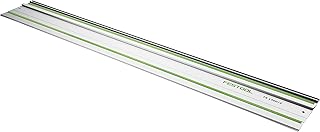
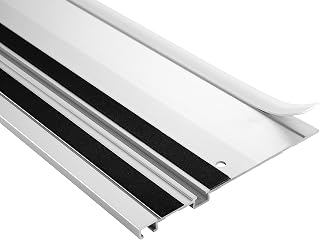
A Festool plunge saw is best understood as part of a guided cutting system rather than simply a circular saw with a plunge mechanism. The guide rail helps establish a straight cutting path and makes repeatable cuts considerably easier when the workpiece is properly supported.
Before buying a saw, check which rail configuration is included or required. A deal without a guide rail may be appropriate for an existing Festool user who already owns compatible rails, but it may be less attractive for a first-time buyer.
Longer rails can be useful for cutting full-size panels and large boards in one continuous pass. Shorter rails are easier to transport and can be more convenient for smaller components.
Some users benefit from owning multiple rail lengths rather than attempting to use one rail for every project. The ideal selection depends on the dimensions of the materials you normally cut and how easily you can transport and support the rail.
If a project requires a cut longer than one rail, compatible rail connectors can allow multiple sections to be joined. Accurate alignment becomes especially important because even a small deviation at the joint can affect the finished cut.
For professional work, it is worth treating guide rails as precision accessories. Protect their edges, keep them clean and store them so they are not bent or damaged.
The defining feature of a plunge saw is its controlled ability to enter the material at a selected point rather than requiring the blade to start at the edge of the workpiece. This makes plunge saws particularly useful for certain interior cuts, worktop applications, panel work and installation tasks.
Controlled plunging is also valuable when a cut must start at a specific location. However, the operator must still understand the material, blade type, cutting direction and support arrangement before making a plunge cut.
Cutting depth should be considered at both 90 degrees and angled settings where applicable. Tilting the saw generally changes the available cutting depth, so do not use the maximum advertised straight-cut capacity as a substitute for checking the specification at your intended angle.
Bevel capability can be important for carpentry, furniture construction, trim work and other applications where two components must meet at an angle. When comparing models, examine the available adjustment range, locking mechanism and ease of setting the desired angle.
The saw itself is only part of the cutting system. Blade selection has a major influence on the finish, cutting speed, material suitability and overall performance.
Fine-tooth blades are generally more appropriate when the visual quality of the cut is important. They can be particularly useful for finished panels, laminated boards and applications where reducing visible breakout is a priority.
Coarser tooth configurations can be preferable when faster material removal is more important than achieving the finest possible edge. The appropriate choice depends on the material and the desired finish.
Do not assume that one blade is ideal for every material. Wood, plywood, coated boards, composite materials and other products can have different cutting requirements. Always verify that the blade is intended for the material and saw configuration being used.
Dust management is an important reason many professionals choose a system-oriented plunge saw. Cutting wood-based panels can generate a significant amount of fine dust, particularly when working indoors.
A compatible dust extractor can help reduce airborne debris and keep the cutting area cleaner. Festool CT dust extractors are commonly considered alongside Festool power tools because they are designed as part of the wider Festool system.
Dust extraction should not be treated as a replacement for appropriate respiratory protection or safe working practices. Fine dust from certain materials can present health risks, so users should follow the manufacturer's safety guidance and applicable workplace requirements.
A high-quality plunge saw should be evaluated for more than cutting performance. Safety-related design features and operator controls are equally important.
Always read the current operating instructions for the exact model. A plunge saw is a high-speed cutting tool, and safe operation depends on correct setup, suitable blades, secure material support and appropriate personal protective equipment.
Make a list of the materials you commonly work with. If the answer is primarily plywood, MDF and laminated sheet goods, a compact precision-focused model may be more useful than a large deep-cutting saw.
If your workload includes thick timber and substantial components, cutting depth should move higher on your priority list.
Do not choose a saw based on the average thickness of your materials. Look at the thickest materials you regularly encounter and leave sensible working margin where appropriate.
At the same time, avoid paying for excessive capacity that you rarely use. A larger saw can add cost and bulk without providing meaningful value for a cabinetmaker who almost exclusively cuts standard panels.
Consider where the saw will be used. A permanent workshop setup often favours mains power, while a renovation contractor moving between rooms or properties may value cordless operation.
Compare the complete contents of each deal. Important differences can include the saw itself, guide rail, blade, batteries, charger, carrying case and other accessories.
If you already own Festool tools, batteries, guide rails, dust extractors or storage equipment, compatibility can significantly change which deal represents the best value.
Premium power tools should be evaluated over their expected working life rather than solely by initial purchase price. Factor in replacement blades, additional rails, batteries where applicable, dust-extraction accessories and other consumables.
More cutting depth sounds attractive, but additional capacity does not automatically translate into better performance for every application. A smaller saw may be easier to handle for repeated panel work.
A buyer may compare two saw prices and overlook the fact that one package includes a rail while the other does not. Since the rail is central to track-guided cutting, this can distort the value comparison.
A high-quality saw with an unsuitable or worn blade will not deliver the cutting results expected from the system. Budget for the blades appropriate to your materials.
A bare cordless tool and a complete corded setup are not necessarily equivalent purchases. Always compare complete working configurations.
Ratings can provide useful information, but they do not replace technical specifications. A highly rated compact saw may still be unsuitable if you need deeper cuts, while a larger model may be unnecessary for your projects.
Festool product families can contain different configurations, generations, power sources and package contents. Verify the precise model and included accessories before purchasing.
The terms plunge saw and track saw are often used interchangeably because a plunge saw is commonly used with a guide rail. The important distinction is that the plunge mechanism allows the blade to enter the workpiece at a controlled point.
For buyers, the practical question is not which label is better but whether the complete system provides the cutting control, capacity and accessories needed for the intended applications.
A standard circular saw can be an excellent general-purpose cutting tool, particularly for rough carpentry and construction work. A plunge saw, however, is designed around more controlled and guided cutting.
If your work involves cabinetry, furniture, worktops and precision panel sizing, the plunge-saw format can offer meaningful advantages. For rough framing and general site cutting, a conventional circular saw may be sufficient.
Festool is not the only manufacturer worth considering when researching precision cutting tools. Buyers may also encounter professional products from Bosch, Makita, DeWalt, Milwaukee and other established power-tool manufacturers.
The best comparison should focus on the complete ecosystem rather than a single specification. Consider guide-rail compatibility, battery platform, extraction equipment, accessory availability, blade options, ergonomics, service arrangements and the types of work you perform.
Makita offers a broad professional power-tool ecosystem and can be attractive to users who already own Makita batteries and accessories. Festool may be particularly appealing to buyers who prioritise an integrated precision-cutting, guide-rail and dust-extraction workflow.
Bosch has a substantial professional tool range and offers multiple solutions for woodworking and construction. Compare the specific saw and system rather than assuming brand-level differences automatically determine performance.
DeWalt is widely associated with professional job-site equipment and cordless tools. For a buyer already invested in DeWalt batteries, the total system cost can be an important consideration when comparing cordless cutting solutions.
Milwaukee's cordless ecosystem can be especially relevant to tradespeople who already use its battery platform. Buyers comparing a Festool cordless plunge saw with another professional cordless system should calculate the cost of batteries, chargers and accessories rather than comparing tool-only prices.
When several listings appear similar, use a structured comparison rather than choosing the first discounted-looking offer.
A lower price deserves closer examination when purchasing a premium power tool. Buyers should confirm that the listing identifies the exact model, clearly states whether the product is new or otherwise, and provides sufficient information about what is included.
It is also sensible to compare specifications against the manufacturer's current documentation before purchasing. Product images alone should not be treated as proof of the exact package contents.
When shopping through Canadian retailers or online marketplaces, look at the seller information, customer feedback, return conditions and product description. An attractive price is less useful if the listing does not clearly establish what you are receiving.
Two listings can use nearly identical photographs while containing different accessories. Check model identifiers, kit numbers and package descriptions before adding an item to your shortlist.
Cabinetmakers often benefit from precision and repeatability when processing panels. A guide-rail plunge-saw workflow can be useful for breaking down sheet goods before final machining and assembly.
Professionals performing installation work may value accurate cuts, controlled plunging and portable equipment. The ideal configuration depends on whether the work takes place primarily in a workshop or on changing job sites.
Renovation projects frequently involve cutting existing panels, doors, flooring materials and worktops. The ability to start a controlled cut at a defined position can be useful in situations where removing the entire component is impractical.
Furniture projects can demand clean and repeatable panel cuts. Blade selection, material support and guide-rail accuracy are especially important when the finished edge will remain visible.
A premium plunge saw can make sense for a DIY user who regularly builds furniture, cabinetry, workshops or home-improvement projects. For occasional cutting, however, the cost of the complete system may be difficult to justify.
Not every user needs a premium plunge-cutting system. If you only make occasional rough cuts in construction timber, a conventional circular saw may provide sufficient capability.
Likewise, if most of your projects involve small pieces that can easily be cut on a mitre saw, table saw or other existing equipment, a plunge saw may duplicate tools you already own.
The best buying decision is therefore based on workload rather than brand prestige. A premium tool is valuable when its features solve problems you regularly encounter.
Place the sheet or board on a stable cutting surface that supports the workpiece without interfering with the blade. The cut-off section should be supported appropriately so it does not pinch the blade as the cut progresses.
Align the rail carefully with the intended cut line. Make sure the rail remains stable during cutting and that the workpiece is not able to shift unexpectedly.
Adjust the depth according to the material and cutting requirements. Avoid treating maximum cutting depth as the default setting. Follow the manufacturer's instructions for the appropriate adjustment procedure.
Inspect the blade before starting work. A damaged, unsuitable or excessively worn blade can compromise cut quality and increase the difficulty of the operation.
Use a stable grip and controlled feed rate. Avoid forcing the saw through the material. Let the cutting system perform the work while maintaining appropriate control.
Cut quality depends on more than the saw's motor. Blade selection, material support, guide-rail positioning, feed speed and workpiece stability all contribute to the final result.
Remove accumulated dust and debris according to the manufacturer's cleaning instructions. Pay particular attention to areas around the base, blade housing, controls and extraction path.
Check the rail for damage, contamination and deformation. A damaged rail can affect accuracy even when the saw itself is functioning correctly.
Blades are consumable cutting components. Inspect them regularly and replace them when they are damaged, excessively worn or no longer appropriate for the required application.
The plunge mechanism, blade guard and adjustment controls should operate smoothly and correctly. If a safety-related component does not function as intended, stop using the tool and follow the manufacturer's service instructions.
Protect the saw, rails and blades from unnecessary moisture, impact and contamination. Proper storage is particularly important for long guide rails because bending or physical damage can affect cutting accuracy.
There is no single correct budget because the final cost depends heavily on the model and package configuration. A first-time buyer should think in terms of the cost of a complete system rather than the saw body alone.
For example, a basic tool may not include the guide rail, while a complete kit can include accessories that an existing Festool user does not need. Comparing the two prices directly can therefore produce a misleading conclusion about value.
For professional users, productivity and compatibility may be more important than achieving the lowest initial purchase price. For occasional DIY users, the opposite may be true.
A smart purchase is not necessarily the cheapest purchase. It is the configuration that provides the required cutting capacity, accuracy, mobility and system compatibility without paying for features that will rarely be used.
For a cabinetmaker, that might mean prioritising a manageable saw, high-quality blades and appropriate guide rails. For a renovation contractor, cordless flexibility may matter more. For a workshop working with thick timber, cutting depth can dominate the decision.
There is no universal best model. The TS 55 category is a strong starting point for precision panel work, the TS 60 category is worth considering when additional cutting capacity is needed, and the TS 75 category is more appropriate when deep cutting is a regular requirement.
It can be worthwhile for users who regularly need controlled, guide-rail-assisted precision cutting and can benefit from the broader Festool ecosystem. For occasional rough cutting, a less specialised circular saw may provide better value.
The TS 55 category is well suited to precision cutting applications involving sheet materials such as plywood when the appropriate blade, guide rail, material support and cutting setup are used. Check the blade specification for the particular plywood and finish required.
Not necessarily. The better choice depends on the application. A TS 60 configuration may be preferable when its additional capability is useful, while a TS 55 can be the more practical option for users who value a compact solution for predominantly panel-based work.
The TS 75 is designed for applications where greater cutting depth is important, making it a relevant option for users working with thicker materials. Always check the exact model specification and the required cutting depth for the intended material.
Choose corded operation when continuous workshop use and unlimited runtime are priorities. Choose cordless when mobility and freedom from mains cables are more important, particularly if you already own compatible batteries and a charger.
If you want to use the plunge saw as a precision track-guided cutting system, a compatible guide rail is a key part of the setup. Buyers should check whether the selected package already includes one.
Check the exact model, power source, cutting capacity, included blade, guide rail, battery and charger requirements, dust-extraction compatibility and complete package contents. Then compare the total cost rather than the advertised tool-only price.
Yes, particularly for serious DIY users who regularly build furniture, cabinetry, worktops or other projects requiring accurate sheet-material cuts. However, occasional users should consider whether the cost of the complete system is justified by their workload.
The saw can be operated according to its instructions without necessarily having a dust extractor connected in every situation, but dust management remains important. Follow the manufacturer's operating and safety guidance and use appropriate respiratory and workplace controls for the material being cut.
Select the blade according to the material and desired finish. Fine-tooth options can be useful for finished panels and clean edges, while other tooth configurations may be more appropriate for faster cutting or specific materials. Always verify blade compatibility with the exact saw.
If your projects involve different material sizes, multiple rail lengths can improve flexibility. A longer rail can simplify full-panel cuts, while shorter rails are easier to transport and handle for smaller components.
There is no universal replacement interval because blade life depends on material, cutting frequency, technique and blade type. Replace or service the blade when it becomes damaged, excessively worn or no longer delivers the required cutting performance.
The smartest way to compare Festool plunge saw deals in 2026 is to start with the work rather than the discount. Identify your normal material thickness, required cutting depth, preferred power source and guide-rail requirements before comparing individual listings.
For precision panel work, the TS 55 family is an important category to investigate. When additional cutting capability is required, compare TS 60 configurations. For demanding deep-cut applications, the TS 75 deserves attention. Cordless versions can make sense for mobile users, while corded models remain attractive for workshop environments where continuous operation is important.
Most importantly, compare complete configurations. A saw, guide rail, suitable blade, batteries where required and dust-extraction setup should be considered as one working system. This approach makes it easier to distinguish a genuinely useful deal from a low headline price that requires substantial additional spending.
Before purchasing, verify the exact model number, current manufacturer specifications, package contents, seller information, applicable Canadian pricing and current customer feedback. Product configurations and retailer offers can change during 2026, so the most useful buying decision is the one based on the current specification and your actual requirements.