

♥ Wishlist
Compare 23 DEWALT Cordless Caulking Guns products in Canada. Reviews, ratings, pros, cons and buying advice updated for October 2026.


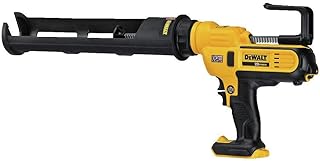


A cordless caulking gun can make a substantial difference when a project involves long seams, repeated applications, thick construction adhesives, or a large number of cartridges. DEWALT cordless models are particularly relevant to buyers who already use compatible DEWALT battery platforms and want to avoid the fatigue, inconsistent pressure, and slower workflow associated with manual caulking guns.
For Canadian buyers, the best choice is not necessarily the model with the highest advertised pushing force. The right cordless caulking gun depends on the material being dispensed, cartridge or sausage-pack format, required bead control, battery platform, application frequency, and the amount of cleanup you are prepared to perform. A professional applying construction adhesive throughout a renovation has different requirements from a homeowner sealing windows, trim, bathrooms, or exterior joints.
When comparing DEWALT cordless caulking guns, examine the complete dispensing system rather than focusing on one specification. Motor performance, variable-speed control, trigger response, anti-drip behaviour, thrust ratio, cartridge compatibility, plunger design, battery availability, tool balance, and replacement components can all affect the practical result.
Manual caulking guns are inexpensive and perfectly adequate for occasional light-duty work, but they require the user to generate dispensing pressure continuously. This becomes tiring when working with high-viscosity adhesives or when applying hundreds of metres of sealant.
A cordless model transfers much of that physical effort to the tool. Instead of repeatedly squeezing a mechanical trigger to advance the plunger, the user controls an electric drive system through the trigger. This can make it easier to maintain a consistent bead, particularly during longer applications.
Thrust ratio describes the mechanical advantage used to push material through the nozzle. A higher thrust ratio can be useful when dispensing thick materials, but maximum thrust is not automatically better for every application.
Very aggressive dispensing can make it harder to control a small bead with a low-viscosity sealant. Conversely, a tool that lacks sufficient pushing force can struggle with thick construction adhesive, especially in cold conditions. The ideal balance depends on the materials you intend to use.
When comparing models, look for the manufacturer's stated thrust specification and consider it alongside the intended material. Do not assume that a high thrust rating means the tool is suitable for every cartridge, sausage pack, or specialty compound.
Trigger control is one of the most important features for producing a clean finish. A good cordless caulking gun should allow the operator to regulate material flow rather than simply operating at one fixed dispensing speed.
Fine control is especially valuable around window frames, door trim, cabinetry, countertops, backsplashes, plumbing penetrations, and other areas where an oversized bead creates unnecessary cleanup.
When the trigger is released, continued pressure on the cartridge can cause sealant to keep flowing. Automatic pressure release or anti-drip functionality helps reduce unwanted material at the end of a bead.
This feature is particularly useful when working with fast-flowing sealants or when moving frequently between separate joints. However, anti-drip performance does not eliminate the need for correct technique. The nozzle should still be cut appropriately, and the operator should release the trigger before lifting the tool away from the surface.
One of the most important buying decisions is the type and size of material the tool can accept. Cordless caulking guns are not universally compatible with every packaging format.
Depending on the specific DEWALT model, a dispensing system may be designed around particular cartridge sizes or may support additional formats with the appropriate configuration. Always verify the manufacturer's current compatibility information for the exact model before purchasing.
Common packaging formats encountered in construction and renovation include standard cartridges, larger-volume cartridges, and sausage-style packs. A tool intended primarily for cartridges may not provide the flexibility required by a contractor who regularly switches between packaging formats.
Battery compatibility can be a major advantage when choosing a DEWALT cordless caulking gun. Buyers who already own compatible DEWALT batteries may prefer a tool-only configuration, while someone entering the battery platform may need to consider the complete kit.
Do not assume that every DEWALT battery is interchangeable with every DEWALT cordless tool. Confirm compatibility for the exact model and battery generation before purchasing.
Battery capacity also affects how convenient the tool is during a workday. A larger-capacity battery can provide longer runtime, while a smaller battery may reduce overall weight and make the tool easier to handle for detailed work.
DEWALT's 20V MAX platform is an important consideration for Canadian buyers comparing cordless tools. However, the phrase "20V MAX" should not be treated as the only specification that matters.
When comparing a 20V MAX cordless caulking gun, examine the complete package: the dispensing mechanism, thrust capability, speed control, compatible material formats, battery configuration, included accessories, and intended workload.
A contractor who already owns multiple compatible DEWALT tools may value platform compatibility more highly than a homeowner purchasing a single caulking gun. In contrast, an occasional user should consider whether the cost and storage requirements of a cordless platform are justified compared with a quality manual gun.
DEWALT uses several product and platform designations across its cordless range. Buyers should not select a caulking gun solely because it carries a familiar designation such as XR.
The exact specifications of an individual tool determine whether it is appropriate for a particular sealing or adhesive application. Always compare the model number and manufacturer's specifications rather than relying on a broad product-family name.
This is particularly important when shopping through Canadian retailers, where several closely related models may appear in search results with different kit contents, packaging formats, or included batteries.
The term "caulking gun" is often used broadly, but not every dispensing job involves conventional caulk. Many users also need to dispense construction adhesive, sealants, polyurethane products, hybrid polymers, or other materials.
Before purchasing, identify the materials you expect to use most frequently. Read the material manufacturer's dispensing recommendations as well as the tool manufacturer's compatibility information.
Cartridge capacity should be checked before purchasing because larger cartridges can significantly reduce the number of reloads required during a job. However, larger capacity also affects tool size and weight.
A buyer who primarily uses standard residential caulk may not benefit from selecting a tool designed around a larger dispensing format. A contractor performing extensive adhesive or sealant work may appreciate the ability to carry more material per load.
Never assume that a cartridge will fit simply because its volume appears similar to the specification in a product listing. Verify the exact cartridge dimensions, packaging type, and compatibility requirements for the model you are considering.
A useful comparison should consider more than customer ratings. Ratings can help identify common ownership concerns, but technical specifications determine whether a particular tool actually fits your application.
Ergonomics become increasingly important as the amount of sealant increases. A tool that feels manageable for a five-minute repair may become uncomfortable during several hours of repetitive application.
Look for a balanced design that keeps the cartridge and battery from creating excessive wrist strain. Trigger placement matters because the index finger may remain on the trigger for extended periods. Grip shape and surface texture can also affect control when wearing work gloves.
Weight is particularly important for overhead applications. Installing trim, sealing ceiling penetrations, or working around tall windows can require the tool to be held in awkward positions. A lighter battery may improve handling, provided its runtime is sufficient for the task.
Canadian weather creates a consideration that is easy to overlook: material viscosity changes with temperature. Many sealants and adhesives become more difficult to dispense when cold.
A cordless caulking gun may provide substantially more mechanical assistance than a manual gun, but the tool cannot change the application requirements of the material itself. Always follow the sealant or adhesive manufacturer's temperature, storage, surface-preparation, and curing instructions.
Do not judge a tool's suitability for winter work solely from its motor power. The material formulation, cartridge temperature, surface temperature, humidity, and manufacturer's application requirements can all influence results.
Even the best cordless caulking gun cannot compensate for poor application technique. A controlled bead starts with surface preparation and continues through nozzle selection, trigger control, movement speed, and finishing.
Remove loose material, dust, grease, old deteriorated sealant, and other contaminants according to the requirements of the product being applied. The joint should be suitable for the chosen sealant, and surfaces should be dry when the manufacturer's instructions require them to be dry.
The nozzle opening controls the approximate bead size. A smaller opening generally provides greater control for narrow joints, while a larger opening can be appropriate for larger gaps or high-volume applications.
Cutting the nozzle at an angle is common because it can help position the tip against the joint while moving the gun. The exact cut should be appropriate for the joint dimensions and material.
Move the gun at a steady pace while maintaining consistent trigger pressure. Moving too quickly can produce a thin or discontinuous bead, while moving too slowly can deposit excessive material.
Follow the sealant manufacturer's tooling instructions. Some materials have a limited tooling window, and delaying the finishing step can make it more difficult to achieve a smooth joint.
More power is useful for demanding materials, but maximum force is not the same as maximum usability. A tool with aggressive dispensing characteristics can be unnecessarily difficult to control for delicate finishing work.
A cordless caulking gun can be an excellent tool but still be the wrong purchase if it cannot accommodate the material packaging you routinely use. Check cartridge size and packaging format before ordering.
Tool-only listings can look attractive when compared with complete kits, but the total cost can be different if you do not already have a compatible battery and charger.
Large-capacity dispensing systems can be useful for professional applications, but a bulky tool may be unnecessarily tiring when used for small interior repairs.
Compatibility is not determined by the tool alone. The sealant or adhesive manufacturer may specify application temperatures, recommended nozzle dimensions, surface preparation, curing conditions, or suitable dispensing equipment.
DEWALT offers products for different applications and tool platforms. Model numbers matter. Compare the exact specifications and included components of the specific product before making a buying decision.
DEWALT is not the only manufacturer worth considering. Depending on the battery platform already present in your workshop, alternatives from Milwaukee, Makita, Ryobi, Bosch, and other established tool manufacturers may make sense.
The strongest comparison is usually platform-based. If your workshop already contains several compatible cordless tools, staying within that ecosystem can reduce the need to maintain multiple battery systems.
Compare the exact thrust, dispensing speed, material compatibility, battery platform, weight, and included accessories rather than choosing solely by brand loyalty. Milwaukee may be attractive to users already invested in its cordless ecosystem, while DEWALT can be a logical choice for users who already operate compatible DEWALT equipment.
Makita is another established cordless-tool manufacturer with a broad battery ecosystem. When comparing a Makita and DEWALT caulking gun, evaluate the specific models and the battery tools already in your workshop.
Ryobi can be relevant to homeowners and DIY users who prioritize access to a broad consumer-oriented cordless platform. Compare the dispensing requirements and total system cost rather than assuming one platform is universally better.
A manual gun remains the simplest option for occasional work. It requires no battery, charger, or electronic components and can be inexpensive to keep in a toolbox.
The cordless advantage becomes more compelling when the user regularly handles thick materials, performs long applications, needs reduced hand fatigue, or values consistent motor-assisted dispensing.
For professional use, productivity and reliability can matter more than the initial purchase price. A contractor should consider how the tool fits into the entire workflow rather than evaluating it as an isolated purchase.
Homeowners should avoid overbuying based on specifications that will rarely be used. If your projects consist of occasional bathroom sealing, window maintenance, baseboard work, or small repairs, a compact cordless model may be more practical than a high-capacity professional dispensing system.
On the other hand, homeowners undertaking a major renovation may use enough adhesive and sealant to justify the convenience of a powered tool. The more repetitive the job, the greater the potential ergonomic benefit.
Battery runtime depends on factors such as battery capacity, material viscosity, dispensing speed, temperature, trigger usage, and the workload placed on the motor. A larger battery can increase operating time but also adds weight.
For occasional projects, a smaller compatible battery may be sufficient. For professional applications, carrying a charged spare battery can reduce interruptions. Always use batteries and chargers approved for the specific tool platform.
Proper cleaning is essential for maintaining dispensing performance. Dried sealant can interfere with moving components, increase resistance, and make subsequent cartridge changes more difficult.
Read the tool instructions and the safety information for the sealant or adhesive before use. Different compounds can have substantially different handling requirements.
Product listings can contain numerous technical terms, so it helps to separate specifications into practical categories.
Customer reviews can provide useful ownership information, but they should be interpreted carefully. A rating alone does not establish that a product is suitable for your application.
Look for recurring comments concerning trigger control, cartridge compatibility, battery performance, weight, dispensing consistency, loading, cleaning, and long-term usability. Give greater weight to reviews that describe the specific material and application rather than vague statements that a tool is simply "powerful."
Also distinguish between complaints about the tool and complaints caused by an incompatible sealant, incorrect cartridge, improper technique, damaged packaging, or unrealistic expectations.
Prioritize strong thrust, dependable speed control, appropriate cartridge capacity, and a battery system that can support extended use. Material compatibility should be confirmed before purchase because construction adhesives can vary considerably in viscosity.
Precise trigger control and smooth dispensing are generally more important than maximum thrust. A manageable tool can make it easier to maintain a clean bead around sinks, tubs, counters, trim, and fixtures.
Look for a good balance between control, cartridge capacity, and ergonomics. Window and door work may involve long continuous beads, making battery runtime and hand comfort particularly relevant.
A versatile model that supports the materials and cartridge formats you expect to use can provide more value than an extremely specialized tool. Consider the number of projects you have planned before deciding how much professional-grade capability is necessary.
If the tool will be used only a few times each year, compare the total cost of the cordless system with a quality manual caulking gun. The convenience of powered dispensing may still be worthwhile, particularly for users with compatible DEWALT batteries already in their workshop.
One of the most important details when comparing online listings is whether the product is sold as a tool-only configuration or as a complete kit.
A tool-only package can be attractive to an existing DEWALT user because it avoids buying another battery and charger. For a new cordless-tool user, however, the additional cost of purchasing compatible batteries and charging equipment should be included when comparing total ownership cost.
Always read the included-items section carefully. Product photographs may show batteries, chargers, or accessories that are not included in every configuration.
When comparing DEWALT cordless caulking gun deals in Canada, avoid selecting an offer based only on the displayed headline price. Compare the complete package and verify whether you are looking at the same model.
Canadian shoppers should inspect the complete product listing before completing an order. Listings can change, and different sellers may use similar descriptions for different configurations.
Confirm the exact model number, package contents, compatible battery system, cartridge capacity, and seller information. Check current retailer terms for delivery, returns, and applicable taxes rather than relying on an old comparison or previously displayed offer.
For Amazon Canada shoppers, compare the current listing information and verified customer feedback with the manufacturer's specifications. Availability and pricing can change, so a deal shown on one date should not be treated as a permanent price.
There is no single best model for every Canadian buyer. The most suitable DEWALT cordless caulking gun depends on the material, cartridge format, required thrust, desired dispensing speed, battery platform, workload, and budget. Compare the exact models against your application rather than choosing solely by rating or advertised power.
They can be worthwhile for users who regularly dispense sealant or adhesive, particularly when repetitive manual squeezing causes fatigue. For occasional light-duty caulking, a manual gun may remain more economical and simpler.
Some models are designed for demanding adhesive and sealant applications, but compatibility must be verified for the exact tool and material. Construction adhesives differ in viscosity and packaging, so check both manufacturers' instructions before use.
It depends on the product configuration. Some listings are sold as tool-only products while others are kits that include batteries and charging equipment. Always check the current package contents before purchasing.
Use the battery type specified as compatible with the exact tool model. Battery capacity can influence runtime and overall tool weight, so choose according to the workload and handling requirements.
No. Cartridge dimensions, capacity, packaging format, and dispensing mechanism must be compatible with the specific model. Verify the manufacturer's specifications before buying replacement cartridges.
No. Higher thrust can help with thick materials, but dispensing force should be matched to the material and application. For precision work, controllability can be more important than maximum force.
Yes, particularly for large renovations, repeated sealing work, or projects involving thick adhesive. For a single small repair, however, the convenience may not justify the cost of a cordless platform if you do not already own compatible batteries.
Use the tool's pressure-release or anti-drip functionality if available, release the trigger before pulling the nozzle away from the joint, and follow the recommended application technique for the material. Some continued flow can also result from pressure remaining inside the cartridge.
Outdoor use depends on the tool's operating requirements and the sealant manufacturer's application instructions. Temperature can significantly affect material viscosity and curing, so always follow the product-specific temperature requirements.
Remove uncured material promptly and clean accessible components according to the tool and sealant manufacturers' instructions. Avoid allowing material to cure around moving parts, and do not expose electrical components to inappropriate cleaning agents or liquids.
The smartest way to choose a DEWALT cordless caulking gun is to start with the work rather than the product name. Identify the materials you use, the cartridge formats you require, the amount of sealant or adhesive you dispense, and the battery platform already available in your workshop.
For frequent professional applications, prioritize dispensing performance, ergonomics, battery logistics, material compatibility, and durability-related considerations. For DIY users, balance those features against purchase cost and how frequently the tool will actually be used.
When comparing the top DEWALT cordless caulking gun options available to Canadian shoppers, verify the exact model number and current specifications, read verified customer feedback, compare kit contents, and check current retailer information before purchasing. A good deal is only a good deal when the tool has the dispensing capability, compatibility, and configuration your project actually requires.