

♥ Wishlist
Compare 21 Cordless Bandsaws products in Canada. Reviews, ratings, pros, cons and buying advice updated for October 2026.
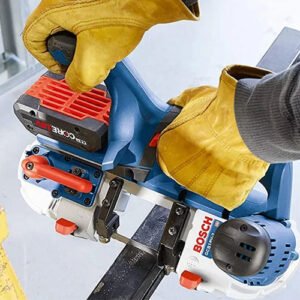
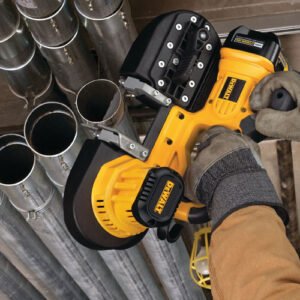
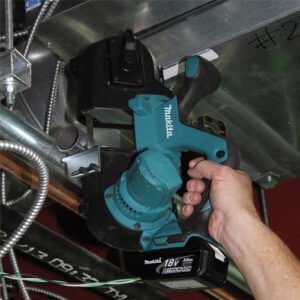
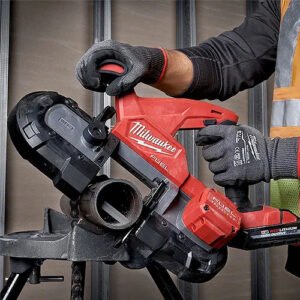


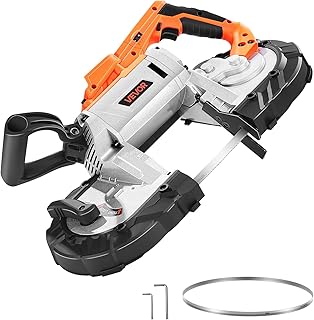


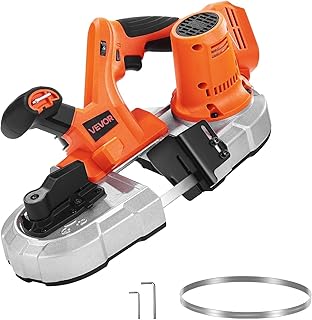


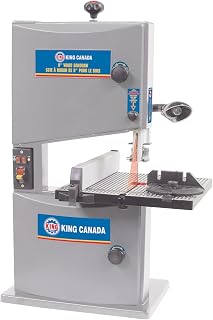


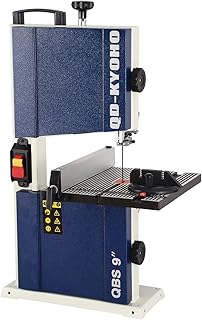
A cordless bandsaw can be a practical choice for cutting metal, conduit, threaded rod, pipe, plastic, wood and other materials when portability matters more than the unlimited runtime of a corded machine. For Canadian buyers, the right choice depends on far more than battery voltage or advertised cutting capacity. Blade compatibility, trigger control, ergonomics, battery ecosystem, serviceability, weight and the type of material you intend to cut all affect whether a cordless bandsaw represents a genuinely smart buy.
This guide is designed to help you compare cordless bandsaws available to Canadian shoppers in 2026. Instead of treating every model as interchangeable, consider the complete tool system: saw, blade, battery, charger, replacement parts and the manufacturer's cordless platform. Brands such as Milwaukee, DEWALT, Makita, Bosch, and Ryobi offer cordless power-tool ecosystems that may be particularly relevant when you already own compatible batteries.
A smart purchase is not necessarily the cheapest cordless bandsaw. It is the model that delivers the combination of cutting performance, portability, runtime, control and long-term practicality that matches your work.
Compact models are intended for situations where portability and access are priorities. They can be particularly useful for electricians, HVAC technicians, plumbers, maintenance workers and installers who need to make cuts away from a workshop.
The main advantage is convenience. A compact cordless bandsaw can often be carried to the work rather than requiring the material to be transported to a stationary machine. The trade-off is that compact designs may have less cutting capacity than larger bandsaws.
Deep-cut designs are more appropriate when you routinely work with larger stock. Their greater throat or cutting capacity can make them more versatile for heavier fabrication and construction applications.
Before choosing a deep-cut model, consider its overall weight and balance. Extra capacity is useful only if you can comfortably position and control the tool for the work you actually perform.
Handheld bandsaws are particularly useful for making controlled cuts in materials such as metal tubing, pipe, conduit and bar stock. Their enclosed blade path can offer a different cutting experience from a reciprocating saw or angle grinder.
They are often most useful where clean, controlled cuts and portability are important. As with any power saw, the correct blade for the material remains critical.
The most important distinction is not simply power. It is freedom of movement versus continuous access to mains electricity.
If your work involves short, repeated cuts in different locations, cordless technology can be especially convenient. If the saw will spend most of its time in a workshop making long sequences of cuts, a corded machine may still be the more practical solution.
A reciprocating saw is highly versatile, but a bandsaw can offer a different approach to cutting. The continuous blade of a bandsaw travels around the wheels rather than moving back and forth like a reciprocating blade.
An angle grinder can cut metal quickly, but it operates very differently. Grinding wheels remove material through abrasion, while a bandsaw uses a toothed blade. For applications where sparks, abrasive dust or heat are undesirable, a bandsaw may offer practical advantages.
That does not mean a bandsaw replaces an angle grinder. Grinders remain valuable for cutting, grinding, deburring and surface preparation. Choose between them according to the material, required finish, access and workplace conditions.
Cutting capacity should be one of the first specifications you check. It describes the maximum size of material the saw is designed to accommodate under specified conditions.
Do not choose a saw based on maximum capacity alone. Think about the largest material you actually expect to cut, then consider whether additional clearance would make positioning easier. A little extra capacity can provide useful flexibility, but buying substantially more tool than you need may add unnecessary size and weight.
Blade speed affects how the saw interacts with the material. Different materials and blade types can require different cutting approaches, which is why speed control can be valuable.
A high blade speed is not automatically better. The objective is controlled material removal while avoiding excessive heat, premature blade wear and unnecessary strain on the tool.
Variable-speed control can make a cordless bandsaw more adaptable. It allows the operator to adjust cutting behaviour according to the application rather than relying on one fixed operating speed.
For buyers who regularly cut different materials, variable speed can be more useful than a specification that simply advertises a high maximum speed.
Battery voltage should not be considered in isolation. Higher voltage does not automatically mean that one bandsaw is better for every application.
Battery capacity, commonly expressed in amp-hours, affects how much stored energy is available. Larger batteries can provide greater runtime potential but may also increase overall tool weight. The best balance depends on whether your priority is maximum portability, longer operating intervals or reduced battery changes.
A bare tool normally makes the most sense for shoppers who already own compatible batteries and chargers. A complete kit can be more appropriate when starting a new battery platform.
Calculate the complete ownership cost rather than comparing the tool-only price with the price of another manufacturer's kit. A seemingly inexpensive bare tool can become much more expensive if you also need batteries and a charger.
If you already use cordless tools, staying within the same battery ecosystem can be one of the most important smart-buy decisions.
Always verify the exact battery platform and compatibility information for the specific model before purchasing. Battery families can contain different generations or configurations, and compatibility should never be assumed solely because two products carry the same brand name.
Metal cutting is one of the most common reasons to buy a portable bandsaw. However, "metal cutting" covers many different materials, including mild steel, stainless steel, aluminium, conduit, pipe, threaded rod and structural sections.
The blade's tooth configuration, material and pitch should be matched to the work. A blade suitable for one type of stock may not provide the same performance on another.
When cutting round pipe or tubing, secure positioning is important. The material can rotate or move if it is not properly supported. Choose a saw with sufficient capacity for the outside diameter and use appropriate workholding practices.
Electrical conduit is often cut during installation work, making portability particularly valuable. A compact cordless bandsaw can reduce the need to bring a larger stationary cutting tool to the work area.
When cutting threaded rod, maintaining control and avoiding damage to the remaining threads can be important. Blade selection and controlled cutting technique matter more than simply choosing the most powerful saw.
Stainless steel can be more demanding than softer metals. Cutting technique, blade selection and appropriate speed become especially important. Avoid assuming that a general-purpose blade is automatically the best option for every stainless-steel application.
The bandsaw itself is only part of the cutting system. Blade selection can have a major effect on cutting speed, surface quality, noise, heat generation and blade life.
Tooth pitch describes the spacing between blade teeth. Coarser pitches can be appropriate for larger sections of material, while finer pitches can be useful for thinner stock. The correct choice depends on the material thickness and blade manufacturer's recommendations.
Bi-metal bandsaw blades are widely used for demanding metal-cutting applications because their construction combines different materials to provide a balance of cutting performance and durability.
Carbon steel blades can be suitable for certain applications and materials. Their suitability depends on the specific blade construction and intended use rather than the material name alone.
A replacement blade must match the saw's required dimensions. Before buying spare blades, check the exact model requirements rather than relying on appearance or a generic description.
Published battery capacity does not translate directly into a guaranteed number of cuts. Runtime varies with material, material thickness, blade condition, cutting pressure, blade speed, battery condition and ambient conditions.
Harder materials and larger sections generally place greater demands on the cutting system. A dull or incorrectly selected blade can also increase workload because the operator may need to apply more pressure.
Weight becomes particularly important with handheld cordless bandsaws because the user supports and guides the tool during cutting. Two models with similar cutting specifications can feel very different in actual use.
Look at the position of the main handle, auxiliary handle, battery and motor. A well-balanced tool can be easier to control than a heavier or lighter tool with an awkward centre of gravity.
For occasional DIY work, weight may be a secondary consideration. For professionals making dozens of cuts during a working day, ergonomics can become one of the most important purchase criteria.
Battery voltage can be useful for understanding a cordless platform, but it does not tell you everything about cutting performance. Motor design, gearing, blade speed, blade quality, cutting capacity and electronics all contribute to how a bandsaw performs.
A cheap initial purchase can become less attractive if replacement blades are expensive or difficult to find. Check replacement-blade availability before committing to a particular saw.
More capacity can sound better on paper, but a larger saw may be heavier and less convenient for work that normally involves small conduit, pipe or tubing.
The opposite mistake can also be costly. If the tool cannot accommodate your common material sizes, its compact design will not compensate for the limitation.
Check whether the listed purchase includes the battery and charger. Bare-tool pricing can be attractive, but first-time buyers may need to budget for the complete cordless system.
Consumables are not the only consideration. Check whether essential replacement components and manufacturer-supported service options are reasonably accessible in Canada.
Bandsaw blades are not universally interchangeable. Confirm blade dimensions and compatibility with the exact model.
A premium bandsaw cannot overcome an inappropriate blade. Always match the blade specification to the material and cutting application.
When comparing two or more models, use the same criteria for each rather than focusing on whichever specification looks most impressive.
DIY buyers should generally prioritise versatility, manageable weight, ease of use and reasonable ownership cost. If the tool will only be used occasionally, spending more for specialist features may not provide meaningful value.
A compact cordless model can be particularly appealing when the main tasks involve occasional pipe, conduit, tubing or small fabrication projects.
Tradespeople should place greater emphasis on ergonomics, battery compatibility, cutting capacity, blade availability and durability. A tool used frequently can justify a higher purchase cost if its design better suits the user's daily workflow.
Fabricators should focus on capacity, blade selection, repeatability and the materials being processed. If most work takes place at a dedicated bench, also compare the advantages of a stationary bandsaw before choosing a handheld cordless model.
Canadian buyers should consider the environment in which the tool will actually be used. Outdoor construction, winter maintenance and remote work can create very different requirements from an indoor workshop.
Cold conditions can affect rechargeable battery performance. If a battery-powered tool is used in low temperatures, follow the battery manufacturer's storage, charging and operating guidance. Avoid treating a battery's nominal capacity as a guarantee of identical runtime in every environment.
Canadian shoppers should also verify that the exact model, battery system and charger configuration is appropriate for the Canadian market. Product names can vary by region, and accessories or kit contents can differ between markets.
Look for damaged, missing or excessively worn teeth. A blade that is no longer cutting properly should not be forced through the material.
Metal chips and debris can accumulate around moving components. Follow the manufacturer's cleaning instructions and avoid introducing debris into areas where it can interfere with the motor, wheels or electronics.
If the model provides blade tracking adjustment, check it according to the manufacturer's instructions. Poor tracking can affect cutting behaviour and blade life.
Keep battery contacts clean and inspect the battery and tool interface for visible damage. Do not use damaged batteries or equipment.
Follow the battery manufacturer's instructions for charging, storage and temperature conditions. Long-term battery care can be just as important as maintaining the saw itself.
A cordless design eliminates the power cord but does not eliminate the normal hazards associated with a powered cutting tool. Read the manufacturer's instructions before operation and use the protective equipment appropriate to the material and workplace.
Customer ratings can be useful, but they should not be treated as a substitute for specification checking. A buyer who uses a bandsaw occasionally for small DIY projects may evaluate the same tool differently from a professional who uses it every day.
When reading verified customer reviews, look for recurring comments about battery life, ergonomics, blade changes, cutting capacity, durability and ease of use. Give more weight to detailed reviews that explain the application than to short comments that simply praise or criticise the product.
Also verify that the reviews belong to the exact model you are considering. Retailer pages sometimes group closely related models, kits or generations together.
A genuine deal should be judged against the complete package rather than an advertised percentage reduction alone. A lower-priced bare tool may not represent better value if you need to purchase a battery and charger separately.
There is no single price that defines a good cordless bandsaw. The appropriate budget depends on cutting capacity, battery platform, included accessories, intended workload and whether batteries are already available.
Instead of setting a budget around a headline price, calculate your total initial investment. For a new cordless platform, this can include the saw, battery, charger and additional blades. For an existing platform, a bare tool may offer substantially better overall value because the battery infrastructure is already available.
Prioritise affordability, versatility, ease of use and a battery system that will remain useful for other household projects. There is little benefit in paying for industrial-level capacity if your typical jobs involve occasional small cuts.
Portability and convenient handling are especially important when cutting conduit or other installation materials. A compact design paired with an existing professional battery platform can be an efficient combination.
Look closely at cutting capacity, balance and one-handed or two-handed control characteristics according to the manufacturer's intended use. Repeated cuts can make ergonomics more important than headline motor specifications.
Prioritise durability, battery availability, cutting capacity and job-site portability. If the saw will be shared among workers, straightforward operation and easily sourced consumables can also matter.
Blade compatibility, speed control, capacity and repeatability should receive greater attention. Compare a cordless handheld model against a stationary bandsaw if most cuts are performed in one workshop location.
The best cordless bandsaw for one Canadian buyer may not be the best choice for another because the battery platform can substantially change total ownership cost. If you already have several compatible tools, a bandsaw that uses those batteries can avoid purchasing another charger and battery family.
However, battery compatibility should not override every other consideration. If an otherwise unsuitable tool fits your existing platform, the savings may not justify compromises in capacity, ergonomics or cutting performance.
When two models appear similar, start with the specifications that affect your actual work. First compare cutting capacity. Next examine weight and ergonomics, then blade speed and control, battery compatibility, kit contents and replacement-blade availability.
If both tools meet your technical requirements, consider the platform you are already invested in. If neither battery ecosystem provides an advantage, compare the complete ownership cost and the features that will affect your daily workflow.
The best cordless bandsaw depends on your material, cutting capacity, frequency of use, battery platform and budget. There is no single model that is ideal for every Canadian buyer. Compare the exact specifications and kit contents of the models you are considering before purchasing.
They can be worth buying when portability, quick setup and freedom from an extension cord are important. They are particularly useful for tradespeople and DIY users who make repeated cuts at different locations.
Yes, many cordless bandsaws are designed for metal-cutting applications. The correct blade, tooth configuration, speed and cutting technique are essential. Always confirm that the exact saw and blade are intended for the material you plan to cut.
Neither tool is universally better. A bandsaw can be advantageous for certain controlled cuts through suitable stock, while a reciprocating saw is often more versatile for demolition and irregular cutting tasks.
Battery consumption depends heavily on the material, blade condition, cutting size, speed and operating technique. Larger or harder materials can require more energy than light-duty cutting.
Choose a bare tool when you already have compatible batteries and a charger. A kit can make more sense if you are entering a new cordless platform and need the complete operating system.
Not necessarily. Voltage is only one part of the overall system. Motor design, gearing, blade characteristics, cutting capacity, electronics, ergonomics and battery capacity also influence suitability.
There is no universal replacement interval. Blade life depends on the material being cut, tooth configuration, cutting pressure, speed, frequency of use and maintenance. Replace a blade when it becomes excessively worn, damaged or unable to cut effectively.
A general-purpose blade may handle a range of suitable materials, but blades are designed for particular applications. Matching blade characteristics to the material and thickness can improve cutting performance and blade life.
Professional users should consider cutting capacity, ergonomics, durability, battery compatibility, speed control, blade availability and serviceability. Frequent users should also pay close attention to weight and balance because small ergonomic differences become more significant during repeated work.
They can be particularly convenient outdoors because there is no mains power cord to manage. However, follow the manufacturer's guidance concerning battery temperature, moisture, storage and operating conditions.
If you depend on the saw for extended work, having an additional compatible battery can reduce interruptions. The appropriate capacity depends on whether you value lower weight or longer operating intervals.
The smartest way to buy a cordless bandsaw in Canada is to start with the work rather than the brand or headline specification. Identify the materials you cut, the largest dimensions you encounter, how often you use the tool and where you normally work. Then compare cutting capacity, blade compatibility, speed control, weight, ergonomics and battery requirements.
For existing cordless-tool owners, battery-platform compatibility can significantly improve overall value. For first-time buyers, compare the complete cost of the saw, battery, charger and consumables. For professionals, prioritise features that affect daily productivity and handling. For occasional DIY users, avoid paying for capacity and features you are unlikely to use.
Before purchasing, verify the current Canadian product configuration, specifications, included accessories, replacement-blade options and current retailer pricing. Product availability, kit contents and prices can change during 2026, so the final purchase decision should always be based on the current listing for the exact model.