

♥ Wishlist
Compare 34 Board Games for Family Nights, Parties & Strategy Play products in Canada. Reviews, ratings, pros, cons and buying advice updated for October 2026.




Finding a genuinely smart board-game purchase is about more than selecting a highly rated title. The right choice depends on player count, age range, game length, learning curve, replay value, table space, component quality, theme, and how often the game is likely to be played. A game that is excellent for a family of four may be a poor choice for a couple, while a strategically demanding title may not suit a group looking for a relaxed 30-minute experience.
For Canadian shoppers, it is also worth checking the exact edition, language information, component contents, retailer policies, and current specifications before buying. Product listings can change, and different editions of the same board game may have different packaging, rulebooks, expansions, or component configurations.
A smart buy should provide a strong balance between purchase cost, usability, replayability, quality and the number of people who can realistically enjoy it. The lowest-priced game is not automatically the best value, and an expensive strategy game is not necessarily a better purchase than a simpler family title.
Player count is one of the most important specifications to evaluate. A game designed primarily for four players can feel very different when played with two. Some titles are excellent at their minimum player count, while others are substantially more engaging when the table is full.
Before buying, think about the group that will actually play the game. If your household usually consists of two players, prioritise games specifically designed to work well at two rather than buying a popular title simply because it supports two participants on the box.
The age printed on a board-game package is useful, but it should not be treated as the only measure of suitability. Reading ability, arithmetic, strategic reasoning, attention span and familiarity with board-game conventions can all affect whether younger players will enjoy a title.
For family purchases, compare the youngest regular player with the game's rules complexity. A technically age-appropriate game can still be frustrating if the younger participant needs constant assistance.
Playing time should match the way your household or group actually spends leisure time. Short games are often easier to bring to the table on weeknights, whereas longer strategy games may be better suited to dedicated weekend sessions.
Complexity influences whether a game gets played repeatedly or remains on a shelf. A highly sophisticated game can be rewarding for experienced hobby gamers but intimidating for people who rarely play modern board games.
Look beyond the number of rules. Consider how many decisions players make per turn, whether there are multiple resource systems, how much reading is required, whether players can be eliminated, and how difficult it is to recover from an early mistake.
Family strategy games are among the most versatile purchases because they can introduce meaningful decision-making without requiring the complexity of a specialist hobby game. Well-known examples include Catan, Ticket to Ride, Carcassonne and Azul.
These games can be especially useful for households seeking a title that adults can enjoy while still being approachable for older children. Compare the recommended age, player count and expected duration carefully because the experience varies considerably between titles.
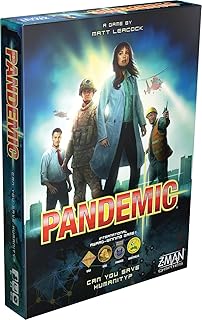
Cooperative games put players on the same team rather than directly competing against one another. Pandemic is a well-known example of the cooperative format, although shoppers should check the exact edition and current product details before purchasing.
Cooperative games can be particularly attractive for families because they encourage discussion, planning and shared problem-solving. However, some cooperative games can suffer from one player effectively making decisions for everyone. If that is a concern, look for titles that encourage meaningful individual choices.
Couples and households that usually play with two people should pay close attention to games specifically designed or optimised for two. A large multiplayer game that technically supports two players may not deliver the same experience as a dedicated two-player title.
When comparing two-player options, consider whether both players have comparable strategic opportunities, whether the game remains balanced at two, and whether the session length makes sense for repeated play.
Party games are designed around larger groups, quick interaction and straightforward rules. They can be an excellent choice when the main objective is social entertainment rather than detailed strategic planning.
Check the actual player range and consider the type of interaction involved. Some party games depend heavily on conversation, while others rely on drawing, guessing, word association, trivia or physical components.
Deck-building games allow players to develop or modify a personal collection of cards during play. The appeal comes from gradually improving the available actions and creating combinations.
These games can offer substantial replay value because the order of cards, strategic choices and available combinations can vary between sessions. Buyers should nevertheless check whether the game requires extensive card sorting and storage.
Tile-laying games use individual pieces that players place into a shared or personal layout. Carcassonne and Azul demonstrate two different approaches to the genre.
Tile-based games can be appealing when players want visible progress and relatively straightforward physical components. Before buying, consider the table footprint because the play area can expand significantly during a session.
Abstract strategy titles typically minimise narrative and focus heavily on positioning, planning, pattern recognition or tactical choices. They can be excellent for players who prefer mechanics over elaborate themes.
The key buying consideration is whether the intended players actually enjoy direct strategic competition. Abstract games can be exceptionally replayable, but they may have less appeal to groups that prefer storytelling or cooperative objectives.
Thematic games combine mechanics with a strong setting, narrative or fictional world. These can be particularly immersive, but they often involve more rules, components and setup time.
For a thematic purchase, examine the amount of reading, campaign structure, storage requirements and session length. If the game is campaign-based, consider whether the group is likely to play regularly enough to experience the content.
Classic titles remain relevant because familiarity can reduce the learning barrier. Brands such as Hasbro and Ravensburger offer games across multiple categories, but individual titles should still be evaluated on their current specifications rather than brand reputation alone.
Premium hobby games can offer elaborate components, sophisticated mechanisms and extensive replayability. They may be an excellent investment for established board-game enthusiasts, but they are not necessarily the smartest first purchase for casual players.
Compare component quality with actual gameplay value. Extra miniatures, inserts or oversized components can increase the physical presentation without necessarily improving the underlying experience.
Cards are frequently handled, shuffled and placed on tables, making card stock an important durability consideration. Look for clear printing, readable text, consistent sizing and a finish appropriate for repeated handling.
If a game relies heavily on cards and is expected to receive frequent use, card sleeves can provide additional protection. However, sleeves increase the thickness of decks and may require additional storage space.
A board should be easy to unfold, sufficiently stable for normal use and clearly printed. Multi-section boards can be convenient for storage but may have seams that affect how pieces sit during play.
Tokens should be easy to distinguish and comfortable to manipulate. Small pieces can be perfectly functional but may be unsuitable for households with very young children because of choking hazards.
Games with miniatures can provide visual appeal and strong thematic presentation. Buyers should consider whether the added detail actually matters to the intended audience and whether the pieces require additional storage.
Component organisation is often overlooked when comparing board games. A title with numerous tokens, cards and small pieces can take longer to set up and pack away if the box provides limited organisation.
For frequent players, an efficient storage system can have a noticeable impact on how often the game reaches the table. Check whether the original insert accommodates sleeved cards and whether components have dedicated compartments.
A low purchase price does not automatically represent strong value. A more useful comparison considers expected frequency of use, replayability, number of compatible players and the overall quality of the experience.
Before adding a board game to your shortlist, compare the following specifications side by side:
Canada's bilingual market makes edition and language information particularly important. Some board games are sold in English editions, French editions, or versions that include material in both languages. The language of cards can be especially important when gameplay depends on reading text.
Do not assume that a product listing's title tells you everything about the contents. Check the current product description, photographs and manufacturer information where available, particularly when purchasing for a family with a preferred language.
Product information can vary between sellers, marketplaces and editions. Before purchasing, compare the exact product title, publisher, edition, listed components and seller details rather than relying solely on a product photograph.
A high average rating can indicate broad satisfaction, but ratings do not reveal whether a game suits your household. A complex strategy game may receive excellent feedback from enthusiasts while being unsuitable for casual family play.
Many shoppers focus on the maximum number of players. The minimum can be equally important. If the game will normally be played by two people, research the two-player experience rather than assuming it will match the full-group version.
Setup can determine whether a game becomes a regular favourite. A game with extensive sorting, deck preparation or board assembly may require more commitment than its advertised playing time suggests.
More complicated does not mean better. The smartest choice is the one whose rules and decision depth match the people who will actually play it.
Large boxes and numerous components require appropriate shelf space. If storage is limited, prioritise games with manageable component counts and efficient packaging.
Expansions can extend replayability, but they also increase cost, complexity and storage requirements. For most shoppers, the base game's value should be assessed independently before adding expansions.
Publishers can release revised, anniversary, language-specific or otherwise different editions. Always check the edition information and included contents for the exact product being considered.
Customer reviews can be useful for identifying recurring practical issues, but they should be interpreted as one source of evidence rather than a substitute for product specifications. Look for patterns instead of relying on a single enthusiastic or critical review.
Families often benefit from games with clear turn structures, manageable reading requirements and enough strategic depth to remain interesting after the first few sessions.
Adult groups may place greater emphasis on strategic depth, negotiation, social interaction, humour, thematic immersion or long-term planning. There is no single definition of an ideal adult board game.
When comparing options, identify the group's preferred experience first. A competitive strategy group may want deep optimisation, while a social gathering may benefit more from a quick party game with minimal rules.
For children, accessibility and engagement generally matter more than mechanical sophistication. Consider how much reading is required, whether pieces are easy to manipulate, whether turns are short enough to maintain attention, and whether losing early makes the remainder of the game unpleasant.
For households with very young children, inspect the manufacturer's age recommendation and pay particular attention to small components.
Difficulty is influenced by several factors rather than one universal scale. A game can have simple rules but difficult strategic decisions, or complex rules with relatively straightforward objectives.
Replayability is one of the strongest indicators of whether a board game will continue to provide value after the novelty disappears. Games can achieve replayability through different mechanisms, including variable setups, randomised components, multiple strategies, changing objectives, asymmetric powers and player interaction.
A game does not need hundreds of unique scenarios to be replayable. Even a relatively compact design can remain compelling if different player decisions produce substantially different outcomes.
Measure your available playing area before choosing a large board game. The dimensions of the closed box tell you very little about the space required during play.
Games involving personal player boards, large maps, card displays, resource pools and multiple decks can require substantially more table space than expected. If your regular playing surface is small, prioritise games with compact layouts.
For cottages, family visits, camping trips or holidays, portability can be as important as gameplay. Consider box dimensions, component count, setup complexity and whether loose tokens can be kept organised during transport.
Compact card-driven games are generally easier to transport than games with large boards or extensive miniature collections, although the best option depends on the intended group and destination.
Store cards flat and away from moisture, excessive heat and direct sunlight. If cards are handled frequently, appropriately sized sleeves can help reduce wear.
Use the original compartments where practical and keep small components separated. If you introduce bags or organisers, choose a system that makes setup faster rather than adding unnecessary complexity.
Follow the manufacturer's care recommendations. Avoid applying liquids directly to printed cards, boards or components. Gentle dry cleaning is generally preferable for routine dust removal.
Keep board games in a dry environment and avoid conditions that can cause warping or deterioration. Store components inside the box rather than leaving cards or boards exposed for long periods.
Brand recognition can be useful when building an initial shortlist, but individual games should always be assessed on their own merits. Depending on the type of experience you want, familiar names worth researching include Catan, Days of Wonder, Ravensburger, Hasbro, Asmodee, Stonemaier Games, Z-Man Games, Azul and 7 Wonders.
Brand reputation should not replace checking the exact game's player count, age recommendation, edition, component list, rules complexity and current seller information.
When several highly regarded titles appear similar, compare them according to the experience you want rather than trying to identify one universally superior game.
Board game pricing can change between retailers and over time. A temporary discount can be attractive, but buyers should first establish whether the game is actually appropriate for their needs.
Compare the exact edition and product configuration before comparing prices. A lower price for a different edition, language version or incomplete listing is not necessarily a better deal. Also consider retailer policies, seller information and the condition of the product.
For shoppers considering Amazon Canada, inspect the complete listing rather than relying only on the headline product name. Confirm the manufacturer or publisher, edition, age range, player count, product description and seller information.
Because marketplace listings can change, verify the information displayed at the time you purchase. Current pricing, delivery estimates, stock status, seller details and return conditions should be treated as changeable information rather than permanent product characteristics.
There is no single best board game for every Canadian household. The best choice depends on the number of players, age range, preferred complexity, available time, theme and budget. A practical approach is to shortlist several titles that match your actual playing group and then compare their specifications and current retailer information.
Not necessarily. Higher-priced games may include more components, larger boards, detailed miniatures or more complex systems, but those features do not automatically make the gameplay better for every group. Value depends on how well the game matches your preferences and how often it is likely to be played.
Family-friendly choices generally have understandable rules, an appropriate age range, manageable playing times and enough strategic depth to interest adults without overwhelming younger players. Catan, Ticket to Ride, Azul and Carcassonne are examples of well-known games that shoppers may wish to compare, while the right choice still depends on the family's specific preferences.
Check the exact edition, player count, age recommendation, playing time, language, component list, seller information and current retailer policies. Customer reviews can provide additional context, especially when multiple buyers report the same practical issue.
They can be, particularly when the game fits the family's ages, interests and available time. A highly replayable game that becomes part of a regular family routine can offer considerably more practical value than a game purchased solely because it is popular.
It is extremely important. Some games change significantly depending on the number of participants. Always evaluate the player count you expect to use most frequently rather than selecting a title based only on its maximum capacity.
Usually, evaluate the base game first. Expansions can add variety, but they also increase cost, storage needs and sometimes complexity. If the base game already offers strong replayability, an expansion can remain an optional future purchase.
Look for variable setups, different strategies, changing objectives, meaningful player interaction or other mechanisms that create different decisions between sessions. Reviews can help identify whether players continue enjoying the game after the initial learning period.
A strong two-player game gives both participants meaningful decisions and a balanced experience at that player count. If two-player sessions are your primary use case, prioritise titles designed for two or specifically recognised as strong at that count.
No. Ratings provide useful context but do not replace specifications and audience fit. Compare reviews with the game's player count, age recommendation, complexity, playing time and intended style of play.
Before making a final purchase decision, run through this checklist:
The smartest board game purchase is the one that combines the right gameplay experience with practical value for the people who will use it. Start with player count, age, playing time and complexity, then evaluate replayability, component quality, storage, language and edition details. Only after those fundamentals fit should price become the deciding factor.
For Canadian shoppers in 2026, comparing the exact product configuration and current retailer information is particularly important because pricing, seller details, availability and listings can change. Use this guide as a framework for narrowing your choices, then compare the latest specifications and customer feedback for the specific board games on your shortlist before purchasing.