

♥ Wishlist
Compare 60 Bakers Racks and Pantry Cabinets products in Canada. Reviews, ratings, pros, cons and buying advice updated for October 2026.


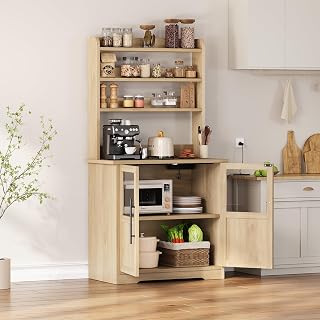


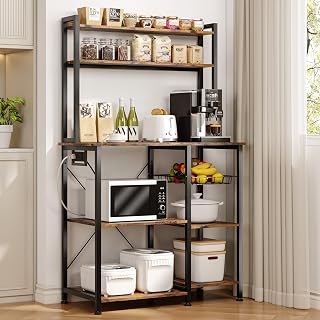


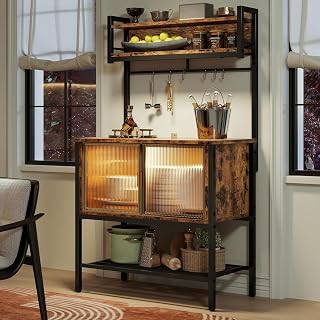


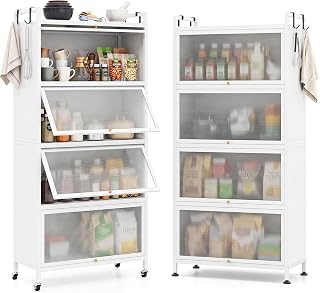


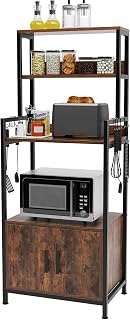


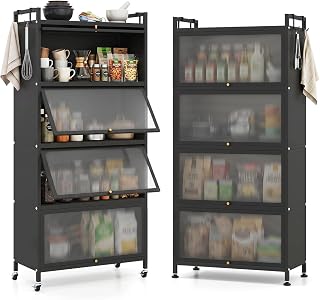


A bakers rack or pantry cabinet can solve very different storage problems, so the best choice depends on how much space you have, what you need to store, and whether the furniture will be used for everyday kitchen organisation or occasional overflow storage. In Canadian homes, where kitchens can range from compact condominium layouts to larger family kitchens, dimensions, usable capacity and placement are especially important.
Before comparing deals, look beyond the headline number of shelves or the overall appearance. A cabinet that looks spacious may have limited usable depth, while an open bakers rack can provide excellent access but little protection from dust, cooking grease or visual clutter. The right purchase balances storage capacity, construction, footprint, accessibility, stability and appearance.
A bakers rack is generally an open storage unit with shelves, a frame and sometimes a work surface, drawers, baskets or a dedicated microwave area. It works particularly well when you want frequently used kitchen items within easy reach. Pantry cabinets are enclosed storage units designed to hide contents behind doors and create a more traditional pantry-style arrangement.
Measure the intended location before selecting a storage unit. Record width, depth and height rather than relying on photographs or general product descriptions. A few centimetres can determine whether a cabinet fits comfortably beside a refrigerator, between counters or against a wall.
Also account for doors, drawers and nearby appliances. A cabinet may technically fit into an available opening but become inconvenient if its doors cannot open fully. For narrow kitchens, depth deserves particular attention because a deeper unit can restrict walking space even when its width is acceptable.
Nominal shelf count does not tell the entire story. Five closely spaced shelves may be less useful than three or four shelves with sufficient vertical clearance for cereal boxes, small appliances, mixing bowls and food-storage containers.
When comparing models, consider the actual dimensions of the spaces between shelves, the internal cabinet dimensions and whether shelves can be repositioned. Adjustable shelving is particularly useful if your storage requirements are likely to change.
Weight capacity should be evaluated at the shelf level as well as for the entire unit. Canned goods, cookware, countertop appliances and glass containers can become surprisingly heavy when concentrated on one shelf.
Use the manufacturer's stated weight limits when available and avoid assuming that a visually substantial frame can safely support unlimited weight. Pay particular attention to shelves made from engineered wood, wire or thin metal, as their load limits can differ substantially from those of the supporting frame.
Adjustable shelving can make a major difference in a pantry cabinet. It allows you to create taller compartments for appliances or bottles and shorter compartments for cans, jars and packaged foods.
Check how the adjustment mechanism works. Shelf-pin systems are common, but the number and spacing of adjustment positions can vary. Also check whether the shelves rest securely on their supports and whether the cabinet construction prevents excessive movement.
Open shelves offer immediate visibility and convenient access. They are well suited to frequently used cookware, coffee equipment, serving dishes and attractive storage containers. The trade-off is that everything remains visible and may collect more dust or kitchen residue.
Enclosed doors are useful for packaged food, cleaning supplies, appliances and miscellaneous kitchen equipment that you would rather keep out of sight. Drawers are particularly convenient for utensils, small accessories and items that are awkward to stack.
Do not assess a pantry cabinet only by its closed dimensions. Consider the space required for the doors to swing open. This matters when the cabinet is positioned beside a wall, refrigerator, island or another piece of furniture.
If the available area is tight, compare the door configuration carefully. Double doors can sometimes provide easier access to a wide storage area, while a single door may be more practical in a narrow location.
Metal is commonly used for open bakers racks because it can provide a relatively slim structural profile while supporting shelves and appliances. Steel and other metal constructions can work particularly well for industrial, modern and utility-focused kitchens.
Look closely at the frame joints, shelf construction and finish. A strong-looking frame does not automatically mean every shelf is suitable for heavy cookware. Check the stated materials and weight specifications rather than judging quality from appearance alone.
Engineered wood is widely used for freestanding pantry cabinets because it can provide a consistent surface and traditional cabinet appearance. It is important to protect wood-based furniture from prolonged exposure to moisture and standing water.
Inspect the construction details, including edge finishing, shelf supports, back-panel design and hardware. These details can influence how stable and durable the cabinet feels after assembly.
Solid wood can provide a substantial appearance and may be attractive for traditional kitchens. However, material alone should not be treated as a guarantee of superior construction. Joinery, hardware, panel thickness, finish quality and overall engineering also matter.
Glass can make a pantry cabinet appear lighter and allows stored items to remain visible. It can be useful for displaying serving pieces, dishes and attractive containers.
When considering glass components, check the manufacturer's specifications for shelf capacity and the type of glass used. Avoid assuming that a glass shelf intended for lightweight display items is appropriate for heavy cookware or bulk food storage.
Freestanding kitchen storage furniture should be stable on the floor and appropriately secured when the manufacturer recommends or provides an anti-tip system. Tall, narrow furniture deserves particular attention because its centre of gravity can make it more vulnerable to tipping if heavily loaded or subjected to force.
In a compact kitchen, vertical storage can provide additional capacity without consuming as much floor area as a wide cabinet. A narrow pantry cabinet or slim bakers rack can fit into unused wall space, provided there is adequate clearance around doors, appliances and walkways.
For small spaces, prioritise footprint efficiency. Measure the depth carefully and consider whether an open rack would make frequently used appliances easier to access than storing them inside cupboards.
Larger kitchens offer more flexibility, allowing you to choose wider racks or cabinets with multiple storage zones. A pantry cabinet can hold packaged food, baking ingredients and small appliances, while a bakers rack can function as an additional preparation or display area.
Freestanding furniture is often attractive to renters because it can add storage without requiring a permanent cabinet installation. However, renters should still verify that the furniture is appropriate for the intended floor surface and that any wall anchoring complies with their rental agreement.
A pantry cabinet or bakers rack can also provide useful overflow storage outside the primary kitchen. These areas may be used for bulk food, small appliances, entertaining supplies or seasonal kitchen equipment.
Pay attention to environmental conditions. Moisture, temperature changes and basement humidity can affect wood-based furniture, metal finishes and stored food. Select materials and storage locations appropriate to the environment.
If the primary purpose is appliance storage, measure the appliances before buying the furniture. Include the appliance's full footprint rather than relying on its nominal size.
Do not place an appliance on a shelf simply because the shelf is large enough. Heat-producing appliances may require clearance around the sides, rear and top. Always follow the appliance manufacturer's operating requirements.
Store tall bottles and large containers in appropriately sized compartments rather than wasting vertical space above short items. Adjustable shelves can make this much easier.
Place everyday staples at comfortable heights. Reserve higher shelves for less frequently accessed items, provided they can be retrieved safely.
Grouping baking ingredients, canned foods, breakfast items, snacks and cooking supplies makes a pantry easier to maintain. Containers can also reduce visual clutter and help make shelf contents easier to identify.
Deep shelves can provide considerable capacity but may make smaller products difficult to see. Shallow shelving can improve visibility and reduce the tendency to lose items behind larger containers.
Not every premium feature provides meaningful value for every kitchen. The most worthwhile upgrades are usually those that solve a specific storage problem.
Decorative details, additional shelves that cannot accommodate your typical items and oversized display sections can add cost without improving practical storage. Evaluate every feature against your actual kitchen routine.
For example, an elaborate bakers rack may look attractive but provide less useful capacity than a simpler cabinet with adjustable shelves. Similarly, a pantry with many narrow compartments may be less flexible than one with fewer but better-spaced shelves.
Furniture photography can make a product look larger, deeper or more substantial than it is. Always compare the listed measurements with your available space and the items you intend to store.
Many freestanding storage units require assembly. Before purchasing, check the assembly information, estimated complexity where provided, included hardware and whether any tools are required.
The rear construction can contribute to overall rigidity and help keep a cabinet square. Examine product specifications and photographs carefully rather than focusing only on the front-facing shelves and doors.
Additional shelves can actually reduce usability when vertical clearance becomes too small for the products you store. Storage efficiency depends on usable volume, not simply shelf count.
Uneven flooring can affect stability. A tall cabinet that is stable on one surface may require careful leveling on another. Check whether the design includes adjustable feet or another method of levelling.
For large furniture, consider how the packaged product will enter your home. Doorways, staircases, elevators and tight corridors can present practical challenges even when the assembled furniture fits the intended room.
When browsing Canadian marketplaces, shoppers may encounter brands such as Yaheetech, HOMCOM, VASAGLE, Hodedah, Bestier and Costzon alongside many other furniture manufacturers and private-label sellers. Brand recognition can help narrow a search, but it should not replace comparison of the specific model.
For each candidate, compare the exact dimensions, materials, shelf capacity, assembly requirements, included hardware, storage configuration and current customer feedback. Different models from the same brand can have substantially different designs and specifications.
Customer reviews can reveal practical details that are difficult to judge from product photographs, but they should be interpreted alongside specifications rather than treated as the sole measure of quality.
The lowest purchase price is not necessarily the best overall value. A useful comparison considers what you receive for the available space and whether the furniture meets your storage requirements.
Kitchen storage furniture is exposed to dust, food particles, grease and occasional spills, so maintenance should be considered before purchase. Smooth, sealed surfaces are generally easier to wipe than heavily textured or difficult-to-access designs.
A simple open rack can become a highly practical kitchen workstation when storage is organised by frequency of use. Keep everyday cookware and appliances within easy reach while moving occasional-use items to higher shelves.
Baskets and matching containers can help organise smaller products without permanently changing the furniture. However, accessories should not interfere with ventilation, shelf capacity or the manufacturer's stated load limits.
Use the cabinet's vertical space deliberately. Tall compartments can accommodate bottles and large packages, while smaller compartments can hold cans, spices and containers. If shelves are adjustable, arrange them around the products you actually own rather than following an arbitrary equal-spacing layout.
It can also help to keep heavier products on lower shelves and lighter products higher up. This can make the cabinet easier to use and may improve overall stability when the manufacturer's loading guidance is followed.
A bakers rack is a strong option for shoppers who value open access and flexible storage. It can be particularly useful for additional appliance storage, cookware, serving equipment, coffee stations and kitchen displays.
It is less suitable when your priority is concealing clutter or protecting stored items behind doors. In those cases, an enclosed pantry cabinet may be a better fit.
A pantry cabinet is generally better for households that want enclosed, organised storage for food and kitchen supplies. It can also be useful when counter space is limited and you need a dedicated location for smaller appliances.
The best model depends heavily on the available footprint and the dimensions of the products you plan to store. A tall cabinet can provide substantial vertical capacity, while a wider cabinet may be easier to organise for larger containers.
There is no single best model for every Canadian household. The right choice depends on available space, storage requirements, construction, shelf dimensions, weight capacity, preferred appearance and budget. Compare the specifications and current customer feedback for the exact models you are considering.
Yes. A narrow bakers rack can add vertical storage without requiring a large cabinet footprint. However, measure the depth carefully because a unit that projects too far into a walkway can make a compact kitchen feel cramped.
Neither is universally better. Pantry cabinets are preferable when you want concealed storage, while open shelves are convenient when quick visibility and access are more important.
Common uses include cookware, dishes, small appliances, baking equipment, coffee supplies, serving pieces and decorative kitchen items. Always stay within the manufacturer's shelf capacity and follow appliance clearance requirements.
Adjustable shelves are valuable when you store products with different heights. They allow the interior to be configured more efficiently and can make the cabinet adaptable as your storage needs change.
The appropriate depth depends on what you plan to store and how much floor space is available. Deeper shelves can accommodate larger containers but may make smaller products harder to see. Measure your largest intended items and compare that measurement with the cabinet's usable internal depth.
The best height depends on ceiling clearance and how comfortably you can access upper shelves. Very tall cabinets can provide excellent vertical capacity, but frequently used items should remain within safe and convenient reach.
Metal construction can provide a strong and practical frame, but durability depends on the specific material, joints, shelf construction, finish and weight limits. Compare the manufacturer's specifications rather than assuming all metal racks have the same strength.
Some models are designed to accommodate microwaves, but suitability depends on the shelf dimensions, weight capacity and the microwave manufacturer's required ventilation clearances. Verify all measurements before placing an appliance on the rack.
Choose based on both available space and storage behaviour. A narrow cabinet works well when vertical space is available and floor space is restricted. A wider cabinet can provide easier access to larger quantities of food and cookware but requires more floor area.
Usable shelf size is generally more important than the raw number of shelves. Shelves should have enough vertical and horizontal space for the products you actually intend to store.
Measure the installation area, nearby obstacles and the products you intend to store. Compare those measurements with both the external dimensions and the usable internal dimensions listed for the furniture.
The smartest purchase is not necessarily the cheapest bakers rack or pantry cabinet. It is the model that uses your available space efficiently, accommodates your actual storage needs, provides appropriate stability and construction, and remains convenient to use over time.
Before making a purchase, compare exact dimensions, shelf capacity, materials, storage configuration, assembly requirements and current customer feedback. If you are comparing several options, create a simple shortlist and eliminate products that fail your essential requirements before considering appearance or additional features.
For 2026 shopping decisions in Canada, prices, availability, retailer policies and product configurations can change. Check the current listing and specifications immediately before ordering rather than relying solely on older deal information. A careful comparison of the exact model will help you find a bakers rack or pantry cabinet that offers practical value for your kitchen rather than simply an attractive deal.